 A law enforcement action in Michigan earlier this year lead to a series of misleading TV news articles about it, and posts like this on online groups across the USA, including one for a group where I live in Oregon:
Nearly half of Michigan’s missing children were being trafficked, and we don’t know about the other half.
Don’t you dare tell me that I’m overreacting when someone is acting strangely around my kids!
That social media post is by a woman who believes, mistakenly, that young people, mostly white girls, who are trafficked for sex are kidnapped by strangers. She’s part of a much larger group of people in the USA who mistakenly believe that there are bands of men, usually foreigners, roaming around looking for girls – white girls specifically – to abduct and force into sex trafficking. Movies like 2008’s Taken add fuel to this far-fetched legend. So do things like this: a doctored image posted to a very popular Facebook group that targeted an Oregon small town specifically, with a claim by a woman that she had been accosted by strangers who wanted to buy her baby (a white baby). In this case, thankfully, the community quickly rallied to debunk the rumor, but it’s another example of how people promote the myth of strangers abducting children – primarily white children – to force them into sexual slavery.
The reality is that a trafficker of teens for sex can be the older brother or father of one of your children’s friends. It can be a guy who frequents places where young people gather, like a shopping center. It’s someone who entrances the teens there with gifts and romantic talk. Too often, parents’ response to the idea of sex traffickers is “Beware of strangers!” But traffickers aren’t strangers to the teens they target: they are charming, funny, fun and they know how to make teens feel all the things they long to feel – especially about feeling like an adult.
Traffickers befriend vulnerable young people who have low self-esteem or want to feel beautiful/handsome, loved, included or more grown up. And they do this befriending in places parents have approved for the teen to be: school, an after-school job, the mall, a community of faith, a friend’s house – and, yes, sometimes, online. These predators look for someone who is angry with their parents or not doing well in school or who has run away or who is just feeling really, alone and unwanted, and they offer sympathy. They look for young people who feel ugly and rejected – maybe a boyfriend has dumped the young person, or the young person has never had a romantic relationship and feels like they never will. Young people with disabilities are targets because they want to feel like “normal” teens. Traffickers are happy to shower any of these vulnerable young people in gifts and attention and a feeling of being heard and included. Traffickers draw their victims into trusting relationships and, through a mix of flattery and gifts and abuse, are able to reach a point of complete control over the person, and they are eventually able to use their victims in any way they wish – and the young person often feels like he or she is consenting to what eventually happens, in terms of sex and abuse.
A June 2017 article in Psychology Today noted that a Polaris Project report found that
32 percent of sex trafficking victims were recruited through a friend. Hotspots for recruitment are homeless shelters, rehab facilities, jails, malls, and foster homes. In fact, abductions accounted for only a tiny percentage of victims’ stories. Most victims are not kidnapped, drugged, chained or locked up in a home or workplace. Sometimes they don’t even experience physical abuse because the traffickers don’t want to leave physical evidence that may reveal the abuse. Instead, they use psychological abuse, threats, and manipulation. Some victims even have cell phones and can get permission to leave to go outside to places like a health clinic, a grocery store, or even church.
A survivor of the sex trafficking trade in Portland, Oregon shared some of her experiences with Think Out Loud, a radio program produced by OPB. The Lloyd Center is a mall in downtown Portland:
I was actually recruited out of Lloyd Center. There’s a lot of different recruiting areas in Portland, Lloyd Center being a huge one…If a 16-year-old runs away from home and she takes the bus out to 82nd, within 72 hours she will be picked up by a pimp. The scary thing about pimps is they are masterminds.
In an interview by Audrey Meschter with Multnomah County, Oregon Sheriff Deputy Keith Bickford, Bickford said:
Something that really stuck in my head is how effective these guys are when it comes to brainwashing these girls… Turning them on their own families, their friends, away from their normal life and talking them into getting raped every day by guys that want to pay for sex — and it’s hard to even talk about that — the logical part of your mind is going ‘no way, how do you do that?’, but to the traffickers that’s a very effective way to make money and keep the girls around longer.
Interviews with girls in the USA that have been trafficked are heart-breaking: the girls – and in many cases, young men – are convinced their family no longer wants them. Maybe their family has, indeed, thrown them out. They hate their life, but don’t consider going home an option. The feeling of worthlessness makes them feel that this life of trafficking is their only option.
And consider these statistics from 12 Confronting Child Sexual Abuse Statistics All Parents Need to Know, published in the Huffington Post:
- Approximately 20 percent of girls (1 in 5) and eight percent of boys (one in 12.5) will be sexually abused before their 18th birthday (Pereda, Guilera, Forns and Gomez-Benito, The prevalence of child sexual abuse in community and student samples: a meta-analysis, 2009).
- 95 percent of sexually abused children will be abused by someone they know and trust (NAPCAN, 2009).
- Of those molesting a child under six, 50 percent were family members. Family members also accounted for 23 percent of those abusing children 12 to 17 years (Snyder, H. N., Sexual assault of young children as reported to law enforcement: Victim, incident, and offender characteristics. Washington, DC: U.S. Department of Justice, Office of Justice Program, Bureau of Justice Statistics, 2000).
- The most vulnerable age for children to be exposed to sexual assault is between three and eight years with the majority of onset happening between these ages (Browne, K. & Lynch, M. Prevention: Actions speak louder than words. Child Abuse Review, 3: 241-244.s, 1994)
- Males made up 90 percent of adult child sexual assault perpetrators, while 3.9 percent of perpetrators were female, with a further six percent classified as ’unknown gender’ (McCloskey KA, Raphael DN. Adult perpetrator gender asymmetries in child sexual assault victim selection: results from the 2000 National Incident-Based Report System. J Child Sex Abuse. 2005;14(4):1-24.’, 2005).
- As many of 40 percent of children who are sexually abused are abused by older, or more powerful children. (Finkelhor D. Characteristics of crimes against juveniles, Durham, NH: Crimes Against Children research Centre. 2012).
- 84 percent of sexual victimization of children under 12 occurs in a residence (Snyder, 2000).
- Children living without either parent (foster children) are 10 times more likely to be sexually abused than children who live with both biological parents. Children who live with a single parent that has a live-in partner are at the highest risk: they are 20 times more likely to be victims of sexual abuse than children living with both biological parents (Sedlak, A.J., Mettenburg, J., Basena, M., Petta, I., McPherson, K., Greene, A., and Li, S. Fourth National Incidence Study of Child Abuse and Neglect (NIS–4): Report to Congress, Executive Summary. Washington, DC: U.S. Department of Health and Human Services, Administration for Children and Families, 2010).
I bring all of this up because I want to protect children and teens from predators, and I know the way to do that is to talk about reality, in frank terms. I started learning about child sex trafficking when I began researching online safety for children in association with the Virtual Volunteering Project back in the 1990s, and I was floored: I had always thought most child abductions were by strangers, and to learn that the VAST majority are by non-custodial parents was startling. And finding out that most teens who are trafficked are targeted by people they consider friends, even romantic partners, was equally stunning.
I also bring this up because I live in the PDX metro area, and Portland, Oregon is often cited as the city with the highest rate of juvenile sex trafficking in the USA.
Protecting a teen in the USA from trafficking is about parents and other family members having a trusting relationship with their children, where there is lots of shared time together and lots of actions that say to that teen, “I enjoy being with you and I respect who you are and you are important to me.” If a teen feels like a parent or other trusted adults are interested in them and want them to be in their lives, those young people aren’t going to be open to overtures from a predator. It’s also about getting vulnerable teens – teens with disabilities, teens who exhibit depression, teens with addiction issues, teens who are struggling with mental issues, teens struggling with tragedies, teens who are struggling with their sexuality, etc. – the help they need.
Also see:
Sex Trafficking of Children Myths and Facts from Multnomah County, Oregon.
Human Trafficking: The Myths and the Realities, from The Muse.
September 16, 2020 update: Here we are, two years later, and this problem has gotten even WORSE. The QAnon movement is promoting outrageous myths about a supposed underground pedophilia ring run by celebrities and left-leaning government officialsy, appropriating and sensationalizing the issue of child sex trafficking to recruit more followers into its conspiratorial web, and legitimate anti-trafficking organizations are suffering significant collateral damage. Legitimate anti-trafficking programs now have to spend an inordinate amount of time debunking viral misinformation, mining through unhinged tips and warding off mob harassment, detracting from their ability to actually help kids in need.
June 26, 2021 update: In the Washington Post article “The state of Ohio vs. a sex-trafficked teenager,” you are taken step-by-step into how some girls are enticed into what they think is a relationship but is actually sex trafficking. It’s a long read, but worth it.
April 25, 2023 update: This Washington Post article profiles when 19-year-old Tiffany Simpson wrote an anti-sex-trafficking group in 2012. She’d thought that trafficking was something that only happened to girls from foreign countries. But the newspaper article she’d read described American teenagers. They weren’t kidnapped or tied up. They thought, at first, that they were in love. Even when the threats and the violence started, they stayed. Tiffany thought about the scar on her left thigh — a reminder of what happened when she, too, stayed… Tiffany lived in Georgia, where she’d spent her whole life. Where, at 17, she met a 34-year-old man who promised to take care of her. Where she became pregnant with his baby. Where she was driven to trailer parks to have sex with as many buyers as would pay.
April 29, 2023 update: California woman is found guilty of lying to police that a couple tried to kidnap her children.
Related resources:
Examples of Folklore, Rumors (or Rumours), Urban Myths & Organized Misinformation Campaigns Interfering with Development & Aid/Relief Efforts & Elections (note there are several examples of mobs who have murdered strangers visiting their towns under the mistaken belief that such were there to abduct children for organ harvesting)
You have an obligation to be truthful online
Safety in virtual volunteering
Keeping volunteers safe – & keeping everyone safe with volunteers
Why don’t they tell? Would they at your org?
Safety of volunteers contributes to a shelter closing
volunteer managers: you are NOT psychic!


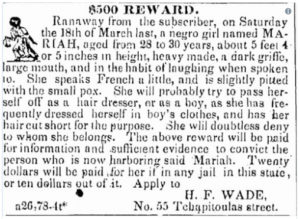 The Freedom on the Move (FOTM) public database project at Cornell University is a major digital database effort to bring together North American fugitive slave advertisements in newspapers from regional, state, and other collections – and online volunteers will be invited to add data tags to the screened entries and to transcribe the ads. This online public engagement by FOTM will allow database users to examine spatial patterns and compare trends over time.
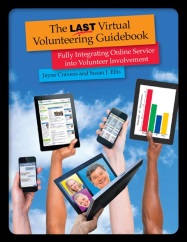 A shame organizers aren’t calling this a virtual volunteering initiative – because it is! Instead, they use the term “crowdsourcing.” It’s also a micro-volunteering initiative. I hope at least the organizers of this initiative will consider reading The LAST Virtual Volunteering Guidebook. The book, which I co-wrote with Susan Ellis, has lots of detailed suggestions and specifics about virtual volunteering, including task and role development, suggestions on support and supervision of online volunteers, guidelines for evaluating virtual volunteering activities, suggestions for risk management, online safety, ensuring client and volunteer confidentiality and setting boundaries for relationships in virtual volunteering, and much more. The LAST Virtual Volunteering Guidebook is available both as a traditional printed book and as a digital book.
 The next time you see a glowing article about or an interview with a woman who has started her own initiative or nonprofit in the town or neighborhood where she lives, or who is running for office, or who is leading a fight against some polluter or oppressor in her area, no matter what country it’s happening in, consider what this woman is probably dealing with that isn’t talked about in the article: vicious, constant personal attacks and criticisms.
 But some people didn’t like her success. A small minority of participants provided constant public and private criticism of how she moderated and facilitated activities and how she reinforced the goals of the project, and rarely was the criticism constructive. People who violated the project’s policies – policies that are in writing and about which regular reminders are sent – were angry when they were gently reprimanded, even if that reprimand happened well behind the scenes, discreetly. They were furious when their actions, in violation of the written policies, lead them to being blocked from further participation. The founder received personal insults via direct message and text, like the one posted next to this paragraph (it’s one of the milder ones, actually). At least one person created a fake account on Facebook and posted outrageous messages, trying to make people think it was the group founder. At least three rival projects were launched by disgruntled former participants – all failed after just a few weeks or months. But that tiny, vocal, persistent minority and their constant insults and attacks finally did her in: after four years, she resigned her role as project owner and manager, not because she thought the project needed fresh leadership, not because there were people who had demonstrated that they were ready to take over, but because, emotionally, she just couldn’t take the belittling and abusive comments anymore. It will now be up to the remaining volunteers to keep the project going. And maybe the project will continue. But what I’m worried about is that she’s probably going to continue to be targeted for comments by people in any endeavor she undertakes in this small town because she DARED to lead.
 I thought it would be fun to start the New Year off with some humor.
 I wrote 80 blogs in 2018, including the one you are reading now. It was a prolific year in terms of writing. No idea why I had so much to say this year.
At the end of each year, I like to review the stats of my blogs and see which were the most read – and which seemed to be overlooked. It’s a review I publish more for me than my blog readers. But note that it’s something you need to be doing with your blog entries as well, so you can look for trends, so you can try to understand why one blog was well-read and another was overlooked, etc.
My top blog in 2018, BY FAR, was this one:
I wrote 80 blogs in 2018, including the one you are reading now. It was a prolific year in terms of writing. No idea why I had so much to say this year.
At the end of each year, I like to review the stats of my blogs and see which were the most read – and which seemed to be overlooked. It’s a review I publish more for me than my blog readers. But note that it’s something you need to be doing with your blog entries as well, so you can look for trends, so you can try to understand why one blog was well-read and another was overlooked, etc.
My top blog in 2018, BY FAR, was this one: 
 Budapest, Hungary is one of my very favorite cities, and not just because I think it has the BEST FOOD IN THE WORLD. Budapest has what I consider the perfect mix of gorgeous history all around and vibrant new ideas from its young people. It feels unique and ancient while also feeling bold and progressive. It’s an energy that both preserves what’s best about a community or country (history, architecture, environment, the arts, etc.) and helps it prosper and move forward, particularly in times of great economic and cultural change.
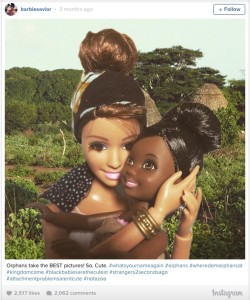 Katie Meyler of the USA wanted to save girls in Liberia from sexual exploitation, to educate them, empower them, keep them safe. She founded a charity called More Than Me and quickly raised more than $8 million for her efforts. The first More Than Me project multiplied quickly to 19 schools teaching 4,000 students. When the Liberian president, who had won a Nobel Peace Prize for her fight for women’s safety, was asked what she wanted from those keen to help her country, she answered, “To expand Katie Meyler’s initiative to as many communities as possible.” Meyler rubbed shoulders with Warren Buffett, Bill Gates and Oprah Winfrey, and even get invited to the Obama White House.
 There are volunteers all over the world, right now, who are working to help impoverished people start small businesses and generate the income they desperately need to care for themselves and their families. They are training people in sustainable farming methods and ecological land management. They are helping build the computer literacy of a variety of people. They are training women in public speaking and in how to lead. They are training rural people in how to set up and operate groups that will identify their own most pressing community needs and communicate those needs to government and potential donors. They are helping refugees and immigrants learn local languages and participate in local civic life. They are helping to educate communities about HIV/AIDS and to not be afraid of those among them who are HIV positive. They are working to stop female genital mutilation. They are