Somewhere in Afghanistan, and Kenya, and Mexico, and all sorts of other “developing” countries, there is a woman who dreams – or dreamed – of being a filmmaker. Or a dancer. Or a comedian. Or a mountain climber. Or a skateboarder. Or a marathon runner. Or a creator of comic book super heroes. She has, or had, the drive, the passion, the desire, and maybe even the talent for it.
But while these women are – or were – physically and mentally able to do those things – they can or could do it – they are or were not allowed to do it – they may not do it.
Think of her: no one around her may be aware of this dream and she may suffer entirely in silence, burning with the desire to pursue this activity. But she doesn’t dare even try: imagine her showing up with her skateboard to a skate park and being chased away by the boys and men there. Imagine dancing as an act that would make her ostracized, at best, and even a target for killing by her own family, at worst. Imagine putting on a puppet show and the event being seen an act of subversion by the government because women performing in public, even with a puppet, is a no-no. Imagine wanting to run in foot races and becoming the target of a shaming campaign by local religious leaders.
Imagine just wanting to move your body a certain way, or just wanting to make people laugh, and being forbidden from doing that.
It actually doesn’t even have to be that dire to prevent a girl or woman from pursuing a dream: imagine a girl right here in the USA, someone who is black or of Latino or Asian heritage, or is perceived as a member of a tribal nation, who can’t get cast in even a community theatre play, can’t get on the lineup at a comedy club no matter how many open mic nights she participates in, can’t get anyone to watch the short, hilarious film she has on YouTube, gets ridiculed when she shows up at a Sci Fi convention, and on top of all that, gets demeaned by her family and peers for even trying to do any of those things. Think about all the years on Saturday Night Live that there was no cast member that was female and black – and, yes, there WERE, and are, female, black comedians.
I thought about this when I read Eric Idle’s autobiography, Always Look on the Bright Side of Life. I enjoyed it so, so much, but I also thought about what a privilege it is to be able to say, “I’m going to this open mic night and I’m performing a sketch.” Or to delight in being an outsider or being weird – doing things and pursuing dreams that are quite different from what is perceived as “the norm” by your family and friends and immediate community. It doesn’t sound like that big of a deal to make your family and friends and immediate community uncomfortable to most Americans – but it’s a huge deal for many people, especially women. Being able to do those things is a right, an opportunity, that millions of people don’t know and will never know. They won’t know them because of lack of opportunity. Because of culture. Or even because of laws and because of the danger.
Have you seen the videos of the rush for tickets in Bangladesh for Avengers End Game? I’ve watched them a few times now. I can’t see any women or girls in that rush. But I know there are women and girls in Bangladesh that would love to see that movie just as much as the men running for that box office.
I think about how lucky I’ve been in pursuing my dreams and passions, both professionally and personally and, yes, delighting in being different, an outsider. I’ve done some crazy things, and I have the photos to prove it – and thank goodness, a lot of times there was no camera around. It is a privilege to mortify your family in public by breaking out into song at inappropriate moments or to dance at the grocery store when a certain song comes on. It is a privilege for a teenage girl to prepare to go out to a midnight showing, dressed as a character in the movie, and for Mom to stare at her in silence for a few moments and then finally say, “Well, have fun.”
Professionally, things have slowed down for me substantially, and I have been lamenting that a lot, resenting it because I don’t at all feel ready to retire, but then I think of all those women and girls, in all those countries, in all those places, even right here in the USA, burning to do things they may not do. So I decided to amplify some of the NGOs working to help girls and women not only dream, but to pursue those dreams, that are so different than “the norm.” Afghanistan is near and dear to my heart, and here are some of the organizations that, were I a millionaire, I would love to support:
Bond Street Theatre has been working in Afghanistan since 2003. Its goal is to introduce theatre-based educational programs in Afghanistan, especially targeting women and girls who have few outlets for creative expression, and to help revitalize the performing arts after years of cultural repression.
Skateistan is an award-winning international non-profit organization providing programs combining skateboarding and education to children and youth in Afghanistan, Cambodia and South Africa. “Through the hook of skateboarding, we engage with children, especially girls and youth from low-income backgrounds, giving them access to safe spaces and education and provide valuable life skills that go beyond the skatepark and the classroom.”
The Afghanistan National Institute of Music (ANIM) “provides a dynamic, challenging, and safe learning environment for all students regardless of their gender, ethnicity, religious sect, or socio-economic circumstances. We focus especially on supporting the most disadvantaged children in Afghanistan – orphans, street-working vendors and girls.”
Community Supported Film fosters good governance and equitable societies by training grassroots activists in documentary filmmaking and using their films to inform public opinion and policy. This includes Afghanistan.
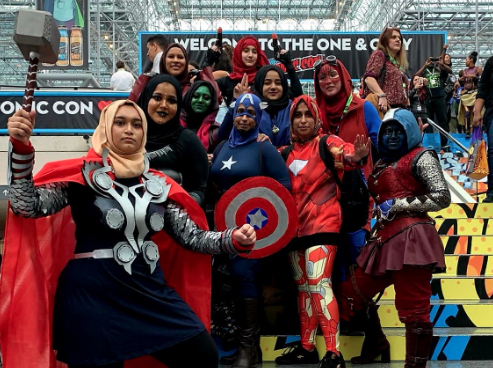
But you don’t have to look to Afghanistan or some other country to find girls and women and other marginalized groups worthy of your support in pursuing artistic or athletic dreams. In or near your community in a “developed” country, there are theatres, dance companies, music groups, even improv groups, as well as running clubs, hiking clubs, kayak classes, karate classes and more for immigrants, refugees, ethnic minorities, and, indeed, women and girls. Look for them, go see a performance or a match or whatever. Look for a roller derby bout in your area – roller derby is my favorite thing in Portland, Oregon. Look for women and girls on Twitter pursuing their cos-play dreams and “like” their posts. Blog about it. Share it on social media. And if there is a nonprofit associated with whatever it is you see happening, donate to it.
Also, check out Geeky Muslimah, a blog about “the Muslim geek experience,” and the Twitter account Black Girl Geeks.
And one final note: 14 years ago, I finished my Master’s project at Open University, on the non-artistic elements that need to be in place for theater, dance or other performance to work as a tool for development – as part of a public health project, a reconciliation campaign, an effort to change attitudes about something, etc. In case you want some light reading…
Updated April 15, 2021: A comic strip demonstrates the challenges women face online. It’s developed by Kenya ICT Action Network (KICTANet). In a story of three differently aged, differently shaped and differently employed women, we see what violence can look like online, how the seemingly harmless can actually contribute to it, and what we can all do to prevent it and to create a safer space for women online.
If you have benefited from this blog or other parts of my web site and would like to support the time that went into developing material, researching information, preparing articles, updating pages, etc., here is how you can help.
Also see:



 I have talked with women who help manage or even just use community tech centers all over the world – in Egypt, Afghanistan, Jordan and various countries in Africa – and very often, they have told me something that they never put into a program report for UNDP or whomever was funding the center: that the men and boys coming to the center used the computers to view porn more than any other subject.
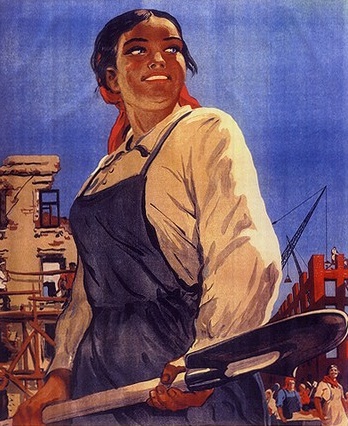
 The next time you see a glowing article about or an interview with a woman who has started her own initiative or nonprofit in the town or neighborhood where she lives, or who is running for office, or who is leading a fight against some polluter or oppressor in her area, no matter what country it’s happening in, consider what this woman is probably dealing with that isn’t talked about in the article: vicious, constant personal attacks and criticisms.
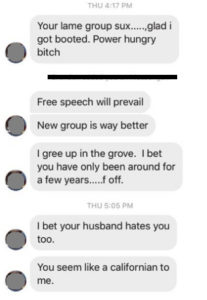 But some people didn’t like her success. A small minority of participants provided constant public and private criticism of how she moderated and facilitated activities and how she reinforced the goals of the project, and rarely was the criticism constructive. People who violated the project’s policies – policies that are in writing and about which regular reminders are sent – were angry when they were gently reprimanded, even if that reprimand happened well behind the scenes, discreetly. They were furious when their actions, in violation of the written policies, lead them to being blocked from further participation. The founder received personal insults via direct message and text, like the one posted next to this paragraph (it’s one of the milder ones, actually). At least one person created a fake account on Facebook and posted outrageous messages, trying to make people think it was the group founder. At least three rival projects were launched by disgruntled former participants – all failed after just a few weeks or months. But that tiny, vocal, persistent minority and their constant insults and attacks finally did her in: after four years, she resigned her role as project owner and manager, not because she thought the project needed fresh leadership, not because there were people who had demonstrated that they were ready to take over, but because, emotionally, she just couldn’t take the belittling and abusive comments anymore. It will now be up to the remaining volunteers to keep the project going. And maybe the project will continue. But what I’m worried about is that she’s probably going to continue to be targeted for comments by people in any endeavor she undertakes in this small town because she DARED to lead.