Commentary, resources & discussion re: nonprofits/ngos, communications, community engagement, volunteerism, effective humanitarian aid & development, ethics, women's empowerment & management ethics. Posts at least twice a month, usually on Tuesdays.
Humanitarian Advisory Group (HAG) and GLOW collaborated on Remote Monitoring in the Age of COVID-19 as part of HAG’s Humanitarian Horizons research program. HAG and GLOW have partnered on third-party monitoring and evaluation (M&E) assignments for a variety of aid and humanitarian donors, including the Department for International Development (DFID, UK) and DFAT, international NGOs (including Concern World and International Rescue Committee) and research institutes (including the Overseas Development Institute).
This guidance note can be used to:
plan remote monitoring approaches
raise awareness of remote monitoring best practices
advocate with donors for supporting remote monitoring requirements
Strong monitoring systems are important for effective program delivery in humanitarian contexts. During a global pandemic, there is a vital need for real-time data and evidence to inform responses to rapidly changing environments. However, collecting and using monitoring data to inform programming is often challenging. During COVID-19, this challenge is compounded by access, safety and travel restrictions.
In addition to implementing remote management and programming, humanitarian actors are initiating or scaling up remote monitoring. Agencies are re-evaluating their existing monitoring design and data collection processes, and recognising that new methods will require changes in staffing, working with partners and resourcing…
This note is intended to guide international and national operational actors on how to adapt and think about remote monitoring in the context of COVID-19. It provides a snapshot of key takeaways from previous research, and draws together emerging learning and guidance.
A helpful guidance note by USAID on remote monitoring approaches outlines a series of factors to consider before implementing remote monitoring. It also highlights which technological solutions to remote monitoring to use in different contexts.
Points of Light commissioned a research study to understand the state of American civic engagement – in all its facets – as of May 2020, and to explore the path forward for catalyzing deeper and broader civic participation. Researchers surveyed 1,441 adults in May for the report, which says it has a margin of error of plus or minus 2.8 percentage points.
The study found that the pandemic and other catastrophes prompted a surge in interest in volunteering in May: While only 36 percent of American adults say they volunteered within the last year, 60 percent said they are interested in doing so in May, and 73 percent said volunteering is more important than ever. According to the survey, Gen Z already demonstrates higher rates of civic engagement than older generations.
The study also found that 75 percent of Americans said in May that donating to nonprofits is more important than ever because of the Covid-19 crisis, while 54 percent reported giving to charity a year ago.
Note that by civic engagement, the survey did not just mean volunteering. Activities measured included:
Donated money to a nonprofit
Signed a petition
Purchase decisions based on company’s social responsibility
Participated in volunteer activities
Posted or started group/campaign for issue on social media
Contacted elected official about issue
Considered applying/taking job because of company’s social responsibility
Attended demonstration or rally for issue
Public service thru military, elected office, nonprofit board
Voted in every/almost every election in past few years
Volunteer Preferences and the percentages of people that selected such:
Focus on global issues impacting our world: 18%
Not interact directly with people benefiting: 24%
Volunteer directly or with friends/ neighbors, not through organization: 28%
Participate at home/online: 30%
Activities where I help someone one-on-one: 27%
One-time activities: 29%
A much bigger group selected these “opposite” options of each of the bulleted items above:
Focus on issues directly impacting my community +37 —> 55%
Interact directly with people who are benefiting +22 —> 46%
Volunteer through an organization +15 —> 43%
Participate in person +12 —> 42%
Activities where I help groups of people +14 —> 41%
Activities that I can do on a regular basis +10 —> 39%
I hope that the way this was presented wasn’t done to imply that volunteering from home, online (virtual volunteering) doesn’t allow for volunteering activities that many people preferred: interacting with someone one-on-one, interacting directly with people benefitting, and focusing on issues directly impacting a volunteer’s community. All of these things are possible in virtual volunteering and have been the preferred activities of online volunteers, at least according to all of the research I’ve done since the late 1990s – indeed, when I’ve said that a greater portion of online volunteers want a more substantial experience than a few minutes of microvolunteering, a lot of tech bros – people with corporate backgrounds and tech backgrounds, not volunteerism backgrounds – have really pushed back. Yet, once again, the latest research shows it’s true.
According to the survey, the top barriers to volunteering (among those interested in volunteering who have not done so) are the following – the same things those of us in the volunteer management field have heard year after year:
Unsure how to get involved or where to find opportunities 44%
Cannot find opportunities near me 44%
Not sure what I can do that would be helpful 43%
Busy, don’t have time to volunteer 42%
Haven’t found a group of volunteers with whom I fit 41%
Haven’t found opportunities matching my skills, abilities 41% ‘
Rather do other things when I have free time 34%
Uncomfortable volunteering with people I don’t know 33%
Don’t believe my efforts will make a difference 26%
From the volunteer perspective, a worthwhile experience is:
discoverable. Can be easily found online.
local. Addresses an issue important to my community.
credible. Delivered by an organization with local/issue expertise.
social. Allows me to invite my friends and family.
authentic. Explains why my actions will matter, upfront.
personal. Allows me to engage with beneficiaries.
impactful. Shows me the outcomes of my actions.
repeatable. Provides an avenue for me to reengage.
This part was my favorite part of the study, in fact – what makes a worthwhile experience. How many managers of volunteer programs are going to use this to improve their own volunteer engagement schemes? And, again, this supports everything I’ve said about micro volunteering – it’s nice, it’s worth exploring, but it’s NOT what most volunteers are looking for.
Here’s the full research study. It would be fascinating to compare this to now – in May, the country was experiencing a pandemic “surge”, where people were feeling optimistic and community-minded. Now, it’s almost October, and we’re most definitely in pandemic “fatigue” where people are feeling anxious, even negative, and rebellious.
As of July 2019, Reddit ranked as the No. 5 most visited web site in the USA and No. 13 in the world. Reddit is a community of communities, and its communities are called subreddits. Statistics suggest that 74% of Reddit users are male. Users tend to be significantly younger than other online communities like Facebook with less than 1% of users being 65 or over.
If you want to reach a younger demographic regarding your volunteering opportunities, your awareness messages, your data that shows your value to the community and more, you need to build posts to Reddit into your marketing strategy, no matter what your nonprofit’s size or focus. This resource tells you how to do it. It covers how to find subreddits to join or read regularly based on your nonprofit or NGO mission, how to choose a user name, how to guide staff who may already have a Reddit user account, whether or not you should create your own subreddit and more.
And note: manging your Reddit presence and monitoring Reddit for discussions about your organization or program is a terrific role for an online volunteer!
If you have benefited from this blog or other parts of my web site and would like to support the time that went into researching information, developing material, preparing articles, updating pages, etc. (I receive no funding for this work), here is how you can help.
For a couple of decades now, volunteers have been getting together for intense, one-day events, or events of just a few days, to build web pages, to write code (hackathons, apps4good, etc.), to edit Wikipedia pages, to transcribe historical documents and more. These have usually been, in the past, gatherings of onsite volunteers, where everyone is in one location, together, but even before the global pandemic, these activities were involving or mobilizing remote volunteers – online volunteers helping from wherever they were in the world.
This resource has been revised to take into consideration more virtual volunteering / remote volunteering, rather than everyone being in the same room. The revision, with greater emphasis on remote volunteers, was prompted by probably half a dozen inquiries to me in the last four months saying something along these lines:
We have all these corporations / businesses calling us because nonprofits have suspended their onsite volunteering. These companies want to engage in group online volunteering, but don’t know what that would really look like.
But with all that said, businesses/corporations also need to keep in mind that nonprofits are under terrific financial strain right now. They need to consider this recent blog by Jerome Tennille, which says in part:
Many companies are seeking to pivot successfully from in-person employee engagement to forms that allow for social distancing whether virtually or remote. In their quest to achieve this some companies have sought to place that burden on their non-profit partners in the communities they serve. Unfortunately, by placing this responsibility on the non-profit organizations…
Remember: Volunteers are not free for the nonprofit or community group expected to involve them. If you ask an agency to create volunteering opportunities specifically for your employees, you are asking them to spend money and resources they may not be able to afford – so be ready to make an appropriate financial – CASH – donation to a nonprofit or school if you want a customized volunteering gig for your employees at that nonprofit or school. Here’s more advice on how to create successful and appropriate volunteering activities for employees.
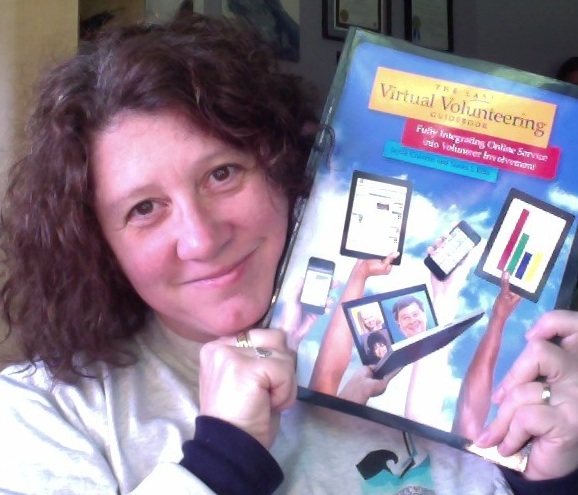
For much more detailed advice on creating assignments for online volunteers, for working with online volunteers, for using the Internet to support and involve ALL volunteers, including volunteers that provide service onsite, and for ensuring success in virtual volunteering, check out The Last Virtual Volunteering Guidebook. Tools come and go – but certain community engagement principles never change. You will not find a more detailed guide anywhere for working with online volunteers and using the Internet to support and involve all volunteers – even after home quarantines are over and volunteers start coming back onsite to your workspace. It’s available both as a traditional paperback and as an online book. It’s co-written by myself and Susan Ellis.
If you have benefited from this blog or other parts of my web site and would like to support the time that went into researching information, developing material, preparing articles, updating pages, etc. (I receive no funding for this work), here is how you can help.
How did I miss this wonderful 2014 review by Thomas W. McKee of The Last Virtual Volunteering Guidebook: Fully Integrating Online Service into Volunteer Involvement, a book I co-wrote with Susan Ellis? Somehow I did – I just recently found it on the Amazon page for the book:
Since most books on technology are outdated by the time the ink dries on the printed version, I teased Susan Ellis about using the word “LAST” in the title of a book about virtual volunteering. She assured me, however, that the word “LAST” was carefully chosen for a very specific purpose. After reading the book, I now understand the wisely chosen word “LAST.” The authors do acknowledge that the technology tools we use today will change, but the principles outlined will always apply to future virtual volunteering because Guidebook is not just another book on technology. It is a book on the integration of technology into all aspects of volunteer engagement so that organizations avoid the silo compartmentalization of virtual vs. traditional volunteers.
Wow. This is exactly how Susan and I tried to write this book!
What we don’t mean is that there will or should never be a further need to write or talk about the latest developments in engaging volunteers online.
What we do mean is that, from this moment on, we hope that talk about virtual volunteering won’t be segregated to a separate book or separate chapter at the end of a book about volunteer management. Our dream is that this is a turning point regarding talk and training about volunteer engagement, and
any book about volunteer management, whether it’s a book about basic principals in general, group volunteering, episodic volunteering, skills-based volunteering, teen volunteering, whatever, has advice about using the Internet to support and involve volunteers integrated throughout the material.
any workshop about some aspect of volunteer management, whether it’s about the fundamentals of volunteer management, recruitment, risk management, adults working with children, whatever, fully integrates advice about using the Internet as a part of those activities.
In short, NO MORE SEGREGATION OF INTERNET-MEDIATED VOLUNTEERING in books about volunteer management, in workshops about volunteer management, and in references to volunteer engagement, as a whole. Virtual volunteering should not be an “add on” in any of these scenarios – not only in a book or training about volunteer engagement, but also, not in any volunteer engagement scheme at any organization. In fact, our dream is that we no longer hear about onsite volunteers as one group and online volunteers as another, separate group when talking about how to work with volunteers – how about we talk about volunteers, period? The exception: research. Absolutely, let’s have research on virtual volunteering, specifically – but NOT the motivation of online volunteers (enough!). Let’s have research that organizations actually need. What do they need? ASK THEM.
The Last Virtual Volunteering Guidebook:Fully Integrating Online Service Into Volunteer Involvement is available both as a traditional print book and as an e-book. Tools come and go, but certain community engagement/volunteer management principles never change. You will not find a more detailed guide anywhere for working with online volunteers and using the Internet to support and involve all volunteers – even after home quarantines are over and volunteers start coming back onsite to your workspace. Reviews assignment creation, changes you will need to make to policies and procedures, how to evaluate your program’s effectiveness, how to build a sense of team among online volunteers and so, so much more. And if you are a volunteer at a school or a concerned parent of a student at a school and you know that school might be considering online mentoring or online tutoring, I hope you will consider buying The Last Virtual Volunteering Guidebook and giving it to the volunteer coordinator at the school, who may not have the budget for such.
We published this six years before COVID-19 / the novel coronavirus, and never thought about how a global pandemic, social distancing and home quarantines would lead to a sudden, urgent rise in interest in virtual volunteering. I’m just glad the book is seeing such renewed interest (far more have been sold this year, in 2020, than even in the first year it was published).
Back in the late 1990s, I was invited to speak and train at what I was told was a state PTA conference in a state different from where I was living. The list of other invited speakers was shared with me by the organizer and I was deeply impressed and honored to be a part of such a lineup. I wasn’t paid by the organizer for the work, but that was fine – I saw it as a part of what I was already being paid for in my job directing the Virtual Volunteering Project. All of my travel and hotel expenses were to be paid.
The date arrived, I flew to the location, I picked up my rental car and I drove to my hotel. The next day, I drove to the location of the conference, and as soon as I walked in, I realized things were not what they had seemed via email and phone calls from the organizer: this was not, in fact, an official PTA conference: a representative from the state PTA approached me to say that they didn’t know about the conference being organized in their name by this local member until the last minute. The organizer was putting all of the expenses on her credit card, expecting the state PTA to reimburse her, and she had no signed contract with them for anything. The conference was in an un-airconditioned junior high school in the middle of summer, in a state notorious for its heat and humidity, the seating was for children, not adults, and there was an un-airconditioned school bus for taking attendees around to the city’s sights that afternoon. The organizer showed signs of serious emotional instability that I won’t list here. After the first day, most of the speakers and half of the attendees had left, many of them asking me if I was going to stay or flee. I stuck it out over two days and nights, fulfilling my commitment to deliver workshops to the few that stayed and wanted to hear me. I left and never heard from the organizer again.
Misrepresentation and deliberate fraud in the nonprofit sector aren’t unusual. Sometimes, the person perpetuating the misrepresentation isn’t really aware that what they are claiming is unethical, inappropriate, or maybe even illegal – I think that was the case with the aforementioned conference manager. I’ve been contacted by people saying they work for a certain large, well-known newspaper who, in fact, have never had anything published in that newspaper or any other credible daily, but they felt like they could with the story they wanted to do with my help, that the newspaper knew nothing about – I am not sure that’s deliberate fraud as much as someone not understanding the appropriateness of claiming to represent a publication. I’ve heard from people who say they are doing a documentary film and want to interview someone at my organization, but when I do a little research, I find out that they haven’t produced any films before and people they have interviewed already for this project are a little afraid of them now after their encounters. I’ve seen web sites of people claiming to be operating a nonprofit that partners with various corporations and very well known nonprofits, but upon contacting people I know at said “partners”, they’ve never heard of the organization. And since that conference fiasco, I have been contacted by a few people putting together a conference or event that have never done so before, but think getting participation is just a matter of asking for such. In all of these cases, the people engaging in what I would call misrepresentation don’t think they are doing so: they are sincere in their belief that they are a legitimate, credible press representative, documentary filmmaker, nonprofit manager or event coordinator, and if they can get enough people to say yes to their request to meet or participate, they are going to be all that they claim to be. Take this Charity Fashion Show in San Francisco in 2010 – I think organizers probably really believed they were going to raise enough money to donate to charity, and had no idea just how expensive a fundraising event can be.
And then there are the ones who ARE aware they are perpetuating something unethical, like Community Service Help and the Caffeine Help Network and other like them, selling letters for people to use with courts that sentence them to a certain number of community service hours – thankfully, state attornies general are cracking down on such. Or people claiming to be putting on a fundraising event, looking for donations and sponsorships, but most of the money goes to “expenses” – like the We Build The Wall effort or the Trump Foundation.
No matter the focus of your nonprofit, non-governmental organization (NGO), charity or consulting business focused on such, you need to do at least a bit of vetting on any press person or documentary filmmaker who wants to interview someone from your program, or any person you are thinking of inviting to speak as part of a panel or conference, or any community group asking to partner with you, etc.
If the person lists conferences where they have spoken or organizations they’ve have consulted for, ask to talk to a representative from at least one of those entities to confirm that really happened, look at old versions of web sites on archive.org to make sure the person is listed in the lineup, or ask for a link to an online video showing the speaker addressing the audience.
If the person says they are a writer, ask for samples of their published work. If they say they are a filmmaker, ask for links to their work online. Do they have a YouTube or Vimeo channel you can review?
If the person claims to have managed events, ask for photos of the event, scans of published material that publicized the event, a blog about the event written by an attendee, event participation surveys, etc. For their most recent events, they should be able to provide dates, number of participants, measures of success, etc. – for instance, if the person says their initiative organizes teen hackathons, what were the dates of those hackathons, how many teens participated in each, where were they and where is the list of apps that were developed?
Type the person’s name into Google or Duck Duck Go and see what comes up. If you start to feel suspicious, type in additional words, like scam or investigation or complaint and see if any blogs or articles come up. But be careful if something does come up – it’s harder and harder to find a person or company who HASN’T had a complaint lodged against them.
Even the newest nonprofit or NGO should have a web site that lists its board of directors, staff members (and their credentials), and either their most recent yearly financials/annual reports or their proposed budget for the first year.
With all that said, people do have to start somewhere if they are an aspiring nonprofit founder, an aspiring filmmaker, aspiring podcaster, aspiring designer, etc. Someone with not much of a track record at doing what they say they want to do might not automatically mean that someone is trying to do something nefarious, or that the person is someone with a mental illness. But if someone says they are a blogger, there should be a blog to read. Someone starting an event management business should have amateur experience managing some kind of events – weddings, reunions, small nonprofit events, etc. – and references to affirm their abilities. Someone who says they do video production will have at least a few videos online you can view. And while I have managed many high-profile events where it would have been inappropriate to let anyone but credentialed press representatives inside to cover such, I’ve also managed community events where an aspiring, unaffiliated journalist or university journalism student would have been welcomed to come in and observe and write about it as they like.
In short: don’t automatically take someone’s word for their credibility, or that of the program they claim to represent. Never automatically accept any proposed speaker, journalist, committee member, program partner, panelist, trainer or advisor without at least a little bit of research. Get used to saying, “Thanks for your information / inquiry / proposal / email. First I need a few days to check your web site OR do you have a web site I could review? OR could you let me know the name of your contact at the such-and-such foundation, so I could confirm your affiliation?” And make sure all staff, including volunteers, know how to route emails and calls about donations, partnerships and conferences and calls from the press.
Ethics of paying to volunteer online (reviews, at the end of the blog, some criteria to use to evaluate the credibility of a volunteer-involving organization)
The Information About & For Volunteers You Should Have on Your Web Site: If your program involves volunteers, or wants to involve volunteers, there are certain things your organization or department must have on its web site. To not have this information says that your organization or department takes volunteers for granted, does not value volunteers beyond money saved in salaries, or is not really ready to involve volunteers.
Nonprofits, schools, charities, NGOs: you have every legal and moral right to require onsite volunteers to properly wear masks or face shields during service, and to ask a volunteer to leave that refuses to comply.
Just make sure that you have communicated with volunteers in multiple ways about the requirement at your volunteer sites for face masks and social distancing and any other safety measures related to COVID-19 or any other issue of concern. You should:
Email all volunteers directly.
Include the notice in your regular newsletter.
Add the notice to your web pages regarding volunteering with your program.
Post it to your online discussion group for volunteers.
Send a reminder to all volunteers the day before they are going to show up onsite for volunteering service.
If you can text volunteers with a reminder, do that too! You may want to do a YouTube video of your Executive Director stating this policy, for a more personal touch – as well as to show that this is a policy that is supported from the very top.
And here’s a sample of communication via email, in your newsletter or via a video:
As we have all probably heard by now, wearing a mask helps to drastically reduce the spread of COVID-19. By your wearing a mask or face shield, you help to prevent others from catching the Novel Coronavirus – remember, you may have it but not be showing any symptoms, and even if you are not showing symptoms, you can spread this virus. The safety of our volunteers, clients and staff is of paramount importance to our program, and it is only if we all wear masks or face shields and socially distance that we can continue to operate at least some of our onsite programs. This link goes to our state’s public health agency and has guidance on the proper way to wear a mask. (add in the link).
If you cannot or will not wear a face mask or face shield, you will not be able to volunteer onsite with our program at this time, but you are welcomed to help us as an online volunteer by… (add in your virtual volunteering roles here).
If you don’t feel comfortable volunteering onsite now, we completely understand, and we hope you will consider volunteering with us online by… (add in your virtual volunteering roles here).
If you have any questions, please contact… (add that person’s name and contact info).
Thank you so much for all of your volunteer support. We will get through this together, and we’re committed to all of us getting through this.
Also:
Your paid staff need to adhere to the same rules regarding face masks and social distancing.
If you think some volunteers may not be able to access a proper facemask, provide links on where to find free or affordable facemasks.
Tell the person who will see volunteers first at a site what they should say to someone who approaches and is not wearing a mask, or is not wearing it properly, and to whom they should report anyone who becomes upset or refuses.
Thank volunteers repeatedly for wearing a face mask or face shield correctly.
You may lose volunteers over this policy, but losing volunteers because of how they feel about a public health issue is far preferable to spreading COVID-19 to volunteers, clients or staff.
On the flip side, volunteers have every right to refuse to volunteer onsite at a program that does not require staff and clients to properly wear masks or face shields. Before you volunteer onsite, ask the program what measures are in place to help prevent the spread of COVID-19. Again, these are the requirements I believe programs should adhere to during this pandemic. If you decide you cannot safely volunteer, write an email saying so (and you may want to write the board of directors as well).
Also see:
Dealing with customers with diminished mental capacities: No matter what business you are in, you encounter people with diminished mental capacities. They may be job applicants, they may be applicants to volunteer, they may be attendees to a public event, they may have paid to be a part of a service you have offered, such as a class or a hackathon. In thinking about customers and clients and public spaces, including online spaces, nonprofits, NGOs, charities, libraries and others need to consider how to balance the priorities of the program and the needs of other clients and customers with the rights of a person with diminished mental capacities who, just like any member of the public, has a right to attend any public events, speak with you in public, come into your lobby to make inquiries, apply to volunteer, apply for a job, comment on your blog, blog about your organization, etc. But what do you do when the behavior becomes disruptive?
For volunteers: how to complain: Sometimes, your attempt at donating your time and skills doesn’t work out so well. How do you complain so that your volunteering experience could be improved?
Have you enabled a Larry Nassar?: Before you think that all is safe and well at your organization, consider how you react to complaints from clients, volunteers and others, especially people expressing concern over someone you admire.
If you have benefited from this blog, my other blogs, or other parts of my web site and would like to support the time that went into researching information, developing material, preparing articles, updating pages, etc. (I receive no funding for this work), here is how you can help.
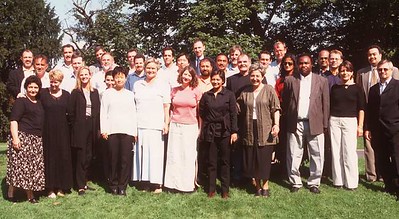
20 years ago this week, an incredible opportunity came my way, out of the blue: I was invited to Germany by a program of the United Nations, to be a part of a group exploring how information communications technologies – ICTs, computers, PDAs, and the Internet – were transforming communities all over the world and the role volunteers played in supporting and expanding the use of ICTs to support a whole range of activities: health education, agriculture, governance, small business development and more (ICT4D).
This is from the original United Nations communications about this event:
Close to 30 experts in development and information and communication technologies (ICTs) met for a workshop from 21 to 23 August at the headquarters of the United Nations Volunteers programme (UNV) in Bonn, Germany, to discuss ways how volunteers can assist developing countries in the application of ICT to human development. Representing a wide range of organizations from all over the world, the workshop participants focused their discussions on how to launch operations of the United Nations Information Technology Service (UNITeS), a volunteer initiative to help bridge the digital divide. UN Secretary-General Kofi Annan asked UNV to take the lead in bringing together a coalition of partners to launch the new initiative, which was announced in April.
I was invited to participate because I was directing the Virtual Volunteering Project at the University of Texas at Austin, and was frequently posting to various online communities about working with online volunteers and how volunteers were participating in various community technology initiatives. A UNV staff member saw my posts on a group called CYBERVPM and some other online communities, passed on my information to another staff member looking for advice, and the rest is history.
The role volunteers have played in helping people use online technologies cannot be under-estimated. Volunteers were the primary staffing for most community technology centers and nonprofit Internet cafés, helping people to get their first email address, surf the web and find essential information. The Community Technology Network, ctcnet.org, compiled best practices from community tech centers all over the world, sharing these on their web site for anyone to access – you can see these resources yourself by going to The Internet Wayback Machine and looking for www.ctcnet.org yourself.
Because of this invitation, my life changed forever: at the end of the event, held at the headquarters of the United Nations Volunteers program, I was invited to apply for a new position that was being created at UNV to manage the online volunteering part of NetAid, which I later successfully moved entirely to UNV and it became the Online Volunteering Service, I also co-managed the United Nations Technology Information Service (UNITeS), the Secretary General’s ICT4D initiative born out of this meeting – it was a global initiative to help bridge the digital divide that both supported volunteers applying information and communications technologies for development (ICT4D) and promoted volunteerism as a fundamental element of successful ICT4D initiatives.
20 years. It’s just so hard to wrap my head around it being two decades since this happened. I will always be grateful for the circumstances and people that earned me the invitation to this meeting. I will always be grateful to have had these 20 years since.
I’m the girl in the peachy/pink shirt in the middle of this photo, by the way… if you are in the photo, please comment below!
It is not unusual, nor automatically unethical, for a program to charge people who want to participate as a volunteer in a program. Even the Girl Scouts of the USA asks volunteers to pay a very small fee to become an official member (but will waive that fee for anyone who says they cannot afford it), and some Habitat for Humanity chapters and food banks asks groups coming from one organization, particularly from the corporate world, to pay a fee to help cover the costs of staff that set up the site for their feel-good-for-a-few-hours volunteering gig.
Volunteers are not free: people have to screen applicants (and even if a program has an automated system that screens applicants, someone has to be paid to build that system), train those volunteers (again, even if this is an automated system, someone usually has to be paid to build it), support the volunteers, track their progress, etc. Volunteers might be asked to pay for their own criminal background checks or a uniform as well. Most programs that have a cost they ask volunteers to pay will waive that cost for any qualified applicant who says they cannot afford it.
There are also online programs that ask volunteers to pay a fee in order to participate in their virtual volunteering activities. There are the programs I consider ethical, like Business Council for Peace (BPEACE), a USA-based nonprofit that recruits business professionals to help entrepreneurs in countries emerging from conflict to create and expand businesses and employment (particularly for women), like El Salvador and Guatemala. Bpeace asks its Skillanthropists to make a monthly donation during their participation, which both helps cover just a bit of BPEACE’s costs and which makes the volunteers financial investors as well, which can help with retainment. There are also university programs that have pivoted their student volunteering programs abroad to online versions because of the COVID-19 pandemic, and the tuition that students pay to participate helps cover the substantial administrative costs of converting these programs online (including hiring me sometimes – I’ve done workshops for two universities to prepare their administrative staff, partner NGOs and students for virtual volunteering – that work earlier this year lead me to create this robust list of high-impact virtual volunteering projects).
But there are the online programs I consider highly unethical for asking volunteers to “donate.” For instance, there’s a nonprofit that has no list of board of directors or staff – just lots of information about its founder (and, apparently, sole employee), who wants to charge people $250 “to initiate” a request to volunteer with the initiatives it says it has created, like a “teen hackathon” that has no dates of actual hackathons and stock photos (not photos of its supposed events – probably because there haven’t been any). This “organization” also has an emphasis on recruiting volunteers who can develop iOS Mobile Apps so the nonprofit to accept donations, and to “conduct a fundraiser for your app development” for its program. And it wants volunteers to, on its behalf conduct “outreach to employees of matching gift companies” to donate to the “nonprofit” – thereby doubling the gift.
There are also programs, many of which that used to regularly post to the volunteer sections of Craigslist, claiming that if you will “fundraise” (pay) a certain amount for a nonprofit with a dubious, vague mission statement, the nonprofit will provide a letter saying you did a certain amount of community service (volunteering) hours for them – how many hours they will say depends on how much “fundraising” you did (how much you pay them). There’s also “nonprofits” that say you can pay to “take courses online” and then get a certificate asserting how many hours you spent in those “community service” classes.
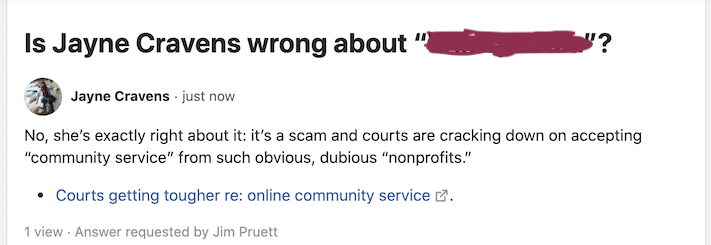
One person got so frustrated with me outing their “nonprofit” for being a scam that they created a Quora question specifically about me.
My advice: NEVER make a donation in order to volunteer online unless the program:
is a 501 c 3 listed on Guidestar (if in the USA) or is a long-established, credible PUBLIC university.
lists its board of directors, staff members (and their credentials), and yearly financials/annual reports.
lists events and program it has undertaken, with dates, number of participants, measures of success, etc. – if it says they do teen hackathons, what were the dates of those hackathons, how many teens participated in each, where were they and where is the list of apps that were developed?
will put you in touch with an actual, long-term online volunteer with the program who will answer your questions via phone or video conference.
will say, in writing, that the photos on its web site are NOT stock photos but are, in fact, photos of volunteers, clients or other participants (or, if not, has an excellent reason for using a stock photo).
If any news reporter wants to do a story specifically about these virtual volunteering scams and wants the names of actual programs I consider unethical and, possibly, illegal, email me at jayne @ coyotebroad.com (note spaces) and I will be happy to pass over the list I maintain. And I’m happy to be interviewed about these programs and how people can know the difference between legitimate virtual volunteering programs online, like these, and those that are there primarily to take your money.
For very detailed information about the qualities of a credible virtual volunteering program, including online mentoring programs, there is The Last Virtual Volunteering Guidebook, available for purchase as a traditional print book or as a digital book. You will not find a more detailed, realistic guide anywhere for working with online volunteers, for using the Internet to support and involve all volunteers, and for evaluating the effectiveness and results of virtual volunteering activities. It’s a book written for those managing programs that want to involve online volunteers or to better support traditional volunteers with online tools, for those that want to improve their existing virtual volunteering programs, and for those undertaking research regarding virtual volunteering for any reason. If you are a consultant that wants to train others regarding virtual volunteering, this is your guide on how to become an expert (along with volunteering online and engaging volunteers yourself, which is essential to be a credible trainer).
August 24, 2020 update: here are four articles from other organizations and consultants that talk about how to evaluate the credibility of a nonprofit or charity before you donate or volunteer:
NonprofitsFirst has a set of Accreditation Standards “to support organizations in achieving the highest levels of nonprofit excellence” & the standards are great measures to use when evaluating any nonprofit’s credibility.
Also see, from, my web site, these resources on evaluating a nonprofit’s credibility:
The Information About & For Volunteers You Should Have on Your Web Site: If your program involves volunteers, or wants to involve volunteers, there are certain things your organization or department must have on its web site. To not have this information says that your organization or department takes volunteers for granted, does not value volunteers beyond money saved in salaries, or is not really ready to involve volunteers.
July 12, 2022 update: I just found a company promoting virtual volunteering to support communities in the developing world – and it requires online volunteers to pay to participate: the one-month fee is $800 and the six-month fee is $2300. These fees are absolutely outrageous and entirely uncalled for. I’m not linking to them, just as I don’t link to other unethical programs, because I don’t want to promote them, but if you want to know the name of such, especially if you are from the media, feel free to contact me.
June 9, 2025 update: The debate about paying to volunteer continues to rage, especially regarding people paying to volunteer in another country. Is voluntourism always unethical? Believe it or not, I don’t think voluntourism is always bad. A change, I know… I can evolve!
If you have benefited from this blog or other parts of my web site and would like to support the time that went into researching information, developing material, preparing articles, updating pages, etc. (I receive no funding for this work), here is how you can help.
I am seeing questions on Quora and Reddit about what to do in a gap year from university during the pandemic, from people who seem to think that there’s a safe place to go, and a safe way to get there, without contracting nor spreading the novel coronavirus. It’s so frustrating – the reality is that no one should travel now unless it’s essential travel, and certainly not for a year: situations within countries, at borders and on airlines change dramatically from month to month, which can strand you somewhere abroad, with hotels or homestays closed, plus, you could contribute to the spreading of the virus, even if you never contract it yourself.
So, what ARE the options for a student who decides not to start a new semester or entire study year at a university in the Fall or Spring?
You could, in a gap year, or gap semester, stay in your community and:
The more you volunteer, the more you will be transformed by the experience, the more you will learn, and the more you should see leadership opportunities you might want to initiate or undertake. You may end up leading your own virtual project at a program you have worked with and established trust with.
You can also:
Trace your family tree, scan family photos, upload those photos online and record family members on video calls talking about family memories. There will never be a better time to work with family members online to get your family names and dates and places and stories recorded.
Study another language. Duolingo and Babbel are two great resources.
Take classes that are NOT offered at the university you will attend. Some good resources for free courses are Open University’s Open Learn and MIT’s Open Courseware.
The key to any of the above working is that you need a SCHEDULE and a COMMITMENT. Create a workspace where you will do these things. Carve out a regular time of day and days of the week you will do these activities. Create deadlines. Track your progress. Celebrate your accomplishments and results. Learn from your mistakes and challenges. Document your experiences with a journal or a blog or YouTube videos. And if you do this, then at the end of a year, you will have something much more substantial to show for it than Instagram photos that say, “Hey, look at me!” You will have something much more substantial than vanity volunteering. In fact, you will have proven you can work remotely, something employers very much like to see.
If you have benefited from this blog or other parts of my web site and would like to support the time that went into researching information, developing material, preparing articles, updating pages, etc. (I receive no funding for this work), here is how you can help.