Commentary, resources & discussion re: nonprofits/ngos, communications, community engagement, volunteerism, effective humanitarian aid & development, ethics, women's empowerment & management ethics. Posts at least twice a month, usually on Tuesdays.
I keep seeing this comment in blogs and articles and tweets:
“Will virtual volunteering continue after the pandemic is over?”
Of course, it will. Just as virtual volunteering was happening BEFORE the pandemic, at THOUSANDS of organizations. Why in the world wouldn’t it continue?
Altogether, these videos cover developing initial online roles and activities for volunteers, how to rapidly engage online volunteers, how to expand virtual volunteering, how to adjust policies, how to address safety and confidentiality, the importance of keeping a human touch in interactions, addressing the most common questions and resistance to virtual volunteering and much, much more. You have my permission to show them at any conference or workshop or class you might be doing regarding virtual volunteering.
For some more advanced topics regarding virtual volunteering:
If your program wants to better use online tools to support all of your volunteers, including those providing service onsite, or if your program wants to create a robust virtual volunteering scheme, such as an online mentoring program or online volunteer engagement as skills-building or other extension of your mission , check out the Last Virtual Volunteering Guidebook: Fully Integrating Online Service Into Volunteer Involvement. The book can help you fully explore the reality of remote volunteer engagement, in terms of policy and procedures, to ensure success. This book was helpful long before the global pandemic spurred so many organizations to, at last, embrace virtual volunteering. This is the most comprehensive resource anywhere on working with online volunteers, and on using the Internet to support ALL volunteers, including those you might not think of as “online” volunteers.
If you have benefited from this blog or other parts of my web site or my YouTube videos and would like to support the time that went into researching information, developing material, preparing articles, updating pages, etc. (I receive no funding for this work), here is how you can help.
By contrast, the current administration, headed by President Joe Biden, has designated $1 billion in the Fiscal Year 2021 Reconciliation Bill, known as the American Rescue Plan, for the Corporation for National and Community Service (CNCS). The investment will help to stabilize existing national service programs, increase the benefits for those who serve, and deploy additional full and part-time members to support their communities’ response to COVID-19.
Since the coronavirus outbreak, members of AmeriCorps and AmeriCorps Seniors have acted quickly and creatively to address gaps in services and persistent inequities that have only been worsened by the pandemic… The additional funding provides a triple bottom line: the opportunity to engage more Americans in pandemic relief efforts, such as helping schools safely reopen and tackling the growing hunger crisis; an important accelerator for increasing equity in national service; and a proven pathway help prepare young people prepare for future jobs, particularly for populations hardest hit by the pandemic.
Make no mistake: this funding from Congress, lead by the President is, in part, because of vocal activism by nonprofits and others to their US Representatives and Senators. It’s long overdue for nonprofits to speak out on these and so many other issues. You ARE allowed to do this if you have nonprofit status!
FYI, Voices for National Service was founded in 2003 and is a coalition of national service programs, state service commissions and individual champions, who work to ensure Americans of all ages and backgrounds have the opportunity to serve and volunteer in their community.
If you have benefited from this blog or other parts of my web site and would like to support the time that went into researching information, developing material, preparing articles, updating pages, etc. (I receive no funding for this work), here is how you can help.
Back in 2012 and 2013, I was part of the ICT4EMPL Future Work project, focused on the countries of the European Union and funded by the European Commission. The overall project aimed to inform policy regarding “new forms of work” and pathways to employability that involved online technologies. The overall ICT4EMPL project produced a series of reports on the state of play of novel forms of internet-mediated work activity: crowd-sourced labour, crowdfunding, and internet-mediated work exchange (timebanks and complementary currency) and, of course, internet-mediated volunteering (virtual volunteering).
Traditional volunteering – onsite, face-to-face – has been a good source for people to acquire or enhance new skills, explore careers and network with others all towards improving their employability. As the paper notes, along with enhancing technical skills and subject knowledge, employers also want other skills, many of which can be acquired through virtual volunteering:
Communication and interpersonal skills,
Problem-solving skills,
Using your initiative and being self-motivated,
Working under pressure and to deadlines,
Organizational skills,
Team working,
Ability to learn and adapt,
Numeracy,
Valuing diversity and difference
This chapter of my paper looks at how virtual volunteering can help to enhance those skills, as well as challenges and risk in promoting online volunteering as a route to employability.
If your agency or organization is considering virtual volunteering as a path to helping people become more employable, check out the Last Virtual Volunteering Guidebook: Fully Integrating Online Service Into Volunteer Involvement. The book can help you fully explore the reality of remote volunteer engagement and what you and partner organizations will need to put in place, in terms of policy and procedures, to ensure success. This book was helpful long before the global pandemic spurred so many organizations to, at last, embrace virtual volunteering. This is the most comprehensive resource anywhere on working with online volunteers, and on using the Internet to support ALL volunteers, including those you might not think of as “online” volunteers.
If you have benefited from this blog or other parts of my web site or my YouTube videos and would like to support the time that went into researching information, developing material, preparing articles, updating pages, etc. (I receive no funding for this work), here is how you can help.
I really do mean that headline: I hope we will stop talking about virtual volunteering.
What I mean is: I hope we will stop talking about online volunteers versus onsite volunteers. I would be so happy to never hear the phrase “virtual” volunteers, distinguishing them from “real” volunteers, ever again. I hope that, at last, all managers of volunteers realize they need to be using the Internet to engage and support ALL volunteers.
Co-author Susan Ellis and I wanted The Last Virtual Volunteering Guidebook to be a turning point, to be the last time anyone talked about using the Internet to engage and support volunteers as something separate and completely different than engaging and supporting traditional onsite volunteers. We hoped the book would be the moment that virtual volunteering stopped being segregated to separate books or a separate chapter at the end of a volunteer management book or a separate workshop on volunteer recruitment, volunteer support, etc.
Sadly, the publication of the book was not the turning point we were hoping for.
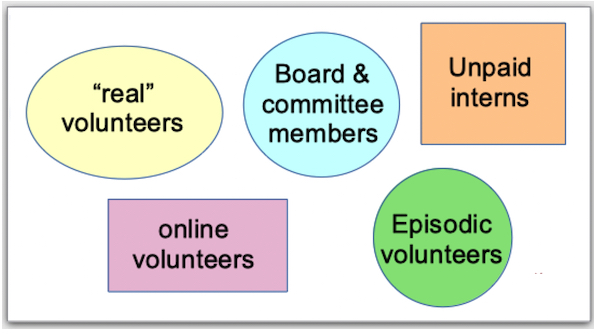
So… could the pandemic and the massive rise in popularity of virtual volunteering be that turning point? Could this be the moment that we stop thinking of volunteer engagement this way, with groups completely segregated from each other:
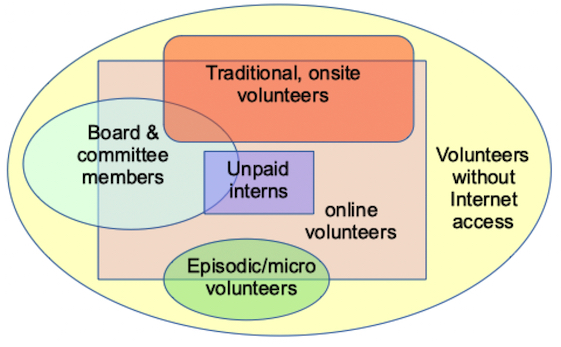
And, instead, we think of volunteer engagement this way, with everyone in the yellow oval being volunteers and intersecting together, and being in more than one grouping?
They are all volunteers. And unless the volunteers don’t have Internet access, you should be using the Internet to engage and support all of your volunteers – to refuse to do so creates so much more work for you, the manager, and leaves out so, so many people as volunteers – it undermines any goals you might have regarding diversity and inclusion.
(Yes, there are volunteers without Internet access – just as there are volunteers who don’t like your traditional thank-you banquet and choose not to attend, or volunteers who don’t like working with the public or in groups and prefer to work behind-the-scenes, alone. No one thing you do onsite, face-to-face is appropriate for all volunteers.)
If you are writing a book or teaching a class about the basics of volunteer management, it should talk about using the Internet to support and engage volunteers – not at the end, but throughout the book or workshop. If you are going to focus on how to
identify tasks for volunteers
recruit volunteers
keep volunteers engaged/volunteer retainment
recognize/honor volunteers.
Then you should be talking about:
identifying tasks people can do online, not just onsite
using the Internet to recruit volunteers for both onsite and online roles and tasks.
using Internet tools to keep volunteers engaged/volunteer retainment
using your web site, YouTube, social media and other Internet tools to recognize and honor volunteers.
You don’t even have to say the phrase virtual volunteering in your workshop or article. People don’t think of themselves as online volunteers – just as volunteers, so why are you talking about them as this completely separate group?!
The Last Virtual Volunteering Guidebook is a volunteer management book for anyone that supports or engages volunteers, or who cares about the overall volunteer engagement at their agency. The book has never been just for people that want to involve online volunteers. In fact, the book emphasizes support for ALL VOLUNTEERS more than any other topic. When Susan Ellis and I wrote The Last Virtual Volunteering Guidebook, we never envisioned a global pandemic creating this massive, sudden shift to virtual volunteering for so many agencies, and I’m glad the book has been helpful to so many in these trying, fatiguing times, but I worry that people are thinking of virtual volunteering as something that will go away when the pandemic eases. Just as virtual volunteering is a practice that’s more than 35 years old and undertaken by thousands of organizations long before 2020, it will continue to be not only a reality, and an expectation.
If you have benefited from this blog or other parts of my web site or my YouTube videos and would like to support the time that went into researching information, developing material, preparing articles, updating pages, etc. (I receive no funding for this work), here is how you can help.
In pre-pandemic times, an online meeting felt like a luxury, a welcomed relief from driving to a site or taking mass transit. Now, because of COVID-19. when the only way to safely work together is online or via the phone, we’re all burned out by online meetings, and there’s nothing virtual about our fatigue.
In addition, volunteering onsite is a way to be a different person than we are at our paid work or in a classroom or even with our families. It’s a way to feel like we’re making a difference in the world. It can be a refreshing change from other parts of our life. For people that live alone, volunteering onsite can provide a much needed social life. While I think online volunteering can be wonderfully personal, I also know that virtual meetings, virtually all the time, is not the world most of us want to live in.
Volunteers are exhausted. Many that still have jobs and struggling to do those and assume new family care obligations – children are in virtual school and some older relatives have moved back in with younger family members. Many are having to look over their finances every day. Most everyone is scared of for their own health as well as everyone else in their household. And many people, especially living alone, are oh-so-lonely. Volunteering these days doesn’t offer the time out it did in pre-pandemic times – it can just feel like another online meeting.
But nonprofits still need volunteers, and volunteers still need volunteering. I know so many nonprofits, NGOs, charities and other groups have a huge amount on their plate these days and far more stresses than usual, but we all need to take a deep breath and spare some thoughts for both our current volunteers and those we want to recruit.
How to Recruit & Engage Volunteers in a Time of Virtual Fatigue, an article is by WBT Systems, which produces TopClass LMS, a learning management system for membership-based associations, has great advice for any program involving volunteers. It starts with some basics from quality volunteer engagement we should all know and apply even in non-pandemic times, like creating realistic roles for volunteers and emphasizing why the task matters to the program and the difference it will make. But then it gets into more specific advice that relates to current remote working challenges, which I’ve reframed and expanded below.
For instance, we all need to better commit to SHORT meetings that have a definite purpose and a definite start and end time. Don’t have a general, open group volunteer meeting; have a here’s-what-everyone’s-doing meeting, devoted exclusively to elevator speeches from each volunteer. Or have a celebrate-one-accomplishment meeting, devoted solely to quick updates. Whatever the meeting, be able to answer these questions: what do I want to happen as a result of this meeting? Why does this meeting matter? Why can’t you ask for this info via email?
I like to prepare my meetings as though it’s a stage performance: I like start and end on time and know exactly what I want to say, but also be ready for a spontaneous improv moment! I also am ready to facilitate: to frankly, politely tell a person who is going too long that we are going to have to table that discussion until later, for instance, because we need to hear from everyone.
Also regarding meetings, the article suggests telling volunteers you will open up an online meeting 15 minutes before the start and leave it open 15 minutes after so they have a chance for chatting, if they wish. I have REALLY enjoyed this in meetings and webinars.
I sometimes encourage people I’m meeting with to have the meeting in a different room than they are in usually – and I do the same. The same rules apply: you should be in a well-lit room that does not have lots of distractions, if at all possible (people walking through the space, intrusive sound, etc.). Otherwise, you might be surprised at how refreshing it feels to have a meeting in a different room, or even just in a different place in the usual room.
In addition, I like when I don’t have to have a full meeting to get a question resolved or check-in with everyone – I like having a Slack channel just for volunteers I’m working with, so they can check-in or ask a question of me, any time. It’s a virtual way of dropping by my office. And it keeps messages out of my email in-box.
The WBT Systems article suggests that you “Invite someone to Zoombomb the end of the meeting, perhaps the CEO, board chair or another leader who thanks the volunteers for giving their time and talent.” I LOVE this idea.
I’m somewhat tepid on the idea of things like encouraging everyone to wear a hat, or having everyone bring a toy to a meeting, etc. – the article doesn’t suggest this, but I’ve seen it elsewhere. I’m not big on ice breakers before every onsite meeting – I do not like having my time wasted, especially when I’ve schlepped across town or had to juggle to carve out time for a meeting, and everyone going around the room talking about who their favorite superhero is (Wonder Woman in the DC universe, Jane as Thor in Marvel). Online, I can find meeting games even more annoying. I want to feel like my time is valued and what’s most needed is getting done. In the end, you have to know your audience, you have to experiment and be observant, you have to be open to what is NOT working, and you have to work towards balance.
Don’t assume staff working with volunteers, or even volunteers themselves, understand how to lead and manage virtually. Yes, I’m going to yet again recommend The Last Virtual Volunteering Guidebook, which emphasizes support for volunteers more than any other topic. Also, if you have time, look for videos and articles that could help others, and if you don’t have time, recruit a volunteer to curate such for you to review and share.
When Susan Ellis and I wrote The Last Virtual Volunteering Guidebook, we never envisioned a global pandemic creating this massive, sudden shift to virtual volunteering for so many agencies. I’m glad to be able to recommend this detailed resource for ensuring success in virtual volunteering, with far more information than a blog or webinar ever could.
If you have benefited from this blog or other parts of my web site or my YouTube videos and would like to support the time that went into researching information, developing material, preparing articles, updating pages, etc. (I receive no funding for this work), here is how you can help.
I’m preparing to teach a class on online community management for nonprofits, through a college back East in the USA (details in the coming weeks), and I realized recently I had done a presentation that I can use in class. The presentation is from 2014 for a group called OCTribe, a monthly in-person meeting in San Francisco. It was a meetup for online community managers, enthusiasts and innovators interested in social networking applications, social media and online group collaboration. “We discuss tools and strategies to enhance participation in the various online communities we support.” The event was hosted at the TechSoup offices.
My presentation, which was also live-streamed on YouTube, is exactly as it is titled: online community management as volunteer management. I look at participants in an online community, especially when I’m the moderator or facilitator of that community, as volunteers – they aren’t paid to participate, they aren’t paid to contribute, and yet, they do. I think cultivating new community members is a lot like cultivating new volunteers, I think supporting and keeping community members is a lot like supporting and keeping new volunteers, and on and on.
I have the presentation available both as a podcast (about 40 minutes) that you can live stream from my web site or download, however you like, and in a video that I have edited. The video isn’t very good, but don’t worry about seeing the slides – I say out loud during the presentation most everything that is on them. I also repeat the questions and comments people ask.
Also, the Last Virtual Volunteering Guidebook: Fully Integrating Online Service Into Volunteer Involvement can help you better work with people online – specifically volunteers, and including participants in an online community that relates to the work of a nonprofit, NGO, library, environmental issue, humanitarian concern, and on and on. This book was helpful long before the global pandemic spurred so many organizations to, at last, embrace virtual volunteering. This is the most comprehensive resource anywhere on working with online volunteers, and on using the Internet to support ALL volunteers, including those you might not think of as online volunteers. It’s available both as a traditional paperback book and in electronic format.
If you have benefited from this blog or other parts of my web site or my YouTube videos and would like to support the time that went into researching information, developing material, preparing articles, updating pages, etc. (I receive no funding for this work), here is how you can help.
It was 20 years ago today that I began my first job with the United Nations. Specifically, I was a program specialist (P3), directing the UN’s Online Volunteering service and co-managing the United Nations Technology Service, both hosted at the UN Volunteers headquarters in Bonn Germany (UNV is a division of the UN Development Programme – UNDP).
It was a position I held for four years and which was the start of a new international career for me.
In the last few years, I’ve been working to preserve the many resources I developed or helped develop as a part of this incredible opportunity, all of which were disappearing from the World Wide Web. Here are those resources:
Lessons from the UN’s Online Volunteering service. In directing the UN’s platform for agencies working in and for the development world to recruit online volunteers, I carefully documented what worked and what didn’t, challenges, successes and more. I turned much of that into web pages on the onlinevolunteering.org website itself; when the site was changed a few years after I left, those resources and data were deleted. I’ve reproduced them here on my own web site.
United Nations Technology Service (UNITeS) This was a global volunteer initiative created by Kofi Annan in 2000 and hosted at UNV. UNITeS both supported volunteers applying information and communications technologies for development (ICT4D) and promoted volunteerism as a fundamental element of successful ICT4D initiatives. During the tenure of UNITeS, the UNV program helped place and/or support more than 300 volunteers applying ICT4D in more than 50 developing countries, including 28 Least Developed Countries (LDC), making it one of the largest volunteering in ICT4D initiatives. The activities of UN Volunteers, as well as those by tech volunteers working through NetCorps, CompuMentor, the Association for Progressive Communications, Australian Volunteers International, NetCorps, Voluntary Service Overseas (VSO) and Volunteers in Technical Assistance (VITA), were tracked and promoted by UNITeS as part of its overall mission. Part of the UNITeS mandate was to try to track all of the various tech volunteering initiatives and encourage them to share their best practices and challenges with each other. I was one of the managers of this initiative, developing the web materials and writing about what ICT4D volunteers were doing, as well as managing the UNITeS online community.
Handheld computer technologies in community service/volunteering/advocacy This was a pioneering article, published in October 2001. It provides early examples of volunteers/citizens/grassroots advocates using handheld computer/personal digital assistants (PDAs) or phone devices as part of community service/volunteering/advocacy, or examples that could be applied to volunteer settings. It was originally part of the UNITeS online knowledge base. It anticipated the popularity of smartphones and #apps4good, talking about these concepts long before they had these names.
UNITeS Contributions to the UNESCO Multimedia Training Kit The UNV staff managing the UNITeS initiative was invited to prepare a module on volunteers in telecentres and community media organizations for the UNESCO Multimedia Training Kit (MMTK). The module includes a slide show presentation, exercises, case studies and trainer notes. I was the primary author of the UNITeS contribution.
What Was NetAid? NetAid was an anti-poverty initiative, started as a joint venture between UNDP and Cisco Systems. The initiative no longer exists, though a legacy of the initiative, www.onlinevolunteering.org, continues to this day. I oversaw the transition of NetAid to UNV, and also worked to preserve the legacy of the original initiative.
At some point, you have believed misinformation. You may bristle at the idea that you have ever fallen for a falsehood, but you have. Every person has. When you realize that you’re wrong, you probably just quietly, without any announcement, switched your stance, because it’s unlikely people around you knew that you thought something was true that wasn’t. If you cannot admit this, it’s going to be very hard for you to counter misinformation in, say, public health, because you will set yourself apart and above the majority of people.
I fell for misinformation about vaccines back in 2007, because of CNN broadcaster Larry King. I was living in Germany and I watched copious amounts of CNN International because it was one of only two-English language TV channels I had. One of the programs they showed was Larry King Live. I naively thought that people booked on his program were vetted. I assumed anyone who got on his show to talk about health, the environment, crime, whatever, had been screened, to make sure they really were appropriate to talk about those subjects, and that they had some sort of doctor or scientist they consulted to make sure someone wasn’t saying something dangerous on the show. So when Larry King hosted TV personality Jenny McCarthy and actress Holly Robinson Peete in 2007, talking about how they believed vaccines had caused their children to have autism, I believed what was being said. I didn’t say anything to anyone – at least I hope I didn’t – but the belief was there.
Then I stumbled onto the Bad Astronomy web site, a blog by scientist and skeptic Phil Plait – he probably got a shout out on fark.com and that’s how I started reading him. I started reading back issues of the blog and, low and behold, there was his thorough, merciless debunking of the myth that vaccines cause autism and his specific condemnation of Jenny McCarthy.
I will never forget reading his blog and realizing I had been duped. I literally stared at my computer screen, not moving, for at least a full minute. I was horrified. And then, I was angry.
Larry King had Jenny McCarthy on his show eight times. EIGHT TIMES. How many parents chose not to get their children vaccines because of that? How many children contracted preventable diseases because of that? How many children were permanently disabled or died because of that? It was then I realized what The New York Times later wrote in its obituary for King: “crackpot inventors, conspiracy theorists and spiritual mediums loved his show, which let them reach huge audiences without facing challenging questions.”
I wanted to link to Phil’s specific blogs that made me realize that I had been duped, but the site is pretty much defunct, and searches on the Internet Wayback Machine weren’t helpful. So, here’s a 2008 article he wrote for Discover Magazine that says much of what those blogs said, to my memory.
I share this story of being duped when I do trainings for international visitors through the State Department’s International Visitor Leadership Program through World Oregon. And there is always a look of shock and incredulity. One person asked, “Aren’t you embarrassed to share this story?” Yes, I’m ashamed that I fell for something any sensible person now knows is nonsense. But it’s important to acknowledge that being duped can happen to anyone.
Knowing when you have been duped, and acknowledging it, even just to yourself, will help you better address misinformation in your own communications efforts – professional or otherwise.
If you have benefited from this blog or other parts of my web site and would like to support the time that went into researching information, developing material, preparing articles, updating pages, etc. (I receive no funding for this work), here is how you can help.
The world will get safer as more people get vaccinated against SARS-CoV-2, the infectious disease which causes Coronavirus disease 2019 (COVID-19), but health officials are saying over and over that our world is going to stay the way it is for most of 2021, and probably well into 2022: face masks will continue to be needed in order not to spread this or other viruses, even if you aren’t sick from such. We will need to continue to avoid groups of people, including large crowds. We will need to socially distance. People vulnerable to the illness will need to continue to be protected.
And while lots of precautions will, I hope, continue to be taken to ensure onsite volunteering can be done safely amid the ongoing threat from COVID-19, it also means that virtual volunteering – using the Internet to support and engage volunteers – is going to still be necessary, even for organizations that avoided the practice for decades. And the reality is that virtual volunteering – a practice that’s more than 35 years old and that thousands of organizations were leveraging long before the global pandemic – is a tool that creates an avenue to involve volunteers that could not be involved otherwise and is an avenue of volunteering that many people actively seek out even when there isn’t a dangerous virus lurking about.
High Impact virtual volunteering has always been something many volunteers have sought. While many consultants, especially from the private sector, say the trend for volunteers is towards micro-tasks, I disagree: I hear people saying they want to make a real impact in volunteering, an investment of time that makes a real difference, that isn’t just about minutes or hours done, and isn’t about a check box of tasks completed. I’ve been talking about the desire of volunteers for this kind of deeper-investment virtual volunteering since 2015, including in this blog, the future of virtual volunteering? Deeper relationships, higher impact. In that blog, I said:
When volunteers interact with clients directly, it’s a highly personal activity, no matter the mission of the organization. These volunteer roles involve building and maintaining trust and cultivating relationships – not just getting a task done. It takes many hours and a real commitment – it can’t be done just when the volunteer might have some extra time. And altogether, that means that, unlike microvolunteering, these direct service virtual volunteering roles aren’t available to absolutely anyone with a networked device, Internet access and a good heart. These roles discriminate: if you don’t have the skills and the time, you don’t get to do them. And, believe it or not, the very high bar for participation is very appealing to a growing number of people that want to volunteer.
I always have to remind people at this point that I’m not opposed to microvolunteering – online tasks that take just a few minutes or hours for a volunteer to complete, require little or not training of the online volunteer, and require no ongoing commitment. I’ve been writing about microvolunteering before it was called that – I gave it the name byte-sized volunteering back in the 1990s, but the name didn’t stick. If you want to give lots of people a taste of your program, with an eye to cultivating those people into longer-term volunteers, and/or donors, and you have the time to create and support microvolunteering assignments, great, go for it!
But I continue to hear and see a growing number of comments, especially young people, saying they want more than just a “quickie” volunteering experience. They want more than number-of-hours volunteering and a list of tasks that need done. They want something high-impact. They want to feel like they have really made a difference. They want to make a real connection with the organization and those, or the mission, it serves. And not just for virtual volunteering! They also want it for onsite volunteering.
When a university contacted me this year about what their student volunteering abroad program could look like online instead, a program where students provided medical help with medical and public health professionals in other countries, I put together a quick list of what this could look like, based on these resources I’d continued to maintain, and I’ve been adding to it ever since. This list of what high-impact virtual volunteering looks like, with links to examples, is for people seeking ideas for an online project that will mobilize online volunteers in activities that lead to a sustainable, lasting benefit to a community or cause, particularly for a community or audience that is at-risk or under-served. It was created especially for programs looking for ways to engage online volunteers in high-responsibility, high-impact tasks focused on communities in the developing world. Note that these ideas absolutely can be adapted for remote volunteering within the same country where the online volunteers live as well – “remote” could mean across town rather than around the world.
Also, the Last Virtual Volunteering Guidebook: Fully Integrating Online Service Into Volunteer Involvement can help you better work with people online – specifically volunteers. These can be volunteers in short-term, “microvolunteering” tasks or longer-term, more high-responsibility roles, like what is highlighted here in the blog you are reading now. These can be volunteers who do some or most of their service onsite, at your organization, or volunteers who do most or all of their service remotely, rarely or ever onsite and in-person with you. This book was helpful long before the global pandemic spurred so many organizations to, at last, embrace virtual volunteering. This is the most comprehensive resource anywhere on working with online volunteers, and on using the Internet to support ALL volunteers, including those you might not think of as “online” volunteers.
If you have benefited from this blog or other parts of my web site or my YouTube videos and would like to support the time that went into researching information, developing material, preparing articles, updating pages, etc. (I receive no funding for this work), here is how you can help.
Since moving back to the USA in 2009, and before the pandemic, I attended a lot of public meetings by local, state and national officials, both elected and otherwise, and for some meetings, I live-tweeted what was happening. My goal was to try to generate some excitement for civic engagement and, in the cases of meetings that aren’t recorded and available later for public viewing, like town hall meetings with US Senators, to capture how certain things were being talked about / addressed. I also wanted to see if city, county, state and national officials were paying attention to Twitter, seeing if they responded when they were tagged or named in a post, etc. (for the most part, no, they aren’t paying attention).
The city of Forest Grove, Oregon held its 2021 annual town meeting online rather than in person because of the COVID-19 pandemic. And even though, I assume, the meeting was recorded and will be made available for viewing any time somehow, I decided to live-tweet the event, both to offer my commentary and to show as an example in workshops and classes I teach about what live-tweeting an event can look like. I also find it amusing to see how live-tweeting can affect search engine results.
I have the text of all the tweets below, with each tweet as a separate paragraph. Also here in this blog, I embedded the links that I attached to tweets. Sorry for misspellings and any confusion – live-tweeting requires fast typing and you cannot go back and correct tweets once they are out there:
About to log in to the Forest Grove, Oregon annual town meeting, 1st-ever via the Interwebs. On the agenda: police. We’ve had some ugly incidents here & they still haven’t been addressed. If I decide to live-tweet it, it will be in the replies below.
Logged in & we’ve already had our first “does anyone know how to…” from a panelist.
Mayor is warning not to be cute and make your Zoom name and title “Jake from State Farm.” He did that for a meeting and was kicked off because they didn’t know who he was.
Lowell Greathouse of the Committee for Community Involvement is kicking off the meeting. He’s the MC of this meeting. I so wish the CCI was on Twitter and Facebook & Reddit.
Background: Here’s the 1st story from the local Forest Grove newspaper, the @FGNewsTimes, about the ouster of the police chief more than a year ago, which kicked off the growing distrust of the community regarding the police.
Now speaking is the city manager, Jesse VanderZanden. He’s introducing all the city officials & staff in attendance. VanderZanden played a key role in Forest Grove Police Chief Janie Schutz.
VanderZanden is now addressing the departure of Chief Schutz. He is saying he is not anxious to discuss personnel matters.
City manager is saying that the city has been transparent, having released emails between the chief and him, all official documents. He says all are available for the public and that they “tell the story.”
“We could have done a better job” regarding communication – city manager. Public disclosure procedures have been revised to make it easier for public to get info.
“What I’d like to do is thank the former chief.” He’s now praising her transparency, how she built community connections, and what she did to promote the police facility.
My opinion: THIS IS SO RIDICULOUSLY OVERDUE. Shame on the city for taking so long. Reprehensible.
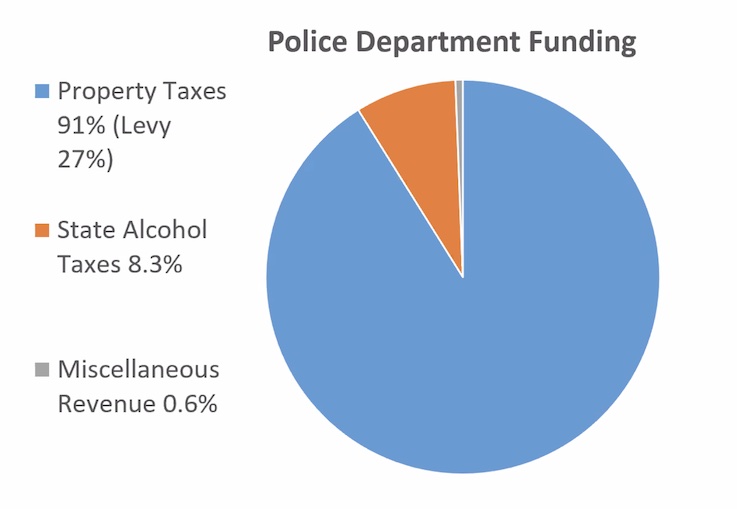
How Forest Grove, Oregon police are funded (from the slides now)
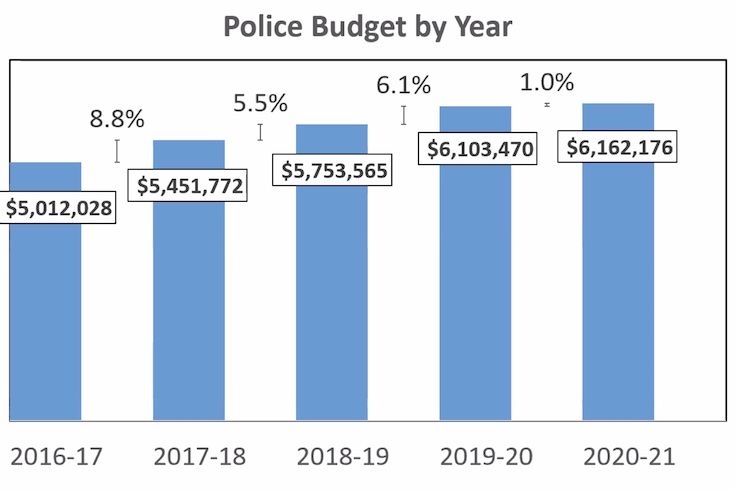
Forest Grove police funding levels. Along with this slide, the city manager when through the why costs increase (primarily salary and benefits, some additional staff).
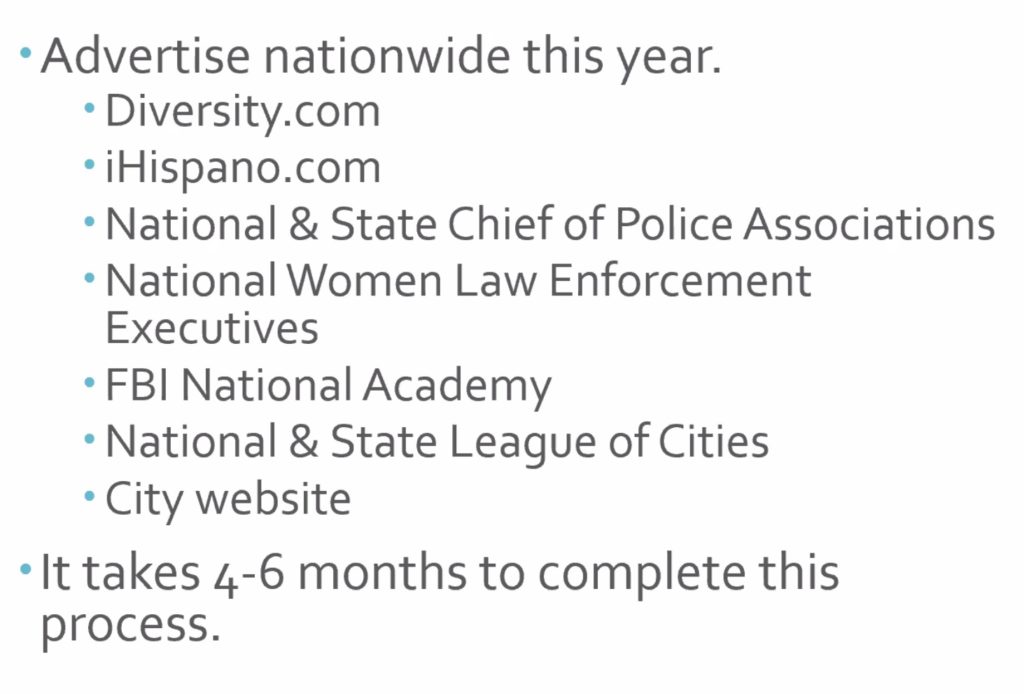
Says interim Forest Grove police chief will get the option to stay another year. Here is how city will advertise for the chief’s position. Says city will have opportunities to participate in the hiring process.
Now talking about how they will create community panels for the hiring process, how they will try to make it a diverse representation from the community.
If you have things you want the Forest Grove police chief job description to have regarding what kind of qualities the person should have, etc., the city manager says they want this feedback from residents. Here’s how to do that:
Apologies for not putting in alt text on the pics. I believe the slides will be available on the Forest Grove, Oregon’s city web site and I certainly hope all materials will be accessible for people with disabilities.
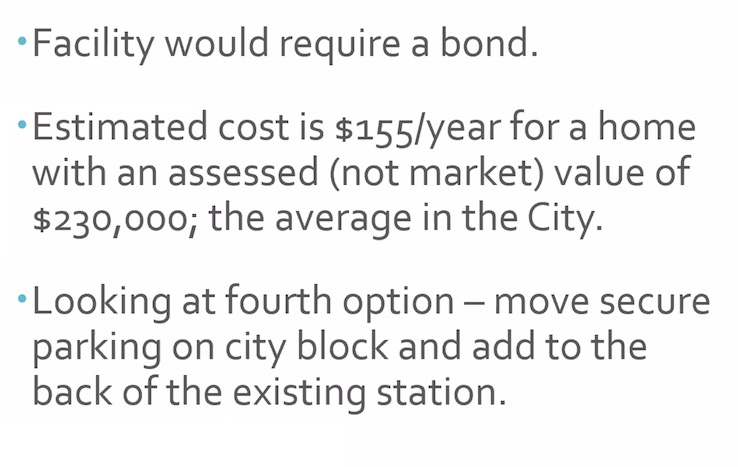
He’s now reviewing why the city needs a new police station and the current design process. If you went to the police station open houses in 2019, or watch Chief Schutz’s excellent video on the subject, you know all this.
City manager is now making a pitch for why the cost is cost-effective, the difficulty of passing a bond, the reluctance of residents regarding paying for this, etc. The presentation is now done.
Now Forest Grove, Oregon interim police chief Henry Reinmann is speaking. He’s touting that the station is more transparent, policies they have adopted, etc.
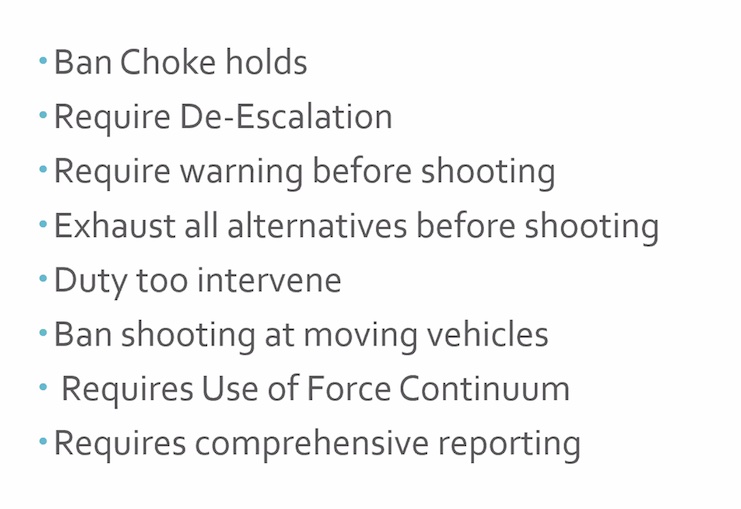
Says these police policies have already been adopted in Forest Grove, Oregon. Now going through stats: type of calls, number of calls, etc. You can see these stats in the presentations that will be available on the Forest Grove city web site (or should be).
Now talking about mental health resources. Now talking about history.
Now going through the history of policing. While he’s doing that, here’s one of the issues last year: Forest Grove Police Officer Steven Teets, off duty, terrorized a family in the middle of the night. & was NOT immediately arrested
Officer Teets is still employed, FYI, as are officers that initially covered for him. This incident, plus Chief Shutz’s firing, plus someone dying after being tased last year, & other things that haven’t made the news, have affected trust of police here.
Interim police chief is still doing his “history of policing” and very general presentation about approaches to policing. Has not made any reference to Black Lives Matter, to warrior training, white supremacy in police ranks, etc. Just very general stuff.
Now touting the relatively new Community Policing Advisory Commission, which replaced the citizen’s committee that was focused on BOTH police & fire (there is now no citizen’s committee regarding fire services).
Forest Grove interim chief is still touching on very general things. No specifics about what the city of Forest Grove, Oregon is doing – just general things about what’s needed – “transparency” and “trust”, etc. This is all in his sides which will be available on FG web site.
Finally is giving examples of specific changes. Says sergeant promotions interviews at Forest Grove, Oregon had no tactical questions – questions were about diversity, equity, etc. Says they will change how they train and who they hire.
Forest Grove interim police chief reviewing state and national changes that will affect the Forest Grove police department. Says they will change what they test for. Will focus more on behavioral competencies.
Is talking about systemic bias of society, in general, but has not acknowledged that police, specifically, have a problem with systemic racism. Is framing police problems as a reflection of all society’s problem.
Now referencing Bob Dylan’s “The Times They Are A Changin’.” And returning floor to meeting chair.
Now going to the questions submitted in advance. First question is regarding having a problem like “Cahoots” in Eugene in Forest Grove, Oregon, regarding unarmed mental health staff going to some calls. Interim chief says, instead, they are using the “Colorado model.”
Mayor can’t get his video to turn on. But we can hear him.
Mayor is reminding everyone that all of these changes will have financial costs and that there is no one big fix that can solve everything.
Interim chief is now addressing what the subjects are covered in the police academy and who makes that determination.
Questions regarding diversity training, number of officers that identify as people “of color,” etc. Interim chief is noting that the force makeup does not reflect the community. One officer “of color”, three women. Says they will do better.
Question about Chief Schutz’s departure. City manager says former chief never made a complaint “about gender or otherwise.” Me: this is in contrast to what she said in the previous articles I shared earlier in this tweet thread.
City manager is now saying that the city’s policies cover gender discrimination and how the policies and work place culture aren’t at all discriminatory, that people are held accountable, etc.
City manager is now reviewing stats and diversity.
Questions in Q & A box is filling up. I just submitted this: “Is there a prohibition on Forest Grove police officers taking so-called ‘warrior’ training? Does the chief know which officers have had such training and what do they do to address that?”
They are now addressing a question I submitted previously regarding the Western Washington County Fire Department & relationship with the T V F & R.
They are now clarifying titles and terms. Mayor says there is no effort nor interest in becoming a part of TVF&R. Noting (sudden!) retirement of former chief. Says interim chief hiring is not a precursor to joining TVF & R.
Councilor Ewing says a team has been formed that is working through “facts.” Says she is still gathering facts. Says she can’t raise her hand for or against TVF& R until she has more info.
Forest Grove Interim fire chief Patrick Fale, who is from TVF & R, says he knows of no interest by that agency to expand into Western Washington County, Oregon. Says there is a meeting in February about future of fire departments in this area.
Now a question and suggestion about backyard burns from someone who suffers from lung issues. Mayor is clarifying current regulations.
Mayor says the Forest Grove sustainability commission needs to look into a year-round burn, if that really needs to happen. Says advisory commissions need to advise. Council member Ewing is now weighing in.
Council member Ewing is now talking about “equitable” issues regarding people who need their fireplaces for warmth, older people who cannot afford to get rid of yard debris any other way.
And now the obligatory grocery store question. Paul Downey is answering, but I have no idea what he’s talking about. Sorry, folks. Something about a developer, a grocery store, affordable housing, etc.
MC is now about to list all of the questions relating to the Officer Teets situation (see my earlier tweet with link to the story). Notes that, because of the legal nature of the outstanding issue, some things won’t be answered at this meeting.
Interim chief is noting there are two different investigations – one regarding Officer Teets, one regarding the response by the other Forest Grove officers. Notes he can’t say much more because it’s a current investigation.
Question regarding make-up of CPAC and why there’s not a member of the chamber or business. I think – I was typing and missed both the question and answer. Sorry.
CPAC seems to not yet be meeting regularly. They haven’t set a regular meeting. It sounds like they’ve had only one meeting.
Question someone has submitted, similar to what I have submitted, still not answered: “Do you know if any of your police officers are involved in domestic terrorist groups in their personal lives such as proud boys etc And what are you doing to check this?”
councilmembers are now lauding the CPAC & the interim chief instead of answering the questions submitted. This has gone on for several minutes, celebrating Forest Grove CPAC instead of addressing questions.
Now again answering questions on diversity training. Interim chief is again talking about systemic bias in society but not systemic racism in police departments, specifically. No questions related to this have been addressed (I am making a list of them).
Comment and discussion regarding hiring and diversity. No specifics, just general comments about turnover and recruitment.
A question in regarding food banks and how the city is supporting them. I’m not going to tweet the response. Sorry, my fingers are getting tired.
Reading through the Q & A. Someone, maybe more than one person, is posting racist comments, attacks on the “political left.” His/her comments are all anonymous, of course. So disturbing. But absolutely representative of some people in Forest Grove, Oregon.
Someone asked how to volunteer during the pandemic. You have to freakin’ be kidding me. Did anyone reference me? No. Do they know about me? Yes. So, frustrating. What I posted on the Q & A “volunteering during the pandemic? If only there was someone in the community was an expert in volunteering, including virtual volunteering (sigh). Who writes and blogs extensively on this subject specifically. (sigh).”
They are asking my question – might be the last one. Here it is: “Research is showing that a lot of police departments have members that are white supremacists and/or identify as “sovereign citizens.” Does either (fire or police) department have screening, interview…”
“… social media and supervision practices and policies in place that would help prevent such people from becoming a part of the ranks and would help identify such people who may already be a part of either department?”
Interim chief says only that the they look at social media activity. Did not address the question at all.
Mayor says the city has “taken a stand” regarding “hate.” Says they need to have that attitude all the time. Feels good that they’ve had conversations with groups. But still hasn’t answered the question regarding how white supremacists are identified in the ranks.
Council woman Ewing is now making statements about these difficult times.
Me speaking now: I encourage all of you who asked questions about identifying members of the proud boys, sovereign citizens, etc. in the police department to attend the next Forest Grove city council meeting and ask them AGAIN. & to write them directly, again, to the city.
Chair is trying to get the participants to please address the questions regarding membership in proud boys, sovereign citizens, etc.
Interim chief says social media review & interviews of new hires addresses this. Interim chief is implying that social media monitoring of police officers is ongoing. Now Council Wenzel is celebrating how well the town meeting has gone, staff that helped, etc.
Meeting over. Survey at the end. Hope lots took it. With all my problems with how some questions were not answered, I have to give kudos to Forest Grove, Oregon for doing this meeting. Lowell Greathouse was a terrific MC – WELL DONE, sir! & now, to walk my dog.