Category Archives: Nonprofit/NGO/Agency Management

International Fellowship in USA For People from Select Developing Countries-Deadline June 30

The 2012 Ford Motor Company International Fellowship of the 92nd Street Y is currently accepting applications from community leaders who are citizens and residents of Albania, Bolivia, Democratic Republic of Congo, Ecuador, Haiti, India, Israel, Mongolia, Peru, Tunisia and Zambia. 20-24 emerging leaders from these regions will be selected.

Applicants must be 21 years of age or older, though younger applicants should note that candidates should have several years of leadership experience. Candidates are sought from a variety of backgrounds with the aim of creating a group of Fellows who will work well together and offer a diversity of views and experiences. Candidates should be emerging leaders addressing issues whose resolution can have a significant positive impact on their communities, on their countries, and—collectively—on the world.

Fellowship Application Deadline: June 30, 2011. For more information or to apply.

The program is designed to enhance the efforts of emerging leaders in communities throughout the world. The program includes a three week residency in New York City (May 30-June 20, 2012) and ongoing communication before and after the residency via telephone and email. Fellows are expected to complete reading, writing and group assignments prior to their residency to maximize the value of their fellowship experience and after their residency to evaluate its impact and success. Fellows participate in an intensive immersion experience designed to address the challenges of community building in today’s world. In partnership with the Picker Center for Executive Education at Columbia University’s School of International and Public Affairs, fellows participate in classes and participatory workshops in nonprofit management, leadership, and strategic thinking.

The academic curriculum is complemented by visits to model nonprofits throughout New York City and meetings with academic, business, and government leaders. The experience is enhanced by the Fellows’ residency at the 92nd Street Y, an institution founded in 1874 that has grown to serve over 300,000 people annually. At once a school, a lecture hall, a performance space, and a community organization, the 92nd Street Y is a nonprofit organization unique in the world and vital to the cultural life of New York City. The 92nd Street Y is world’s first global Jewish community and cultural center.

Nonprofits: Use the Car Mechanic Business Model

I’m in Budapest, Hungary where, yesterday, I presented an all-day intensive onsite workshop for education advising centers throughout Eastern and Western Europe affiliated with EducationUSA, a global network supported by the U.S. Department of State. My workshop was regarding business planning and creating revenue streams/fee-based services. I’ve certainly done business planning and managed fee-based services at nonprofits, and I’ve consulted on this subject before with nonprofits, but I have never trained on it.

It was a fascinating challenge for me to develop a hands-on workshop that would be relevant to an audience representing so many different countries, and, therefore, very different rules, different cultures, etc. (countries included Azerbaijan, Cyprus, Georgia, Lithuania, Russia, Portugal, Ukraine, the UK, Germany, Slovenia and Spain). To get everyone on the same page regarding what I meant by business planning, fees, customer service, and financial sustainability, I used a car mechanic as a model — a car mechanic, it seems to me, is a rather universal concept, someone we are all familiar with, even if we don’t have a car.

To be provocative, I ofcourse used an image of a FEMALE car mechanic.

And then I talked about what makes a car mechanic successful:

  • Her prices are reasonable (at least understandable – why she charges for what for a particular task or material).
  • She helps you to understand what she will do.
  • She can give you an immediate, realistic estimate for how long a job will take and when she can do that job.
  • She does the job she says she will do, on time.
  • She exudes quality.

In short, her customers TRUST her, because of the above activities and approach.

And then we related that back to nonprofit businesses – how, really, we have to do all those same things regarding our organizations, even if we have just one funder who gives us a mega-grant to pay everything.

I think it worked really well at setting the stage for all the rest of the workshop, if I do say so myself. I’m sure that most car mechanics don’t use the forms and exercises I used with these centers, like a SWOT analysis, to develop their business plans. But the car mechanic approach seemed to help my oh-so-multi-cultural group understand how to use those tools.

One of the biggest takeaways that attendees seemed to really seize on: clients who are expected to pay for something anticipate gaining significantly more from an organization than those who get the service for free. That slide got referred back to again and again.

And, finally, I have to thank Michael Keizer for posting the infographic shouldiworkforfree.com in the comments section of a recent previous blog of mine – I ended up using it in the workshop, after being reminded of it by my colleague Ann Merrill, and the group not only laughed, they said it actually helped them in thinking about what to charge for!

Added bonus: you can see my photos from this amazing trip.

More about my consulting services and my training services.

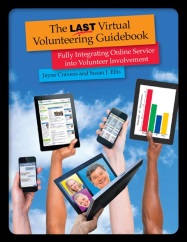
cover of Virtual Volunteering book with hands raising up various Internet connected devices

A reminder: The Last Virtual Volunteering Guidebook provides detailed advice on creating assignments for online volunteers, for working with online volunteers, for using the Internet to support and involve ALL volunteers, including volunteers that provide service onsite, for ensuring success in virtual volunteering, and for using the Internet to build awareness and support for all volunteering at your program. Tech tools come and go, but certain community engagement principles never change, and those principles are detailed in this comprehensive guide. You will not find a more detailed guide anywhere for working with online volunteers and using the Internet to support and involve all volunteers. It’s available as a digital book or as a traditional paperback. It’s co-written by myself and Susan Ellis.

If you have benefited from this blog or other parts of my web site and would like to support the time that went into researching information, developing material, preparing articles, updating pages, etc. (I receive no funding for this work), here is how you can help.

The Gutting of the USA

The Republican Study Committee, a bloc of more than 165 US Congressional Representatives, have unveiled a proposal that will end a range of federal programs that benefit charities and their clients. Among its proposals:

* Eliminate AmeriCorps and other national-service programs.

* Abolish the Agency for International Development.

* Eliminate the National Endowment for the Arts, the National Endowment for the Humanities, and the Corporation for Public Broadcasting

* End Department of Energy grants to help low-income people weatherize their homes.

In short, it would cut every program I believe makes my country exceptional, that makes my country great — except for public education and the National Parks Service, both of which I guess they will be going after very soon. While these programs make up just a fraction of the US budget, they have had a profound, positive impact on the lives of millions and millions of people, often without those people even knowing it. I could not even begin to say how these programs have affected me.

Cutting these programs will rob the USA of a large chunk of its voice and its culture, as well as taking away programs that make the USA, and the World, a better place.

Rep. Jim Jordan of Ohio is the committee’s chairman.

A sad day.


Going too far

A national nonprofit organization asked me to participate in a one-hour conference call this week to help them brainstorm something they want to do. I said sure, because I can make time available to do this, the topic is interesting to me, and I would like to contribute.

That same nonprofit then asked me to participate in a series of calls between now and the summer, contributing more than 20-30 hours of my time to a planning process. I said no. They wanted 20-30 hours free consulting from me, and from about a dozen other people as well, and seemed stunned that I (and at least one other person involved) found this request exploitative.

If I were running a store, would you walk in and say, “Hi, can you give me several hundred dollars of stuff for free?”? If I ran a restaurant, would you say, “Could I eat hear for six months every night for free? After all, we’re friends!”?

When does a request for donated time go from being appropriate, even welcomed, to being exploitive? When the organization forgets what they are asking for — for volunteering. Pro bono consulting is volunteering.

Time is a precious commodity. In today’s economy, asking for a person’s time can be the same as asking for money. If you are going to ask me to part with that much of my time, you had better have a highly-motivating reason for me to do so, because you are asking me to give you something that I normally charge for – and I have bills to pay, a household to support, and many things to pay for, just like you do.

This organization forgot what goes into recruiting volunteers. Which is shocking, since it’s an organization that is supposed to be focused on volunteering. Recruiting volunteers is never, “Here’s a bunch of work we need done. Please come do it. Because we’re a nonprofit.”

I volunteer a lot, with various organizations. How did these organizations recruit me to give so much of my precious time to them? Their recruitment messages focused on:

    • what their organization does, in terms of results for their target audience, and it inspired me or motivated me to get involved.
    • why volunteers are essential to what that organization does, but never in terms like, “We could never have enough money to pay staff to do this, so we involve volunteers” or “volunteers contribute $xxxx in services,” which implies money saved in having to pay people; instead, the messages focus on why volunteers are more appropriate to do the tasks than paid staff, for reasons that have NOTHING to do with money.
    • what the benefits will be for me in volunteering; Will I get to work with a target audience or regarding an issue I care deeply about? Will it be fun? Will I get opportunities that might help me in my professional work? Will I get some kind of incredible discount on something I would love to have?

I don’t wait for some free time to give these organizations; I MAKE time to help them. And these organizations also let me know that they appreciate my work:

  • They send me personalized emails when I finish an assignment, commenting on the work to show me that they actually read it.
  • They send me stuff: a pen, a t-shirt, a trophy.
  • Sometimes, someone writes me just to say “hi.”

In short, they treat me like a precious investor!

I cannot possibly say yes to every organization that wants my donated time. In fact, I say “no” more often than I say “yes,” even to organizations that have a great volunteer recruitment message, because, as I’ve said, I have bills to pay. In fact, even if I win the lottery and can afford to give away all my time for free, I will still have to say “no” often, because there are only 24 hours a day, and I’ll still need time for eating, sleeping, spending time with my family, etc.

Time is precious. Sometimes, if you really want it, you are going to have to pay for it – even if you are a nonprofit.

Aid in Haiti is failing

A few weeks ago, the radio show This American Life did an great show focused on aid in Haiti. If you want to understand the roadblocks to improving things in Haiti, it’s worth your time to listen to this show. Notice how some of the blocks are because of policies donors have implemented to try to prevent corruption.

It can be hard to get your mind around, but aid actually sometimes harms people, rather than helping, even in Haiti. There are stories of rice farmers in rural parts of Haiti not being able to sell their crops because, with all the rice donations from other countries, there is no market for products. Would-be Haitian contractors are also missing out on jobs because foreign contractors are being chosen by aid agencies instead. Sometimes cheaper, or even most modern, doesn’t mean better, in the long-term, for local people needing the aid.

Time has a story Haiti’s Failed Recovery: Who’s to Blame? that presents the two camps regarding why recovery in Haiti is failing:

For the anti-NGO camp, Haiti is a case study in the hypocrisy of the global relief bandwagon that descends on poor countries victimized by wars, famine and natural disasters. A growing chorus of critics accuses humanitarian-aid groups of using misery to validate their existence, spending funds inefficiently and creating a culture of dependence among the people they are supposed to help… If you belong to the “blame Haiti” camp, you’re less likely to ascribe the post earthquake mess to outsiders than to the country’s defective political culture. In recent years, development economists have sought to explain why some countries lift themselves out of poverty while others chronically underachieve. Stable, transparent institutions – like police, courts and banks – are critical to the success of poor nations. But Haiti’s long history of disarray has left it with few institutions worthy of trust. For those who emphasize such internal factors, Haiti wouldn’t be saved even if every dollar of aid money were spent and every NGO disappeared tomorrow. Until the country’s political class proves it can govern, Haiti’s people will continue to suffer.

I certainly offer no solution — it’s a systemic problem across sectors that defies a simplistic solution. I will say that aid agencies need to be reading these stories and looking at their messages to the public and to donors. They need to be showing how many local staff they are hiring versus how many foreign staff they are bringing in, and highlighting what steps they are taking so that Haitians are not just contributing to their own relief, they are leading it, and will eventually take over from the aid agency completely. They also have to be open about corruption – don’t shy away from talking about problems with transparency, even if it’s just in internal reports or reports to donors.

It’s not time to give up. But it is time to pay greater attention.

ADDITION ON JAN. 12:

John Mitchell, Director of ALNAP (Active Learning Network for Accountability and Performance in Humanitarian Action) has posted a blog about how the media is portraying what is happening in Haiti. It’s very much worth your time to read.

New Congress Brings Stark Agenda for Nonprofits

The new Republican majority in USA Congress will have a big impact on programs that affect charities and the people they serve. The Chronicle of Philanthropy lists what the nonprofit world can expect from the new Congress. It’s must reading!

This is a followup to my earlier blog warning that the Fall 2010 election in the USA should have every nonprofit’s attention – and every NGO’s attention abroad that receives money from the USA in some way, directly or indirectly. It provides links to commentaries by other organizations as well as ways to address the proposed changes.

As I noted in that earlier blog, US government budgets have already been cut severely, and the cuts that are coming will become even more severe — and the irony is that the same local, state and national governments cutting nonprofit budgets are also asking nonprofits to maintain their services in the face of these cuts.

Also see these tips to use your web site to show your organization’s accountability and results.

Beware those charity rating sites

Very few nonprofits hand out cash to people. Instead, they provide services. Those services could be just about anything: nutritious food for people who can’t afford to feed themselves, live theater, counseling for people who have been victims of domestic violence, shelter for unwanted animals, job training for people desperate to enter or re-enter the workforce, day care activities for people with severe disabilities, and on and on and on.

Many of these services are designed, overseen or provided by professionals — people who have the training and experience to provide specialized services. These nonprofit professionals are just like those in any for-profit profession: they have spent a lot of money on their education and training, they have bills to pay, they have health care costs, they want to be able to buy homes and put their kids through school, they need a retirement plan, etc. And to keep the best people, nonprofits have to pay competitive salaries (and their competition isn’t just nonprofits — its businesses as well).

All of these organizations have rent to pay, equipment and supplies to buy (copy machines, computers, paper, furniture), insurance and utlities to pay for, and on and on.

What about any of these costs isn’t related to program costs? A copy machine may mean the difference between serving 1000 people as opposed to just 100. A trained social worker with a Master’s degree may mean the difference in providing a job counseling program and not providing one at all. A paid, full-time manager of volunteers may mean the difference between involving 100 volunteers and just a dozen or less.

With all that in mind, I have a lot of skepticism for claims that nonprofits give too much to administative costs, as well as for grading systems that are focused mostly on financial reports and not-so-much on the results of a nonprofit’s work. Some nonprofits have told me that they have been forced to hire a revolving door of short-term consultants instead of full time employees because, the way sites charity rating organizations or the way funders count administrative costs, a consultant can be counted as a program cost, but an employee, doing exactly the same work, is considered administrative.

As the Nonprofit Quarterly put it recently, “With one holiday giving article after another urging donors to do their homework on charities, it would be nice to believe that those that set themselves up to inform donors would take care not to do harm.”

Here’s some of the many criticisms of these charity rating sites:

Here’s my advice: when evaluating a charity, look for accredication by professional bodies, such as the Council of Accreditation. Look for membership in national or international networks. Look at what the organization says it does; don’t just look at activities – look at results. Look to see if they involve volunteers — not because volunteers are “free” and replace paid staff but, rather, because volunteers prove community investment in the organization. If you don’t see this documented on the organization’s web site, email the organization and ask for it.

But remember that many large donors refuse to fund administrative costs, and that means the organization may not have the funding to hire the staff that would be needed to provide the level of detail regarding its programs you and others may want — because, you know, that’s an administrative cost.

A war on nonprofits & NGOs?

The Fall 2010 election in the USA should have every nonprofit’s attention, as well as the attention of every NGO’ abroad that receives money from the USA in some way, directly or indirectly. Government budgets have already been cut severely, and these cuts will become even more severe over the coming months — and the irony is that the same local, state and national governments cutting nonprofit budgets are also asking nonprofits to maintain their services in the face of these cuts.

In addition to the budget cuts, there is also a significant backlash in the USA, and in some cases, abroad, against nonprofits and NGOs; there is growing rhetoric against the work of mission-based organizations, which are being accused of everything from promoting inappropriate agendas to being corrupt.

Your organization needs to get up to speed on what could be called the war on nonprofits and NGOs:

Your organization needs to develop a strategy that employs a variety of activities over the next year to ensure local officials, state legislatures, and US Congressional representatives, as well as political leaders that are not office holders, understand just how vital your organization is and just how well managed and efficient it is. This isn’t something nice to do; it’s absolutely necessary to your organization’s survival.

There are several things your organization can do:

  • Build a relationship with elected officials, politicans and pundits:
  • Ensure that office holders, representatives from local political parties and various media representatives receive press releases regarding your organization’s results and the difference your organization makes. This can be evaluation results and testimonials from clients or volunteers.
  • Invite office holders, representatives from local political parties and media representatives (radio, TV, newspapers and bloggers) to events where they will hear about the difference your organization makes, or to observe your organization “in action.” Thank office holders, politicans, media representatives and others for attending your event with a personalized followup letter or email.
  • Set up meetings with elected officials, politicans, media representatives and others, one-on-one. It can be a morning meeting at their office, a lunch, whatever. Try to know them on a personal level.
  • Respond to criticism and rhetoric from elected officials, politicans and pundits. Respond with a phone call, a request for a meeting, a letter, an email, a newspaper editorial and/or a blog. Responding to criticism is vital both in countering negative PR and in showing office holders, politicans, pundits and others that you are listening!
  • Post your annual reports for the last five years online. Give an idea of why things cost what they do. Spell out administrative costs — what does having a copy machine allow you to do that you could not otherwise? How does having computers and Internet access allow you to serve more clients? Why do you rent or own office spaces, meeting spaces, event spaces, etc.?
  • Post information about your paid staff and their credentials online. Show that the staff you are paying are worth their salaries.
  • Talk in your newsletter and blog about what a cut in the budget will look like, what programs would have to be eliminated, what services you would not be able to provide, etc. Don’t sound desperate but do be clear about why decisions are being made and what cuts will look like.
  • Talk in your newsletter and blog in blunt terms about expenses. For instance, involving volunteers is NOT free; talk about all the costs that come from involving volunteers, your commitment to involving volunteers as something much more than free labor, etc.

You cannot afford not to do this!

Also see: Going all-volunteer in dire economic times: use with caution.