Commentary, resources & discussion re: nonprofits/ngos, communications, community engagement, volunteerism, effective humanitarian aid & development, ethics, women's empowerment & management ethics. Posts at least twice a month, usually on Tuesdays.
At some point, you have believed misinformation. You may bristle at the idea that you have ever fallen for a falsehood, but you have. Every person has. When you realize that you’re wrong, you probably just quietly, without any announcement, switched your stance, because it’s unlikely people around you knew that you thought something was true that wasn’t. If you cannot admit this, it’s going to be very hard for you to counter misinformation in, say, public health, because you will set yourself apart and above the majority of people.
I fell for misinformation about vaccines back in 2007, because of CNN broadcaster Larry King. I was living in Germany and I watched copious amounts of CNN International because it was one of only two-English language TV channels I had. One of the programs they showed was Larry King Live. I naively thought that people booked on his program were vetted. I assumed anyone who got on his show to talk about health, the environment, crime, whatever, had been screened, to make sure they really were appropriate to talk about those subjects, and that they had some sort of doctor or scientist they consulted to make sure someone wasn’t saying something dangerous on the show. So when Larry King hosted TV personality Jenny McCarthy and actress Holly Robinson Peete in 2007, talking about how they believed vaccines had caused their children to have autism, I believed what was being said. I didn’t say anything to anyone – at least I hope I didn’t – but the belief was there.
Then I stumbled onto the Bad Astronomy web site, a blog by scientist and skeptic Phil Plait – he probably got a shout out on fark.com and that’s how I started reading him. I started reading back issues of the blog and, low and behold, there was his thorough, merciless debunking of the myth that vaccines cause autism and his specific condemnation of Jenny McCarthy.
I will never forget reading his blog and realizing I had been duped. I literally stared at my computer screen, not moving, for at least a full minute. I was horrified. And then, I was angry.
Larry King had Jenny McCarthy on his show eight times. EIGHT TIMES. How many parents chose not to get their children vaccines because of that? How many children contracted preventable diseases because of that? How many children were permanently disabled or died because of that? It was then I realized what The New York Times later wrote in its obituary for King: “crackpot inventors, conspiracy theorists and spiritual mediums loved his show, which let them reach huge audiences without facing challenging questions.”
I wanted to link to Phil’s specific blogs that made me realize that I had been duped, but the site is pretty much defunct, and searches on the Internet Wayback Machine weren’t helpful. So, here’s a 2008 article he wrote for Discover Magazine that says much of what those blogs said, to my memory.
I share this story of being duped when I do trainings for international visitors through the State Department’s International Visitor Leadership Program through World Oregon. And there is always a look of shock and incredulity. One person asked, “Aren’t you embarrassed to share this story?” Yes, I’m ashamed that I fell for something any sensible person now knows is nonsense. But it’s important to acknowledge that being duped can happen to anyone.
Knowing when you have been duped, and acknowledging it, even just to yourself, will help you better address misinformation in your own communications efforts – professional or otherwise.
If you have benefited from this blog or other parts of my web site and would like to support the time that went into researching information, developing material, preparing articles, updating pages, etc. (I receive no funding for this work), here is how you can help.
Since moving back to the USA in 2009, and before the pandemic, I attended a lot of public meetings by local, state and national officials, both elected and otherwise, and for some meetings, I live-tweeted what was happening. My goal was to try to generate some excitement for civic engagement and, in the cases of meetings that aren’t recorded and available later for public viewing, like town hall meetings with US Senators, to capture how certain things were being talked about / addressed. I also wanted to see if city, county, state and national officials were paying attention to Twitter, seeing if they responded when they were tagged or named in a post, etc. (for the most part, no, they aren’t paying attention).
The city of Forest Grove, Oregon held its 2021 annual town meeting online rather than in person because of the COVID-19 pandemic. And even though, I assume, the meeting was recorded and will be made available for viewing any time somehow, I decided to live-tweet the event, both to offer my commentary and to show as an example in workshops and classes I teach about what live-tweeting an event can look like. I also find it amusing to see how live-tweeting can affect search engine results.
I have the text of all the tweets below, with each tweet as a separate paragraph. Also here in this blog, I embedded the links that I attached to tweets. Sorry for misspellings and any confusion – live-tweeting requires fast typing and you cannot go back and correct tweets once they are out there:
About to log in to the Forest Grove, Oregon annual town meeting, 1st-ever via the Interwebs. On the agenda: police. We’ve had some ugly incidents here & they still haven’t been addressed. If I decide to live-tweet it, it will be in the replies below.
Logged in & we’ve already had our first “does anyone know how to…” from a panelist.
Mayor is warning not to be cute and make your Zoom name and title “Jake from State Farm.” He did that for a meeting and was kicked off because they didn’t know who he was.
Lowell Greathouse of the Committee for Community Involvement is kicking off the meeting. He’s the MC of this meeting. I so wish the CCI was on Twitter and Facebook & Reddit.
Background: Here’s the 1st story from the local Forest Grove newspaper, the @FGNewsTimes, about the ouster of the police chief more than a year ago, which kicked off the growing distrust of the community regarding the police.
Now speaking is the city manager, Jesse VanderZanden. He’s introducing all the city officials & staff in attendance. VanderZanden played a key role in Forest Grove Police Chief Janie Schutz.
VanderZanden is now addressing the departure of Chief Schutz. He is saying he is not anxious to discuss personnel matters.
City manager is saying that the city has been transparent, having released emails between the chief and him, all official documents. He says all are available for the public and that they “tell the story.”
“We could have done a better job” regarding communication – city manager. Public disclosure procedures have been revised to make it easier for public to get info.
“What I’d like to do is thank the former chief.” He’s now praising her transparency, how she built community connections, and what she did to promote the police facility.
My opinion: THIS IS SO RIDICULOUSLY OVERDUE. Shame on the city for taking so long. Reprehensible.
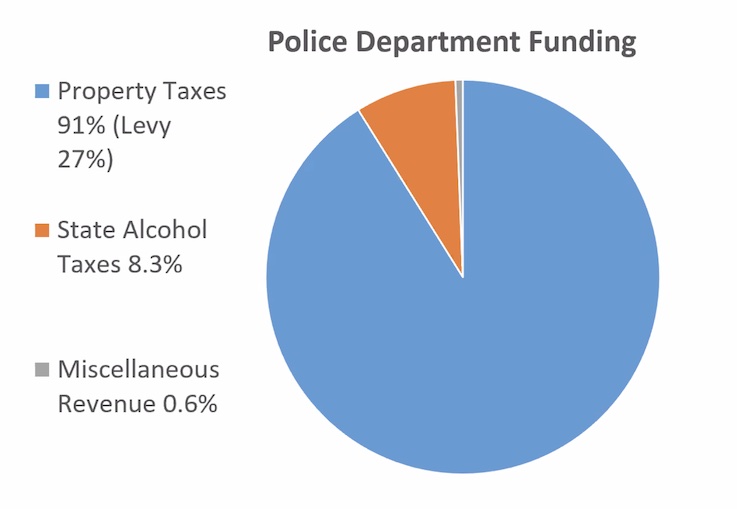
How Forest Grove, Oregon police are funded (from the slides now)
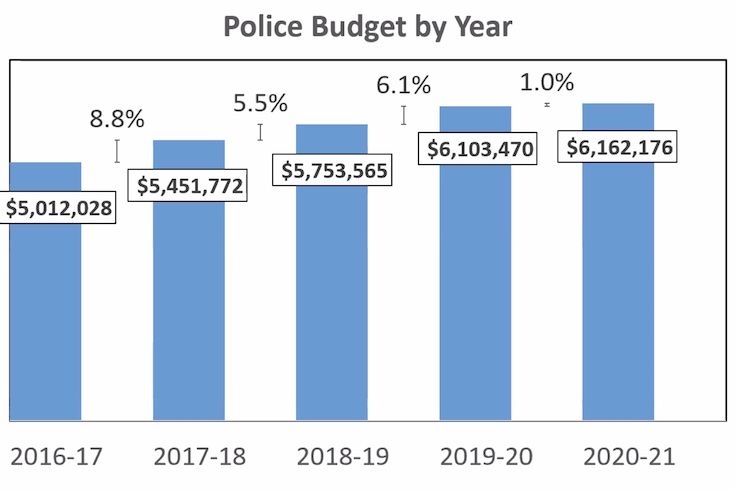
Forest Grove police funding levels. Along with this slide, the city manager when through the why costs increase (primarily salary and benefits, some additional staff).
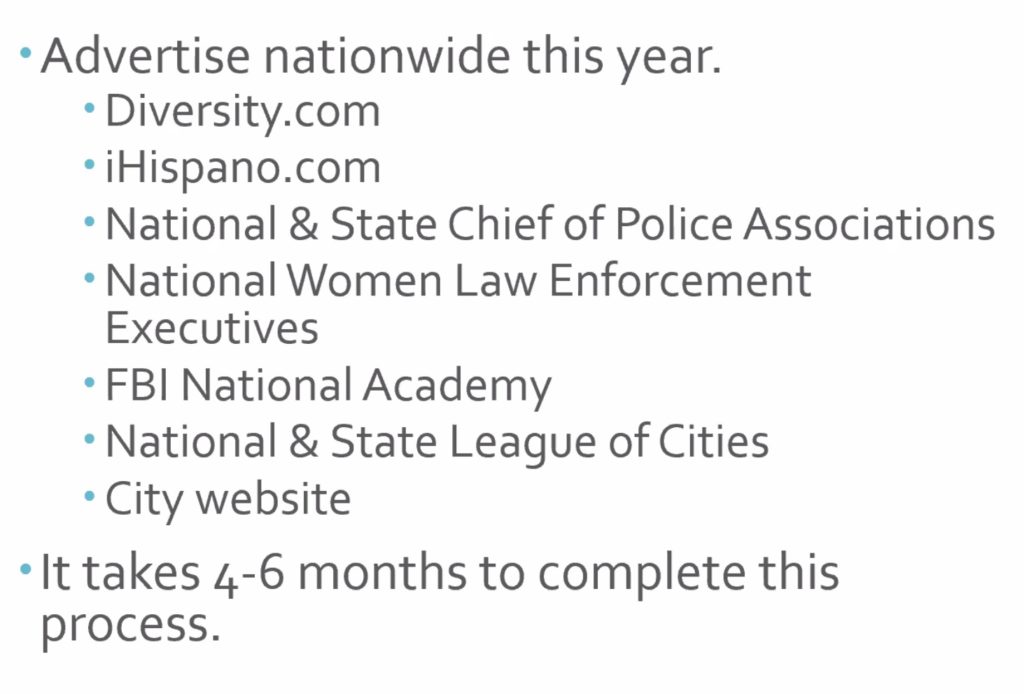
Says interim Forest Grove police chief will get the option to stay another year. Here is how city will advertise for the chief’s position. Says city will have opportunities to participate in the hiring process.
Now talking about how they will create community panels for the hiring process, how they will try to make it a diverse representation from the community.
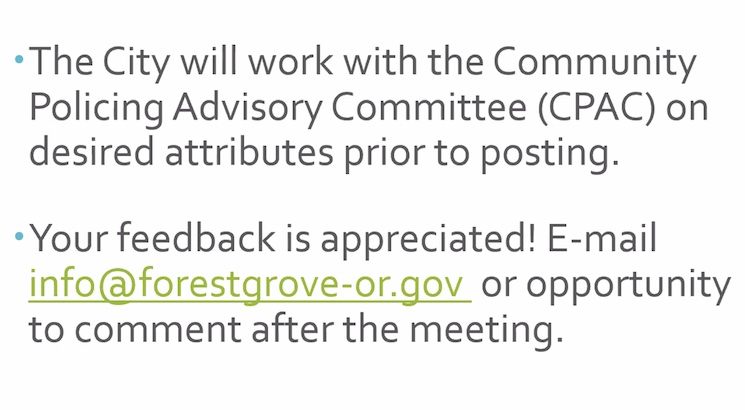
If you have things you want the Forest Grove police chief job description to have regarding what kind of qualities the person should have, etc., the city manager says they want this feedback from residents. Here’s how to do that:
Apologies for not putting in alt text on the pics. I believe the slides will be available on the Forest Grove, Oregon’s city web site and I certainly hope all materials will be accessible for people with disabilities.
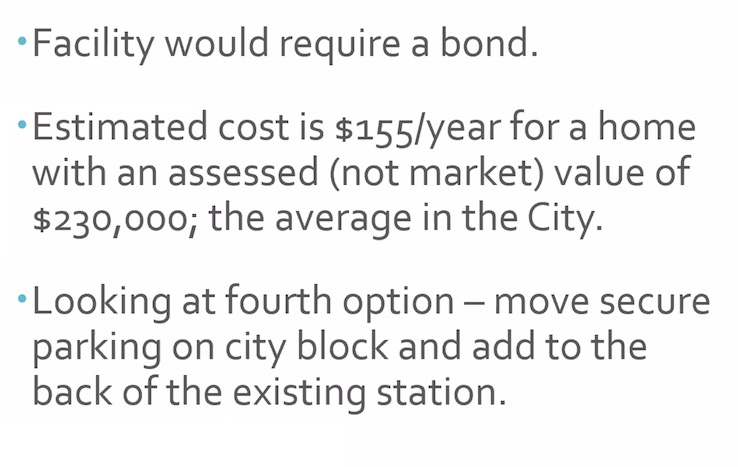
He’s now reviewing why the city needs a new police station and the current design process. If you went to the police station open houses in 2019, or watch Chief Schutz’s excellent video on the subject, you know all this.
City manager is now making a pitch for why the cost is cost-effective, the difficulty of passing a bond, the reluctance of residents regarding paying for this, etc. The presentation is now done.
Now Forest Grove, Oregon interim police chief Henry Reinmann is speaking. He’s touting that the station is more transparent, policies they have adopted, etc.
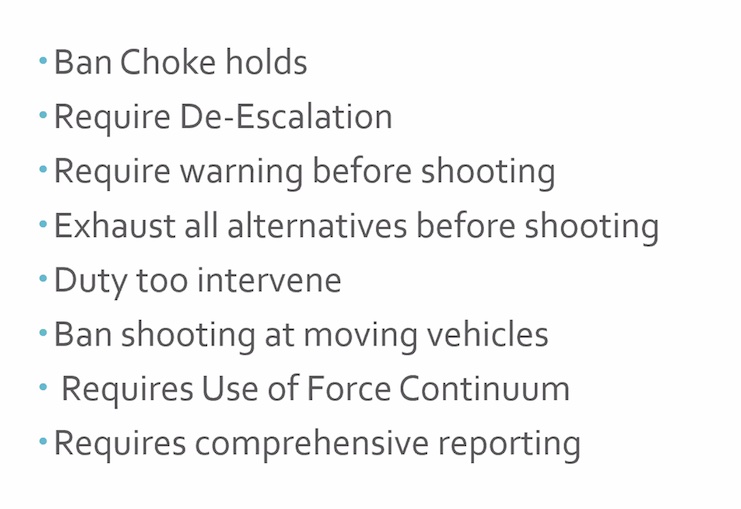
Says these police policies have already been adopted in Forest Grove, Oregon. Now going through stats: type of calls, number of calls, etc. You can see these stats in the presentations that will be available on the Forest Grove city web site (or should be).
Now talking about mental health resources. Now talking about history.
Now going through the history of policing. While he’s doing that, here’s one of the issues last year: Forest Grove Police Officer Steven Teets, off duty, terrorized a family in the middle of the night. & was NOT immediately arrested
Officer Teets is still employed, FYI, as are officers that initially covered for him. This incident, plus Chief Shutz’s firing, plus someone dying after being tased last year, & other things that haven’t made the news, have affected trust of police here.
Interim police chief is still doing his “history of policing” and very general presentation about approaches to policing. Has not made any reference to Black Lives Matter, to warrior training, white supremacy in police ranks, etc. Just very general stuff.
Now touting the relatively new Community Policing Advisory Commission, which replaced the citizen’s committee that was focused on BOTH police & fire (there is now no citizen’s committee regarding fire services).
Forest Grove interim chief is still touching on very general things. No specifics about what the city of Forest Grove, Oregon is doing – just general things about what’s needed – “transparency” and “trust”, etc. This is all in his sides which will be available on FG web site.
Finally is giving examples of specific changes. Says sergeant promotions interviews at Forest Grove, Oregon had no tactical questions – questions were about diversity, equity, etc. Says they will change how they train and who they hire.
Forest Grove interim police chief reviewing state and national changes that will affect the Forest Grove police department. Says they will change what they test for. Will focus more on behavioral competencies.
Is talking about systemic bias of society, in general, but has not acknowledged that police, specifically, have a problem with systemic racism. Is framing police problems as a reflection of all society’s problem.
Now referencing Bob Dylan’s “The Times They Are A Changin’.” And returning floor to meeting chair.
Now going to the questions submitted in advance. First question is regarding having a problem like “Cahoots” in Eugene in Forest Grove, Oregon, regarding unarmed mental health staff going to some calls. Interim chief says, instead, they are using the “Colorado model.”
Mayor can’t get his video to turn on. But we can hear him.
Mayor is reminding everyone that all of these changes will have financial costs and that there is no one big fix that can solve everything.
Interim chief is now addressing what the subjects are covered in the police academy and who makes that determination.
Questions regarding diversity training, number of officers that identify as people “of color,” etc. Interim chief is noting that the force makeup does not reflect the community. One officer “of color”, three women. Says they will do better.
Question about Chief Schutz’s departure. City manager says former chief never made a complaint “about gender or otherwise.” Me: this is in contrast to what she said in the previous articles I shared earlier in this tweet thread.
City manager is now saying that the city’s policies cover gender discrimination and how the policies and work place culture aren’t at all discriminatory, that people are held accountable, etc.
City manager is now reviewing stats and diversity.
Questions in Q & A box is filling up. I just submitted this: “Is there a prohibition on Forest Grove police officers taking so-called ‘warrior’ training? Does the chief know which officers have had such training and what do they do to address that?”
They are now addressing a question I submitted previously regarding the Western Washington County Fire Department & relationship with the T V F & R.
They are now clarifying titles and terms. Mayor says there is no effort nor interest in becoming a part of TVF&R. Noting (sudden!) retirement of former chief. Says interim chief hiring is not a precursor to joining TVF & R.
Councilor Ewing says a team has been formed that is working through “facts.” Says she is still gathering facts. Says she can’t raise her hand for or against TVF& R until she has more info.
Forest Grove Interim fire chief Patrick Fale, who is from TVF & R, says he knows of no interest by that agency to expand into Western Washington County, Oregon. Says there is a meeting in February about future of fire departments in this area.
Now a question and suggestion about backyard burns from someone who suffers from lung issues. Mayor is clarifying current regulations.
Mayor says the Forest Grove sustainability commission needs to look into a year-round burn, if that really needs to happen. Says advisory commissions need to advise. Council member Ewing is now weighing in.
Council member Ewing is now talking about “equitable” issues regarding people who need their fireplaces for warmth, older people who cannot afford to get rid of yard debris any other way.
And now the obligatory grocery store question. Paul Downey is answering, but I have no idea what he’s talking about. Sorry, folks. Something about a developer, a grocery store, affordable housing, etc.
MC is now about to list all of the questions relating to the Officer Teets situation (see my earlier tweet with link to the story). Notes that, because of the legal nature of the outstanding issue, some things won’t be answered at this meeting.
Interim chief is noting there are two different investigations – one regarding Officer Teets, one regarding the response by the other Forest Grove officers. Notes he can’t say much more because it’s a current investigation.
Question regarding make-up of CPAC and why there’s not a member of the chamber or business. I think – I was typing and missed both the question and answer. Sorry.
CPAC seems to not yet be meeting regularly. They haven’t set a regular meeting. It sounds like they’ve had only one meeting.
Question someone has submitted, similar to what I have submitted, still not answered: “Do you know if any of your police officers are involved in domestic terrorist groups in their personal lives such as proud boys etc And what are you doing to check this?”
councilmembers are now lauding the CPAC & the interim chief instead of answering the questions submitted. This has gone on for several minutes, celebrating Forest Grove CPAC instead of addressing questions.
Now again answering questions on diversity training. Interim chief is again talking about systemic bias in society but not systemic racism in police departments, specifically. No questions related to this have been addressed (I am making a list of them).
Comment and discussion regarding hiring and diversity. No specifics, just general comments about turnover and recruitment.
A question in regarding food banks and how the city is supporting them. I’m not going to tweet the response. Sorry, my fingers are getting tired.
Reading through the Q & A. Someone, maybe more than one person, is posting racist comments, attacks on the “political left.” His/her comments are all anonymous, of course. So disturbing. But absolutely representative of some people in Forest Grove, Oregon.
Someone asked how to volunteer during the pandemic. You have to freakin’ be kidding me. Did anyone reference me? No. Do they know about me? Yes. So, frustrating. What I posted on the Q & A “volunteering during the pandemic? If only there was someone in the community was an expert in volunteering, including virtual volunteering (sigh). Who writes and blogs extensively on this subject specifically. (sigh).”
They are asking my question – might be the last one. Here it is: “Research is showing that a lot of police departments have members that are white supremacists and/or identify as “sovereign citizens.” Does either (fire or police) department have screening, interview…”
“… social media and supervision practices and policies in place that would help prevent such people from becoming a part of the ranks and would help identify such people who may already be a part of either department?”
Interim chief says only that the they look at social media activity. Did not address the question at all.
Mayor says the city has “taken a stand” regarding “hate.” Says they need to have that attitude all the time. Feels good that they’ve had conversations with groups. But still hasn’t answered the question regarding how white supremacists are identified in the ranks.
Council woman Ewing is now making statements about these difficult times.
Me speaking now: I encourage all of you who asked questions about identifying members of the proud boys, sovereign citizens, etc. in the police department to attend the next Forest Grove city council meeting and ask them AGAIN. & to write them directly, again, to the city.
Chair is trying to get the participants to please address the questions regarding membership in proud boys, sovereign citizens, etc.
Interim chief says social media review & interviews of new hires addresses this. Interim chief is implying that social media monitoring of police officers is ongoing. Now Council Wenzel is celebrating how well the town meeting has gone, staff that helped, etc.
Meeting over. Survey at the end. Hope lots took it. With all my problems with how some questions were not answered, I have to give kudos to Forest Grove, Oregon for doing this meeting. Lowell Greathouse was a terrific MC – WELL DONE, sir! & now, to walk my dog.
When I began writing about online culture, back in the late 1990s, misinformation was at a minimum and easy to identify, and hateful trolls were oh-so-quickly banned from the online communities they tried to disrupt.
Now, hate and misinformation rage online, and not just among strangers – neighbors are raging against each other on local online communities.
Back in the 1990s, in promoting virtual volunteering – using the Internet to support and involve volunteers – people who were new to the Internet (yes, there used to be such people) would ask lots of questions about what it is like to work with people remotely, rather than onsite, in-person. I created a section of the Virtual Volunteering Project web site, and then my own web site, specifically to talk about online culture, about the different ways people expressed themselves online and how to appreciate those differences, and how to quickly ramp up your skills for working with others online. I linked to some netiquette guidelines, but didn’t put much emphasis at all on online civility, dealing with trolls or addressing misinformation.
My, how times have changed…
A recent Wall Street Journal investigation revealed that Facebook was aware of its Facebook groups feature’s polarizing tendencies as early as 2016, and the Facebook groups feature continues to serve as a vector for lies, especially regarding COVID-19, as this Wired article, Facebook Groups Are Destroying America, notes:
Facebook users have been seeing more content from “friends and family” and less from brands and media outlets… Dynamics in groups often mirror those of peer-to-peer messaging apps: People share, spread, and receive information directly to and from their closest contacts, whom they typically see as reliable sources. To make things easier for those looking to stoke political division, groups provide a menu of potential targets organized by issue and even location; bad actors can create fake profiles or personas tailored to the interests of the audiences they intend to infiltrate. This allows them to seed their own content in a group and also to repurpose its content for use on other platforms... Related memes and links to fringe right-wing websites have been shared millions of times on Facebook in the past few months. Users coordinating their activities across networks of groups and pages managed by a small handful of people boost these narratives. At least nine coordinated pages and two groups—with more than 3 million likes and 71,000 members, respectively—are set up to drive traffic to five “news” websites that promote right-wing clickbait and conspiracy theories. In May, those five websites published more than 50 posts promoting Obamagate, which were then shared in the linked pro-Trump groups and pages. The revolving door of disinformation continues to spin.
And that doesn’t even begin to address the problems with dedicated trolls – people who target others online with insults and harassment in an effort to drive the person offline.
Can online civility be restored? Is it possible to challenge misinformation and destructive speech in the strongest, most deliberate of terms without being accused of hate speech yourself? Can there be rules for online civility that don’t stifle much-needed debate? I hope these curated resources can help answer those questions – but, honestly, based on what I’ve experienced myself this year, I’m deeply skeptical. Perhaps I need to create a list of resources on “Learning to live and thrive in a world with hateful, hate-filled people.”
Also, the Last Virtual Volunteering Guidebook: Fully Integrating Online Service Into Volunteer Involvement can help you better work with people online – specifically volunteers. These can be volunteers in short-term, “microvolunteering” tasks or longer-term, more high-responsibility roles. These can be volunteers who do some or most of their service onsite, at your organization or volunteers who do most or all of their service remotely, rarely or ever onsite and in-person with you. This is the most comprehensive resource anywhere on working with online volunteers, and on using the Internet to support ALL volunteers, including those you might not think of as “online” volunteers.
If you have benefited from this blog or other parts of my web site and would like to support the time that went into researching information, developing material, preparing articles, updating pages, etc. (I receive no funding for this work), here is how you can help.
I ranted back in April about the lack of public health messaging targeting teens and young adults, specifically, regarding how they are spreading SARS-CoV-2, the infectious disease which causes Coronavirus disease 2019 (COVID-19). I was told that such specific messaging was “unnecessary.”
I was right about the need for this targeted messaging… and I really didn’t want to be… and now we’re seeing the consequences, as young people quickly became, and still are, some of the most prolific spreaders of this virus, while most of them remain unaffected by such.
I have so hoped we’re all learning about how to best communicate about this global pandemic, particularly regarding prevention. But after the last four days, my hopes have, once again, been dashed.
Here’s a first-hand account of just how bad communication and contact tracing is across corporate HR departments and across city and county health departments in the USA – from my current home in the Portland, Oregon metropolitan area:
Someone in my household got exposed to COVID-19 by a co-worker 11 days ago. He found out about the exposure on Friday – day eight after exposure. He came home and we implemented our quarantine protocols (yes, we have them!), retreating to divided-up spaces of the house (his part and my part), him wearing a mask at all times etc.
No one told him to, but he made an appointment with Kaiser, our health care provider, to get tested for SARS-CoV-2. He got tested the next day, nine days after exposure. He got his results – “undetected” – on day 10. He continued to stay home on day 11, today, despite some in his workplace implying it’s okay now for him to come back.
We have waited for our county public health office to contact him with whatever they need to contact him for. That’s how contact tracing works, right? He finally heard from a Multnomah County person on Day 11, yesterday, who said, “Oh, you know, I shouldn’t be the one contacting you, it should be Washington County” (where we live).
The representative also told him he had to quarantine until December 4, and he asked WHY!? She said she had down in her records that he was exposed on Friday. He explained that he was exposed a week ago Thursday, 11 days ago. She corrects her records and then says she has a letter for him for his employer, but she can’t send it – she’ll have to send it to Washington County and they will send it to him.
That same night, on Day 11, his doctor texted him to tell him his test was negative – which he knew from an earlier message on Sunday (Day 9).
Neither his company’s HR department, nor Kaiser, nor the Multnomah County Health Department ever told him about these official guidelines for our area on what to do after you get tested. I saw a link to the guideline on a friend’s Facebook newsfeed on Monday morning – that’s the only reason we know about such.
So, in sum: his company failed (wrong date on exposure, wrong date on when to return to work, never told him about the official guidelines for what to do after being tested), our health care provider/testing site failed (never told him about the official guidelines for what to do after being tested), and two health departments have failed (the wrong one contacted him, contact was not at all timely, and no representative ever told him about her own department’s official guidelines for what to do after being tested).
What didn’t fail? Face masks and social distancing. It’s why he doesn’t have COVID-19. It’s why I don’t either.
There is a global pandemic going on, hospital rates are soaring, infection rates are soaring, and if this is how it is, not just in the Portland, Oregon metro area but across the USA, this is part of why: information isn’t timely and complete, accurate information isn’t being distributed. None of the aforementioned, with the exception of the timeliness of the public health department finally reaching out, can be attributed to lack of money nor lack of time.
We’re hopeful that he’ll make it to day 14 – Thanksgiving – without developing symptoms, and that if he does have it, I don’t. We’re thankful to still be able to work and that we have a home big enough for quarantine protocols. But, yes, I’m frustrated! There’s no reason not to do better regarding public health communications!
PEN America is a 501(c)(3) organization based in the USA. Founded in 1922, PEN America works to ensure that people everywhere have the freedom to create literature, to convey information and ideas, to express their views, and to access the views, ideas, and literature of others. Its members are a nationwide community of more than 7,200 novelists, journalists, nonfiction writers, editors, poets, essayists, playwrights, publishers, translators, agents, and other writing professionals, as well as devoted readers and supporters who join with them to carry out PEN America’s mission.
Writers and journalists, particularly women, are facing unprecedented levels of online hate and harassment. PEN America has created an Online Harassment Field Manual that has strategies and resources that writers and journalists, their allies and their employers can use to defend against cyber hate & online abuse. I have found it very helpful.
Manual chapters include:
Prepare for Online Harassment – Tactics, tips, and guidelines for protecting your online presence and accounts
Respond to Online Harassment – Strategies for response, including assessing threats, navigating social media and email, deploying cyber communities, and practicing counterspeech
Practicing Self-Care – Advice for practicing self-care and maintaining community during online harassment
Legal Considerations – What to expect when turning to law enforcement during online harassment
Requesting and Providing Support – How-to guides and helpful information for targeted writers, their allies, and their employers
Learn More about Online Harassment – What is online harassment, what forms does it take, and why is it a free expression issue?
I highly recommend this manual. Read it even if you are not being insulted or harassed online. Even if you don’t think you will ever be thus targeted, even if you think being insulted or harassed online wouldn’t bother you, even if you don’t have any public social media activities (you aren’t on Facebook, you don’t blog, etc.), but you do produce content in some way, or you oversee staff or have co-workers that produce online content, you need to read this.
On a related note: there’s also this resource from the Women’s Media Center: Online Abuse 101. It’s a primer on targeted online harassment. “The purpose of harassment differs with every incidence, but usually includes wanting to embarrass, humiliate, scare, threaten, silence, extort or, in some instances, encourages mob attacks or malevolent engagements… Online harassment can be a steep tax on women’s freedom of speech, civic life, and democracy.”
And if you haven’t in a while, check-in with whoever manages your social media and make sure they are okay. Ask them what sort of negative comments get thrown their way. They need to know that senior management supports them.
If you have benefited from this blog or other parts of my web site and would like to support the time that went into researching information, developing material, preparing articles, updating pages, etc. (I receive no funding for this work), here is how you can help.
As of July 2019, Reddit ranked as the No. 5 most visited web site in the USA and No. 13 in the world. Reddit is a community of communities, and its communities are called subreddits. Statistics suggest that 74% of Reddit users are male. Users tend to be significantly younger than other online communities like Facebook with less than 1% of users being 65 or over.
If you want to reach a younger demographic regarding your volunteering opportunities, your awareness messages, your data that shows your value to the community and more, you need to build posts to Reddit into your marketing strategy, no matter what your nonprofit’s size or focus. This resource tells you how to do it. It covers how to find subreddits to join or read regularly based on your nonprofit or NGO mission, how to choose a user name, how to guide staff who may already have a Reddit user account, whether or not you should create your own subreddit and more.
And note: manging your Reddit presence and monitoring Reddit for discussions about your organization or program is a terrific role for an online volunteer!
If you have benefited from this blog or other parts of my web site and would like to support the time that went into researching information, developing material, preparing articles, updating pages, etc. (I receive no funding for this work), here is how you can help.
Back in the late 1990s, I was invited to speak and train at what I was told was a state PTA conference in a state different from where I was living. The list of other invited speakers was shared with me by the organizer and I was deeply impressed and honored to be a part of such a lineup. I wasn’t paid by the organizer for the work, but that was fine – I saw it as a part of what I was already being paid for in my job directing the Virtual Volunteering Project. All of my travel and hotel expenses were to be paid.
The date arrived, I flew to the location, I picked up my rental car and I drove to my hotel. The next day, I drove to the location of the conference, and as soon as I walked in, I realized things were not what they had seemed via email and phone calls from the organizer: this was not, in fact, an official PTA conference: a representative from the state PTA approached me to say that they didn’t know about the conference being organized in their name by this local member until the last minute. The organizer was putting all of the expenses on her credit card, expecting the state PTA to reimburse her, and she had no signed contract with them for anything. The conference was in an un-airconditioned junior high school in the middle of summer, in a state notorious for its heat and humidity, the seating was for children, not adults, and there was an un-airconditioned school bus for taking attendees around to the city’s sights that afternoon. The organizer showed signs of serious emotional instability that I won’t list here. After the first day, most of the speakers and half of the attendees had left, many of them asking me if I was going to stay or flee. I stuck it out over two days and nights, fulfilling my commitment to deliver workshops to the few that stayed and wanted to hear me. I left and never heard from the organizer again.
Misrepresentation and deliberate fraud in the nonprofit sector aren’t unusual. Sometimes, the person perpetuating the misrepresentation isn’t really aware that what they are claiming is unethical, inappropriate, or maybe even illegal – I think that was the case with the aforementioned conference manager. I’ve been contacted by people saying they work for a certain large, well-known newspaper who, in fact, have never had anything published in that newspaper or any other credible daily, but they felt like they could with the story they wanted to do with my help, that the newspaper knew nothing about – I am not sure that’s deliberate fraud as much as someone not understanding the appropriateness of claiming to represent a publication. I’ve heard from people who say they are doing a documentary film and want to interview someone at my organization, but when I do a little research, I find out that they haven’t produced any films before and people they have interviewed already for this project are a little afraid of them now after their encounters. I’ve seen web sites of people claiming to be operating a nonprofit that partners with various corporations and very well known nonprofits, but upon contacting people I know at said “partners”, they’ve never heard of the organization. And since that conference fiasco, I have been contacted by a few people putting together a conference or event that have never done so before, but think getting participation is just a matter of asking for such. In all of these cases, the people engaging in what I would call misrepresentation don’t think they are doing so: they are sincere in their belief that they are a legitimate, credible press representative, documentary filmmaker, nonprofit manager or event coordinator, and if they can get enough people to say yes to their request to meet or participate, they are going to be all that they claim to be. Take this Charity Fashion Show in San Francisco in 2010 – I think organizers probably really believed they were going to raise enough money to donate to charity, and had no idea just how expensive a fundraising event can be.
And then there are the ones who ARE aware they are perpetuating something unethical, like Community Service Help and the Caffeine Help Network and other like them, selling letters for people to use with courts that sentence them to a certain number of community service hours – thankfully, state attornies general are cracking down on such. Or people claiming to be putting on a fundraising event, looking for donations and sponsorships, but most of the money goes to “expenses” – like the We Build The Wall effort or the Trump Foundation.
No matter the focus of your nonprofit, non-governmental organization (NGO), charity or consulting business focused on such, you need to do at least a bit of vetting on any press person or documentary filmmaker who wants to interview someone from your program, or any person you are thinking of inviting to speak as part of a panel or conference, or any community group asking to partner with you, etc.
If the person lists conferences where they have spoken or organizations they’ve have consulted for, ask to talk to a representative from at least one of those entities to confirm that really happened, look at old versions of web sites on archive.org to make sure the person is listed in the lineup, or ask for a link to an online video showing the speaker addressing the audience.
If the person says they are a writer, ask for samples of their published work. If they say they are a filmmaker, ask for links to their work online. Do they have a YouTube or Vimeo channel you can review?
If the person claims to have managed events, ask for photos of the event, scans of published material that publicized the event, a blog about the event written by an attendee, event participation surveys, etc. For their most recent events, they should be able to provide dates, number of participants, measures of success, etc. – for instance, if the person says their initiative organizes teen hackathons, what were the dates of those hackathons, how many teens participated in each, where were they and where is the list of apps that were developed?
Type the person’s name into Google or Duck Duck Go and see what comes up. If you start to feel suspicious, type in additional words, like scam or investigation or complaint and see if any blogs or articles come up. But be careful if something does come up – it’s harder and harder to find a person or company who HASN’T had a complaint lodged against them.
Even the newest nonprofit or NGO should have a web site that lists its board of directors, staff members (and their credentials), and either their most recent yearly financials/annual reports or their proposed budget for the first year.
With all that said, people do have to start somewhere if they are an aspiring nonprofit founder, an aspiring filmmaker, aspiring podcaster, aspiring designer, etc. Someone with not much of a track record at doing what they say they want to do might not automatically mean that someone is trying to do something nefarious, or that the person is someone with a mental illness. But if someone says they are a blogger, there should be a blog to read. Someone starting an event management business should have amateur experience managing some kind of events – weddings, reunions, small nonprofit events, etc. – and references to affirm their abilities. Someone who says they do video production will have at least a few videos online you can view. And while I have managed many high-profile events where it would have been inappropriate to let anyone but credentialed press representatives inside to cover such, I’ve also managed community events where an aspiring, unaffiliated journalist or university journalism student would have been welcomed to come in and observe and write about it as they like.
In short: don’t automatically take someone’s word for their credibility, or that of the program they claim to represent. Never automatically accept any proposed speaker, journalist, committee member, program partner, panelist, trainer or advisor without at least a little bit of research. Get used to saying, “Thanks for your information / inquiry / proposal / email. First I need a few days to check your web site OR do you have a web site I could review? OR could you let me know the name of your contact at the such-and-such foundation, so I could confirm your affiliation?” And make sure all staff, including volunteers, know how to route emails and calls about donations, partnerships and conferences and calls from the press.
Ethics of paying to volunteer online (reviews, at the end of the blog, some criteria to use to evaluate the credibility of a volunteer-involving organization)
The Information About & For Volunteers You Should Have on Your Web Site: If your program involves volunteers, or wants to involve volunteers, there are certain things your organization or department must have on its web site. To not have this information says that your organization or department takes volunteers for granted, does not value volunteers beyond money saved in salaries, or is not really ready to involve volunteers.
Volunteers have always been the drivers of virtual volunteering, much more than programs that host volunteers. And it’s still true now, in 2020.
Back in the 1990s, when Impact Online (now VolunteerMatch) launched one of the first volunteer-matching services online, there were FAR more people visiting the web site that wanted to volunteer than there were organizations posting assignments, and those assignments were supposed to be all ONSITE, but volunteers kept asking Impact Online staff for things they could do ONLINE. That’s why Impact Online launched the Virtual Volunteering Project in 1996: to promote the idea of involving online volunteers to host organizations and train them on how to do it. When I began directing the UN’s Online Volunteering service in February 2001, I stopped all outreach to potential volunteers and turned all attention to outreach to and support for potential host organizations, because this global service had the same issue: far more volunteers wanting to serve online than there were things for them to do.
Here we are decades later, with a global pandemic and thousands and thousands of volunteers wanting to engage online, but not able to find enough opportunities. I see it all over the Internet, particularly on the Reddit community – the subreddit – dedicated to discussions about and resources regarding volunteering, r/volunteer: young people, with no experience in mentoring, tutoring or counseling, are trying to launch their own virtual volunteering initiatives, recruiting plenty of volunteers but then not being able to find schools or programs to work with.
I’m doing my best to help schools, nonprofits, NGOs, charities and government agencies quickly launch roles and activities for online volunteers, with
But I cannot do this alone. Those of you who want to volunteer online have to help. You are going to have to help schools, nonprofits, NGOs, charities and others that you want to help online to create online roles and activities and to learn about the benefits of virtual volunteering. Otherwise, you are going to continue to be frustrated.
First, do NOT write an organization and say “We want to partner with you!” Words like “partner” and “partnership” are too big, too daunting, for most programs to think about. It sounds like lots of work with no funding. It’s not a message schools, nonprofits, etc. want to hear.
Instead, your first outreach should be something like this:
Hello! We are a group of five students / employees from name of school / company, and…
we saw that you have 10 videos on YouTube about your program, but they are not closed-captioned / they are not captioned correctly. We would like to volunteer to fix that for you over the next two weeks…
we would like to help make your web site be more accessible for people with disabilities. We could spend 10 hours for one week next month adding alt text to all of the photos and graphics on your site and changing all of your “read more” and “click here” links to descriptive links that would make sense for those with a sight-impairments…
we would like to translate all of the text from your last newsletter to Spanish…
we would like to help create a monthly podcast for your program for the next four months. Each month, we would interview a staff member or a recipient of your program’s service and adapt that recording to a 15-minute podcast format, with intro and exit music, appropriate edits and full text transcription. We would help you post this to…
We think the work our local historical society is so important, and we would like to work with you to improve these listings on Wikipedia regarding our local history…
And adding:
We want whatever we do for your program as online volunteers, entirely unpaid, to be something your program wants and needs, something that will be meaningful and beneficial to your organization, not just something we can do. Could we meet by video conference sometime next week to explore these ideas?
In other words, you need to be specific about the project or activity you want to do with them as online volunteers, and to make it clear that your are offering as volunteers and do not expect any payment whatsoever. You need to make it sound like a great idea that isn’t going to cost the organization anything and isn’t going to create more work for them and isn’t going to require a long-term investment. Your outreach needs to prompt a program to say, “We need and want this!” Remember: most nonprofits, NGOs, schools and other community groups are overwhelmed with work, severely under-staffed and facing massive budget cuts. They don’t have time for any more work whatsoever. They will be open to ideas for projects that will immediately have benefits to their organization, especially in terms of attracting more financial support.
Your goal with that initial project is to provide such a great experience that the nonprofit, charity, school or NGO is open to further collaborations – and perhaps much more advanced activities, like from this list of high impact virtual volunteering projects. But first, you have to give them a simple, worthwhile experience that creates a solid, trusting relationship.
Do not write a program and suggest a big, ambitious project that they do not have a great deal of experience doing OFFLINE already. That means you don’t write a senior residence facility and say, “We want to start an online friendly visitor program with your residents!” Who will screen your volunteers to ensure they are appropriate for coming in contact with this vulnerable population? Who will train volunteers regarding appropriate and inappropriate topics of conversation, how to get started with a first conversation, etc.? What will your safety standards be? How will you set boundaries – what if a resident starts calling and texting a volunteer frequently throughout the week and this is beyond what the volunteer wants to be involved with? In other words, a lot of virtual volunteering projects require way more than just a platform for interactions.
For much more detailed advice on creating assignments for online volunteers, for working with online volunteers, for using the Internet to support and involve ALL volunteers, including volunteers that provide service onsite, and for ensuring success in virtual volunteering, check out The Last Virtual Volunteering Guidebook. Tools come and go – but certain community engagement principles never change. You will not find a more detailed guide anywhere for working with online volunteers and using the Internet to support and involve all volunteers – even after home quarantines are over and volunteers start coming back onsite to your workspace. It’s available both as a traditional paperback and as an online book. It’s co-written by myself and Susan Ellis.
If you have benefited from this blog or other parts of my web site and would like to support the time that went into researching information, developing material, preparing articles, updating pages, etc. (I receive no funding for this work), here is how you can help.
Let’s get right to this list of resources for nonprofit theaters, dance groups, music groups and other performance groups regarding program delivery and community engagement during COVID-19 (a curated list):
Genuine engagement through Zoom calls: a post on the TechSoup community from someone who says she “learned a lot about hosting fun and effective video sessions, including music circles with up to 100 participants from up to seven countries.”
if you have additional online resources that can help nonprofit theaters, dance groups, music groups and other performance groups regarding program delivery and community engagement during COVID-19, please comment below.
Why do I care? Theatre and live music performances have been a hugely important part of my life for as long as I can remember. They were my joy in grade school and my sanctuary on more occasions I could list. I believe the arts, including non-performance, like museums, play a fundamentally-important role in a community’s health.
I got my start in nonprofit management via nonprofit theatre organizations. I wrote my master’s degree thesis on the non-artistic elements necessary for theatre, dance and music to be used as a tool for public health and other community development initiatives. Months ago, I had written a blog about how arts organizations – performing arts centers, theaters, museums – have always been masters of customer relations and data management, how masterful the best of them, no matter how small, are at customer relations and customer loyalty, and turning event attendees into long term financial supporters. I consider my early professional experience at places like the Capitol Arts Center in Bowling Green, Kentucky, Hartford Stage in Connecticut and the Williamstown Theatre Festival in Massachusetts to have been pivotal in building my skilIs in data management, project management, customer relations and so much more, skills I’ve applied in every job I have ever had, including international development work in Afghanistan – yes, really. It was a blog meant to celebrate arts organizations for having oh-so-much to teach other nonprofits – and government programs and for-profit companies as well. I kept delaying the publishing of that blog. First by a week, then two weeks, then a few weeks, because things came up that seemed more urgent. I figured that I would publish it right after I got back from my epic Baja, California, Mexico motorcycle adventure.
Well, when I got back from that epic adventure, I returned to a country being ravaged by Covid-19, an inbox full of emails asking me urgently for my consulting rates regarding virtual volunteering, and GoogleAlerts filled with news of newly-launched virtual volunteering schemes (many done with no regard to safety). So that blog got pushed farther and farther on the publishing calendar.
And now, I read the draft, and I want to cry. Because live theater, live dance, onsite museum tours, live music… none of that is happening. And none of that may happen for the rest of 2020. And many nonprofits that produce these events and exhibits aren’t going to survive the year. I have so many friends that still worked in the arts in some way, or some aspect of event management, and their jobs are gone.
Sports will come back. People will watch sports on TV even with no audiences. But the arts… can they survive this? I enjoy watching filmed versions of stage productions, but so many people loathe it, and it’s true: it’s no substitute at all for seeing a performance live. Maybe I’m comfortable with viewing televised productions because, growing up in a small town In Henderson, Kentucky, things like Great Performances on PBS were my only way of seeing Broadway shows or the opera. I go back to that grateful persona, starving for access when I watch Frankenstein presented by the UK’s National Theatre Live, or the Donmar Warehouse all-female production of Julius Caesar directed Phyllida Lloyd and shown on Great Performances. So often, such televised productions of stage shows are all I have access to – and that’s true for so many others.
But I long to sit in a dark hall and watch people act on a stage. Or to stand shoulder-to-shoulder with others while hearing amazing live music. Or wander through an art museum, not thinking about being two meters away from each other person. And it looks like none of us can do that safely for the rest of 2020. And maybe through 2021. And maybe longer. And the nonprofits, and even for-profit companies, that have brought us these experiences, may not survive. And that sends me into an emotional tailspin.
And not one national political leader is talking about what to do about this.
If you have benefited from this blog, my other blogs, or other parts of my web site and would like to support the time that went into researching information, developing material, preparing articles, updating pages, etc. (I receive no funding for this work), here is how you can help.
I don’t believe COVID-19 is going away this month, June, the month that marks the easing of lockdowns all over the USA. That’s why a lot of people – myself included – are going to continue to avoid large groups, even if they are outside, and avoid going inside for any meeting whatsoever, until further notice, regardless of what governments say. It’s very likely lockdown measures will be re-introduced in many places in the Fall, when there is a resurgence in the virus transmission. And all that presents a myriad of problems for nonprofit organizations. And one of those many problems is recruiting board members.
Board members are recruited from cultivating personal contacts, from building relationships with people over time, and this is best done in person – and I say this as an expert in virtual volunteering. Absolutely, you can work with board members online. You can have board meetings online. You can get a LOT done with a board online (and the Virtual Volunteering Guidebook can help). But identifying and recruiting board members entirely online is really difficult. Still, yes, it can be done.
If you are looking for the best place to post online about your board member needs – this isn’t the advice for you, because just posting “We need board members” is not how you get board members.
Instead, first, make sure your web site is rich in information on what your program has accomplished. You want a web site that inspires, not that begs. You want a web site that shows your staff’s credibility and expertise and capabilities for doing the work that needs to be done – not just “We have a good heart.”
If you haven’t established your organization formally yet – your program isn’t yet a nonprofit because, in part, you haven’t recruited a board of directors – then you still start a blog or web site, right now, about the organization you want to start, what it is you want it to achieve, the data that proves it is needed, and profiles of the people currently involved. Your goal is a content-rich site that says, “This is an idea worth supporting,” not “I’m one person, I’m really passionate and I want to do this” or “I’m really desperate for money and support!”
You should have an associated Twitter account and Facebook page for your web site or blog. Use keywords appropriate to your mission and regional focus. Also post links to appropriate Subreddits – communities on Reddit (if your proposed nonprofit is focused on children’s welfare, for instance, find subreddits focused on that. If it’s focused on a specific region, find a subreddit focused on that). Also post to appropriate LinkedIn groups – if your group is focused on protecting wetlands, for instance, try to find LinkedIn groups focused on environmental causes.
Your goal is to create an online presence that either shows you are an established, credible, accomplished organization worth supporting, or, that you are well on your way to having the people and resources in place to make that happen. Here are blogs specifically that can help you further – and to avoid pitfalls in launching a nonprofit or in nonprofit management.
Think about what you want out of new board members. Fundraisers? If you expect board members to raise funds, put that in your board role descriptions. Be upfront about how much you expect board members to raise or to give annually. Note how long you expect a board member to make a commitment to serve – a year? Two? Also state the status of your board liability insurance and the responsibility of the board to keep it current. There are plenty of places online to find sample board member role descriptions. Have the board member roles description on your web site and a way someone could express interest in perhaps being a board member – filling out a volunteer application, sending an email, etc.
By having this clear, robust information online, you will start to attract followers on social media – and, perhaps, online volunteers to help you with further web site development, research, social media management, etc. Invite all local officials – mayor, city council members, county officials, your US Representative, police chief, fire chief, city manager, etc. – to follow you on Twitter and Facebook. If local officials are mostly white men, look for nonprofits and cultural organizations that are focused on women, Black Americans, Latinos, Asians, and any group that represents communities not represented by the culture and ethnicities of elected officials, follow them on social media, comment supportively on what they are doing and ask questions, and make sure they know you care about THEIR work. Look for online events where anyone you might want on your board, or that you want to know about your organization, will be presenting and attend those online. Get all of these people used to hearing from you as an active, involved member of your local community.
Once you have done all of the above – and all of the above takes months – consider having a Zoom, WebEx, Microsoft Teams, Google Talk or whatever online open house, a “ask me anything,” where you and your team are available on a specific day and time, for one hour, to give a brief, inspiring pitch about your program and then you invite questions from the audience. Promote this event via your social media channels, your email newsletter, etc.
Only then are you ready to start your direct board recruitment process: look at the LinkedIn profiles or web sites of people that comment on your posts, that ask you questions, that attend your online open houses and that volunteer – they have shown they are interested in your work. They are your best prospects for board members. Are there people among this group with profiles that make you think they might be a good board member? If so, you can absolutely reach out to such a person personally: an email that says you would like to talk to them about possibly joining the board, a link to the description of what a board member does, and an invitation to a no-obligation talk.
Can you also post to sites like VolunteerMatch to recruit board members? Yes, but you are unlikely to find such that way, especially if you haven’t done all of the above. Again, effective, committed board members come from cultivation, not just an advertisement that you need such.
If you have benefited from this blog or other parts of my web site and would like to support the time that went into researching information, developing material, preparing articles, updating pages, etc. (I receive no funding for this work), here is how you can help.