Category Archives: Community Relations/Outreach

Lessons on effective, valuable online communities – from the 1990s

I’ve been researching updates for my page A Brief Review of the Early History of Nonprofits and the Internet (before 1996). I started the page a few years ago because I worried that the pivotal role that nonprofits played in the early days of electronic networks is overlooked, and because so many people claiming to be starting something new regarding the Internet for nonprofits are really recycling and renaming ideas from decades ago. As I revisited resources I already knew about and found new ones, it reminded me yet again of how much great stuff was written even 25 years ago or more about the potential of the Internet for a force for good, and how much of the advice from then is still valid.

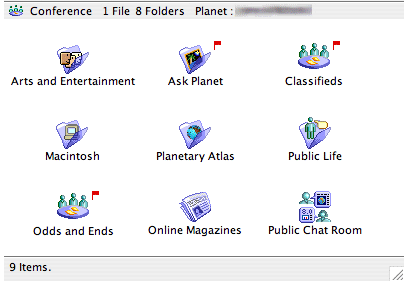
An example of what a FirstClass online community looked like.

An example of what a FirstClass Client online community looked like (I wish I could show you what CItyNet, or any of the Virtual Valley communities, or BMUG, looked like, but there doesn’t seem to be any screen captures of them online).

One of my favorite early resources is from 1993; written by Steve Cisler, then of Apple Computers, “Community Computer Networks: Building Electronic Greenbelts” notes that, “On a local level, thousands of electronic bulletin boards have been started by dedicated individual hobbyists, small business people, non-profits, corporations, federal agencies, other governments and educational institutions.” And Cisler noted the role of volunteers in creating and sustaining these online communities – and that means online volunteers. Back then, Free-nets and community networks were all the rage among the small number of advocates for Internet use by everyday citizens, like Virtual Valley Community Network, a series of community bulletin boards via FirstClass and serving cities in Silicon Valley, California by San Jose-based Metro Newspapers, the most popular being Cupertino’s CityNet. I was involved in CityNet, just as a user, as well as Virtual Valley and Mac-focused online bulletin boards back in the early 1990s, when I was living in San José – I was much more excited by them than the World Wide Web, which, to me, was just a series of online brochures.

In May 1994, Apple Inc. and the nonprofit Morino Institute held the Ties That Bind Conference on Building Community Networks, at Apple HQ in Cupertino, California. It was about the potential of communities online that “make a difference” and “drive positive, sustaining social change.” It defined such communities as everything from neighborhoods to dispersed people with something in common, like a health concern, or caregiving. At that 1994 Silicon Valley conference, the Morino Institute presented a document called Assessment and Evolution of Community Networking. The document opens with a letter published in the newsletter of the Cleveland chapter of the Alzheimer’s Association:

“Every time I do get on Free-Net, I need some kind of help, and when I leave I have truly received the help I need. … I want you to know that without Free-Net I would be lost. … I don’t worry, I am not afraid, I have Free-Net and my Computer Family of loving and caring friends.”

He’s talking about online volunteers – people caring for loved ones with Alzheimer’s and donating their time and knowledge to others online. Is this the earliest heartfelt statement on record by someone that has benefitted on an emotional and psychological level from the efforts of online volunteers? It’s the earliest I’ve found – though virtual volunteering is a practice as old as the Internet, which means it began in the 1970s. Regardless, the statement well represents the potential of virtual volunteering – a potential thousands of organizations and their clients have realized.

I also found this San Jose Mercury News article in 1995 noting the lack of public interest at the time regarding the Cupertino CityNet system allowing users to message their elected officials. An excerpt:

Let the record show that history was made, but few took note.

Cupertino this week became the first city in the nation to allow people to communicate with the city council from home via computer during meetings. The results: Five notes saying, “This is a great idea,” and another, in response to a comment jokingly made by Councilman John Bautista, informing the council that people who commute by bicycle do obey traffic signals.

Although just a handful of residents sent messages, city officials say they have great hopes for the future of interactive computer access to the city council.

Doesn’t sound promising, in the heart of Silicon Valley, for this Internet thing… and yet, less than three years after this article was published, I was directing the Virtual Volunteering Project and abandoning my idea of listing every nonprofit, community or government endeavor involving online volunteers because there were already way too many to count.

My search this time to update my page uncovered a resource I hadn’t seen before: Janice Morgan’s 1997 Master’s Thesis, “Community ties and a community network : Cupertino’s computer-mediated Citynet“. I had forgotten that many these networks were strongly associated with local newspapers, even sponsored by such, until I started reading Morgan’s paper. Media companies started abandoning their relationships with these networks around the time her paper was published. You have to wonder if newspapers could have remained relevant with new generations had they kept their involvement in these communities instead of walking away.

Back in the 1990s, in addition to CityNet and other bulletin boards, I was also heavily involved in USENET newsgroups. These were worldwide distributed discussions that weren’t “closed gardens” like Facebook or Twitter – you didn’t have to join a particular network and fill out lots of information about yourself in order to see messages and participate. They weren’t even based on the World Wide Web. Rather, you just used a free tool to access newsgroups, found a discussion in which you were interested and jumped in! The one I was most involved with was soc.org.nonprofit, which was for the discussion of nonprofit organizations. soc.org.nonprofit, a USENET newsgroup that was also available by email subscription (and called USNONPROFIT-L via email). I joined shortly after it was started in 1994 by Michael Chui, then of Indiana University. I made friends and colleagues on that community, and others, that I still have to this day, and my involvement lead to all of my employment for the rest of the 20th century – not even kidding.

The sense of fraternity I got from those city-based FirstClass bulletin boards and USENET back in the day is missing from most online communities today. As I revisited these documents, I was reminded of this yet again. Social media, with its extensive registration and user information demands, focus on profits and requirements that users have either the most advanced hardware and software, even a special app for each platform, has taken that away.

Also, Assessment and Evolution of Community Networking presents 10 suggestions as critical to transitioning community networks to “a higher role and significance.” The suggestions are things that so many online startups, nonprofit or for-profit, have, sadly, ignored. Among them:

We urge you to consider relevance. We suggest gaining a better understanding of the people and institutions to be served and of the institutions and services to be involved. Gain an understanding of what needs are going unmet — at home, in families, in the workplace, for the unemployed, in the government, social services, and so on. The well-worn cliche, “if you build it, they will come,” is ineffective relative to the needs of community.

That statement is as relevant now as it was in 1994, and NOT just for community networks. I wish every person who wrote me about their fabulous new idea for a start-up nonprofit that will somehow involve tech4good or digital volunteers would have that paragraph in mind as they pitch their idea to me.

If you have never looked at documents from the 80s or 90s about online communities and the promise of the Internet as a tool for building more awareness regarding various causes, improving citizen engagement and participation, helping nonprofits, and driving positive, sustaining social change, you really should: you will be amazed at how early people were seeing the potential of the Internet for good, and how much we have yet to realize.

vvbooklittleAnd, as always, as I read these articles, research and case studies from years past, it all yet again confirms what Susan Ellis and I promote in The Last Virtual Volunteering Guidebook, and what I see being promoted many years later by the very latest digital engagement initiatives and “hot” new technologies meant to help people volunteer, advocate for causes they care about, connect with communities and make a difference. Tools come and go – but certain community engagement principles never change.

Also, if you interested in starting an online community for a neighborhood, town, city, county, school, or other small, defined region, one that’s meant to promote civility, promote civil society and build understanding, please see this resource to help you.

Relationships take time, even via social media

Stop looking for the magic social media management tool, the one that allows you to send one message to “all” the social media platforms and magically get lots of likes and followers. The one that keeps you from ever having to actually log in to Twitter, Facebook, Instragram, etc.

Stop it NOW.

That approach to social media is like walking into a room full of people, making an announcement, even a powerpoint presentation, never taking questions or looking to see if anyone is listening, walking out when you’re done, and then wondering why no one gave your nonprofit money, came to your next event, provided input on your programs, joined as a volunteer, etc. – and using that same experience to say, “Well, I guess everyone likes us or they don’t care, because no one said anything to me!”

Timo Lüge blogs at Social Media for Good and in a recent blog: says this:

“Social media is about building and sustaining relationships. It is not a one-time interaction. In other words: you need to stop thinking about how you can get people to ‘like’ a post and instead develop a long-term strategy for how you want to interact with the community. You and your management need to accept that that will take time. Focus on the quality of the interactions instead of the quantity.”

That doesn’t mean you shouldn’t use a social media management tool to schedule tweets or Facebook status updates or anything else in advance, or to create analytics – I use Hootsuite to schedule my daily tweets in the morning and afternoons, as well as bi-weekly posts to Googleplus and, sometimes, to Facebook. But I still take the time log into each of those platforms, individually, and to read messages by people and organizations I follow, like those messages, comment on them, share posts by others, reply to comments that have been made to me, etc. I also make sure I tag people and organizations related to what I’m posting on social media, so they know they are being talked about, and might be encouraged to reply. In other words, I spend time with the audience, just like I would in a room full of people, to hear their feedback, to hear what they are doing and thinking, to acknowledge their points of view and to get a sense as to whether or not I’m really connecting with people. That’s what building and sustaining relationships look like, online or off. And that’s what it takes to make social media worthwhile for any nonprofit (or for-profit, for that matter).

Also see:

vvbooklittleFor more about building relationships online, see The Last Virtual Volunteering Guidebook, by Susan J. Ellis and myself. The community engagement principles offered here work with the very latest digital engagement initiatives and “hot” new technologies meant to help people volunteer, advocate for causes they care about, connect with communities and make a difference. Tools come and go – but certain community engagement fundamentals never change.

Snapchat’s Potential Power for Social Good – with REAL examples

snapchat

(also applicable to Tik Tok or Instagram or whatever the short-video-platform fad of the month is)

The vast majority of nonprofits, NGOs and community-minded government programs do not have the staff nor the expertise to use every social media tool out there, or even most of the most-popular tools, especially with so many funders refusing to fund “overhead.” That means these mission-based programs are often late adopters when it comes to social media tools – it’s a wait-and-see-if-this-will-stick-around attitude.

During workshops I’ve lead in the last 12 months, I have been getting asked a lot about SnapChat. If you don’t know, SnapChat is a phone-based app that uses photos or videos, with text, to create its messages to an account’s subscribers; you have a fleeting moment to captivate your audience, because 10 seconds after a user opens the message, it disappears. Nonprofits, government agencies and other mission-based folks have asked me if I think it’s worth their time to use to get a message out. My answer is always, “it depends.” IMO, it depends on if you have a program about which you really, really want and need to reach tech-savvy young people. But to work, the messages have to be specifically targeted to that audience and platform (just 12% of SnapChats millions of users in the U.S. are 35 to 54, though they company says that demographic is growing). In other words, you can’t just repurpose what you’re posting to Facebook or Twitter.

Starting in 2013, every few months, there’s an article touting the possibilities of Snapchat for nonprofits – the latest is this article on Snapchat’s “Power for Social Good”. IMO, most of the articles, even this latest one, are just hype – yes, I’m sure everyone is talking about SnapChat at the big Consumer Electronics Show in Vegas this year. Yes, 90% of Snapchat followers are now consuming the content, but that was a similar number for Facebook or Twitter in the early days – it will plummet as more people use it, as more PARENTS use it, as people subscribe to more and more users, etc.

Still, given that Snapchat isn’t yet saturated with advertising (the company is still working on an ad model), and that it has an excellent viewer rate (around 90% of messages are viewed by subscribers), and that millions of young people are using it, the platform has promise, at least this year, and maybe for another year or two, as an effective outreach tool for people under 35 in particular.

Most articles about Snapchat use by mission-based entities are about its potential, not about how it’s actually being used by nonprofit, NGOs, government agencies, schools, etc. So, let’s look at three REAL examples of mission-based organizations doing something with SnapChat that made it worth their time (and note, these actual examples were REALLY hard to find):

Tenovus, a Welsh charity helping people with cancer, used Snapchat to generate media coverage for Volunteers’ Week in the UK. The charity teamed up with WalesOnline and asked supporters to take a #selflessie – a selfie of them doing something selfless – and send it to the charity and WalesOnline via Snapchat. The response was, apparently, excellent – but it would be interesting to know how many of these young people had perceptions changed about cancer, how many became volunteers for the cause, etc.

DoSomething.org is one of the largest nonprofits for teens and young adults in the USA, connecting 13-to-25 year olds to a wide variety of social causes and ideas of how to get involved. SnapChat users fall almost exactly within that age demographic. So, for instance, the organization ran a campaign in February called Love Letters, to encourage young people to make Valentine’s Day cards for homebound seniors, and to create excitement for the campaign, a staff member dressed up as Cupid and made a Snapchat story, using a series of photos with text, explaining that he was going to go out onto the streets of New York City and deliver Valentine’s Day cards, and he encouraged SnapChat followers to vote via text if he should deliver the cards by bike, ice skates or on foot in Central Park. The idea was that, if young people laughed at the photos and voted, they were more likely to make cards for seniors – though there’s no data on how many actually did so.

Save the Children has been using SnapChat since 2015. According to a thread I found on Facebook, “We have found we are getting HUGE engagement vs. other platforms (50% of our audience viewing our stories). We’ve used it for events like UNGA and our Gala, but find the best stories are those from the field where we are showing the children and families helped by our programs.” Save the Children exported their messages for their SnapChat photos that created a story about live in Jordan’s Zaatari refugee camp for Syrian refugees, so the messages wouldn’t disappear, and you can see this SnapChat campaign via Facebook. Unknown: were minds changed about refugees? Was there an increase in donations from young people because of this Snapchat use?

I still say “it depends” on whether or not a nonprofit should use Snapchat, but I will say that every nonprofit should be encouraging volunteers to use their social media channels, including Snapchat, if they are on it, to talk about and/or send pictures of themselves in action supporting a non-profit’s mission, like preparing food, cleaning up a trail, sitting at their computer while engaged in virtual volunteering, etc. But the organization needs to provide repeated guidance on this: volunteers need to always adhere to your organization’s social media policies regarding sharing photos online, they need to provide info on how their friends could also participate or get more information, etc.

A great way to involve young volunteers might be to invite them onsite to talk about how the nonprofit  might use Snapchat to promote a specific message, and how those young people could actually undertake the activities for this to happen; this isn’t so that the nonprofit doesn’t have to get paid staff to do it but, rather, because these volunteers actually might be the best people to lead this activity, better than paid staff, because the organization can involve young people in a very memorable way and in a leadership capacity, and in a way that might become a story in-and-of-itself for the media. Just be sure that screen-capturing is a part of the campaign, so you can preserve and review messages long after those messages disappear on Snapchat!

Even if SnapChat loses its shine in a year or two, your use of it won’t be time wasted; we live in an era where we must be much more nimble in crafting our messages for different online platforms. What you learn using SnapChat is going to help you use whatever takes its place as the shiny new popular kid in a year or two (update: that’s now Tik Tok and Instagram).

Update March 25: justgiving.com has an article called 7 charities that totally get Snapchat (no publication date given) and it highlights Do Something Snapchat activities (see above), as well as:

The organization Penny Appeal and World Champion Boxer Amir Khan’s Snapchat story of welcoming Syrian refugees as they landed on the Greek island of Lesbos, to create awareness about their plight.

Young Enterprise NI in the U.K., which uses Snapchat to provide young people with “bite-size” business tips and advice.

Royal National Lifeboat Institution, also in the U.K., which uses it to “have conversations with our supporters… to raise awareness of our lifesaving work.” The RNLI has used it to organize competitions, share coastal safety advice and tell stories of their volunteer lifeboat crew.

MuslimAid, a charity in the U.K. that says it uses it “as a key volunteer recruitment tool and as a hassle-free way of bringing their events to life.”

Brazilian environmental NGO OndAzul, which shared 10 second Nature Snapfacts with their followers. “Teens who opened their Snap would catch a fleeting glimpse of natural beauty being destroyed by man made hazards.”

The Danish branch of World Wildlife Fund (WWF) used Snapchat to emphasize the speed at which endangered species disappear. Each ad featured one of five endangered animals with the tagline ‘Don’t let this be my #LastSelfie’.

Update April 5: Beth Kanter has a new blog that adds a few more examples and links to some tutorials.

Update July 14, 2020: How Your Nonprofit Can Use TikTok. By Classy, a social enterprise that creates online fundraising software.

vvbooklittle

I’ve read a lot about SnapChat, and dabbled with it myself, and the suggested practices talked about in the aforementioned case studies yet again confirms what Susan Ellis and I promote in The Last Virtual Volunteering Guidebook. Online tools come and go, but certain community engagement principles never change, online or onsite, and our book can be used with the very latest digital engagement initiatives and “hot” new technologies meant to help people volunteer, advocate for causes they care about, connect with communities and make a difference – even if those technologies didn’t exist when we wrote this book.

If you have benefited from this blog or other parts of my web site and would like to support the time that went into researching information, developing material, preparing articles, updating pages, etc. (I receive no funding for this work), here is how you can help.


Volunteers are more important than social media in Presidential elections

Please see the end of this blog for an update nine months later.

graphic by Jayne Cravens representing volunteersLast night, the public radio show Marketplace here in the USA did an excellent story about the vital role volunteers play in a successful Presidential campaign. Social media is great, but the reality is that it’s old-fashioned volunteer engagement – people calling neighbors to get out the vote, driving neighbors to the polls, etc. – that wins elections. The story is available for free online, and if you are outside the USA and can’t access it, just download Hotspot Shield – you’ll be able to using that.

My favorite points from the article:

“It takes $670,000 dollars in ad buys in a general election to get the same number of estimated votes as you would by opening a field office which is about $21,000 dollars to maintain throughout an election season.” — Joshua Darr, assistant professor of political communication at Louisiana State University, quoted in the article.

“Donald Trump’s performance in Iowa has widely been blamed on his lack of volunteer organizing. ”

“Networks of lawn-trodding volunteers aren’t something you can just whip up overnight, and the people who build these networks are not a dime a dozen.”

I’m THRILLED with this story. It touches on so many things I promote in my work: that highly-skilled managers of volunteers, fully supported and funded, are required for effective volunteer engagement, that volunteers are not free, and that, sometimes, volunteers are the BEST people to do a task.

For the record, I knew President Obama was going to win re-election, despite what the polls were saying, because his campaign was getting new volunteers, and keeping volunteers, all over the country, right up to election day, while Romney’s campaign was closing offices many weeks before. And when I volunteer for political campaigns, I always rewrite the script I’m given, so that the first thing I always say is, “Hi, I’m Jayne Cravens, and I’m a volunteer with the such-and-such campaign,” because I know the person on the other end is much more likely to listen to me knowing I’m a volunteer, not a paid staffer.

And note: volunteer engagement might be cheaper than national news spots, but it still costs money. I know a lot of managers of volunteers that would love $21,000 for their volunteer engagement… and with that said, be sure to sign this petition at Change.org that calls on Congress to provide funding for the effective management of the volunteers it is requiring public lands, including National Forests, to involve.

vvbooklittleSuch a shame people managing presidential campaigns, senate campaigns, congressional campaigns, grassroots campaigns – whatever the campaign – aren’t buying The Last Virtual Volunteering Guidebook in bulk! Tools come and go, but certain community engagement principles never change, and our book can be used with the very latest digital engagement initiatives and “hot” new technologies meant to help people volunteer, advocate for causes they care about, connect with communities and make a difference.

— end original blog —

November 28, 2016 update:

I was wrong. This election was not won by volunteers nor by volunteer management. As my November 28 blog details, social media DID win this election. It proved an ideal vehicle for promoting misinformation. As I noted in my last blog, BuzzFeed reported that fake news stories about the USA Presidential election this year generated more engagement on Facebook than the top election stories from 19 major news outlets COMBINED – that included major news outlets such as The New York Times, The Washington Post, CNN, and NBC News, and on and on. And the majority of these fake news stories did NOT come from any campaign operatives; rather, they came from a man in Los Angeles who originally built fake news sites to as a way to expose the extreme right, a plan that most certainly did NOT work. And these fake stories, most of which promoted Trump as a candidate, were shared by millions of people via social media – people who believed them, and most of whom never signed up to be an official Trump campaign volunteer. See my November 28 blog for more details. A blog in December offers even more details on how volunteers were engaged, officially and unofficially, in this campaign, and how a well-managed, vast army of volunteers did NOT win this election.

UN, NGO efforts to counter hate

UNLogoOn December 2, 2015, the United Nations Alliance of Civilizations (UNAOC) held a Symposium on Hate Speech in the Media, with senior officials calling for a global mobilization of citizens to help counter messages that promote xenophobia, violent extremism and prejudice. The symposium was the first of a series that UNAOC will host, called Tracking Hatred,. The next symposium will be held in Baku, Azerbaijan, in April.

The UN Counter Terrorism Executive Directorate (CTED) also organized two days of panel discussions later in December, a collaboration between the public and private sector, called “Preventing Terrorists from Exploiting the Internet and Social Media to Recruit Terrorists and Incite Terrorist Acts, While Respecting Human Rights and Fundamental Freedoms.”

@unaoc, @friendsunaoc, @UN-CTED and other agencies, UN and non-UN alike, are using #SpreadNoHate and #Reclaimingtheweb on Twitter to promote messages from these efforts. I’ll be using them as well, as appropriate, often.

Cristina Gallach, UN Under-Secretary-General for Communications & Public Information, said during the UNAOC event, “Hate speech has been with us for a long time. We will never forget the slaughter of over 800,000 Tutsis and moderate Hutus during a brief three month period in Rwanda in 1994. We will never forget either the six million Jews plus five million others who perished because of one hateful vision… Today, however, more than ever, individuals are using hate speech to foment clashes between civilizations in the name of religion. Their goal is to radicalize young boys and girls, to get them to see the world in black and white, good versus evil, and get them to embrace a path of violence as the only way forward.” She wasn’t just referring to Daesh (also known as ISIL or ISIS), though they are the most high-profile right now and, therefore, they were the primary focus of this event.

From what I’ve read about the symposium, there were lots of comments by speakers about enforcing laws that prohibit incitement of hatred or violence, and about social media companies being compelled to quickly delete content. I’m wary of this kind of talk, as governments use cries of “hate speech” to arrest people that are critical of the government or a religion, such as this 14-year-old boy in Turkey, or these teens in Egypt, or Raif Badawi in Saudi Arabia. I much prefer strategies focused on communications activities that establish and promote a narrative that pushes back against hate and prejudice, and was glad to see that strategy as a focus of two of the CTED panels, one called “privacy and freedom of expression in the digital age” and another that I am very interested in, called “Use of Internet and communications technology for counter-messaging purposes” – the link goes to webcast of the panel, moderated by Steven Siqueira, Acting Deputy Director, CTITF Office- UN Counter-Terrorism Centre (UNCCT) – so wish there was a transcription from this panel! If you want to listen to just a bit, here’s my absolute favorite: go to around the 14:00 point and listen to Humera Khan, Executive Director of Muflehun – she gives realistic, practical advice on mobilizing youth to counter online messages of hate. And then listen to Jonathan Birdwell of the Institute for Strategic Dialogue, right afterward, talking about teaching young people to critically engage with what they read online, and the importance of digital literacy. And then jump to around 36:00 and listen to Abdul-Rehman Malik, who has a provocative, assertive, right-on challenge to governments on this subject. The questions and answers after these three present is worth your time as well. The entire session lasts about 90 minutes, and is really worth your time to listen to (please, UN, release it as a podcast!).

I hope the people involved in these UN and civil society efforts know that, in the last 24 hours, Muslims on Twitter have hilariously trolled a Daesh leader’s call to violence – humor is a powerful tool in fighting against prejudice, and these tech-savvy Muslims are doing it brilliantly. I hope they know about online groups like Quranalyzeit and Sisters in Islam, tiny organizations doing a brilliant job online of countering extremist messages regarding Islam, and doing it as Muslims and from an Islamic perspective. Or about Mohamed Ahmed, a middle-aged father and gas station manager, and one of many Muslims in Minneapolis, Minnesota frustrated by Daesh’s stealthy social media campaigns, and countering it with a social media campaign of his own, AverageMohamed.com.

AND I HOPE EVERYONE KEEPS TALKING. Because I think they are talking about activities and messages that will really work in stopping the violence, and will make all aid and development efforts – about water, about reproductive health, about agricultural, WHATEVER – actually work, actually be sustainable. I so wish all of these efforts were getting more attention online, in traditional media, among all United Nations agencies, among NGOs, and among politicians.

Also see:

Propaganda for good (blog)

Recommendations for UN & UNDP in Ukraine to use Twitter, Facebook, Blogs and Other Social Media to Promote Reconciliation, Social Inclusion, & Peace-Building in Ukraine (PDF)

Reconciliation (a blog of frustration I wrote while working in Ukraine in 2014)

How Daesh (ISIS/ISIL) uses Twitter – update on resources

logoI’ve been updating a blog I wrote earlier in December about communications activities not just to create awareness, but to persuade, to change minds, and to create advocates. There’s a new resource there regarding how Daesh (ISIS/ISIL) uses Twitter to create trending hashtags, and new info about an Islamic-based effort to counter Daesh’s messages. Check it out!

What I learned launching my first online petition

logoLast week, I launched my first ever online petition. I chose change.org as the platform. You can read more about the petition, and why I started it, at this blog, OPB & Congress Think Volunteers are Free.

My goal was to have 100 signatures by Sunday evening, and then I would set a new goal Monday morning. I had four days to get there. I thought that goal would be oh-so-easy to meet: I have more than 300 friends on one of my social media accounts, and they are real friends, people I know personally, many of which I’ve known for years, and they are very active on social media and they “like” or respond to much of what I post (about Star Wars, about politics, about my dog and/or cat, etc.). I just knew 100 of them would happily sign the petition well before Sunday evening, just because I posted a status update about it and they love me (grin).

I also tweeted about the petition several times, at different times during different days, to my more than 2000 followers on my professional Twitter account, using various keywords (even tied it to Star Wars: The Force Awakens!), to my almost 600 followers on my personal Twitter account, to my more than 350 friends on Facebook, made up mostly of colleagues and neighbors rather than close friends, and to my Facebook page, which has almost 1000 “likes” (though I didn’t have much hope for that – Facebook, either via my account or my page, hasn’t proven a good way of reaching folks regarding my work or even my vacations). I also did “mention tweets” and direct tweets to various associations of managers of volunteers – DOVIAs – asking them to share the petition with their members. And I gave GooglePlus a go as well.

As of the end of the day on Sunday, at 11 p.m. Pacific Coast USA time, I had 94 signatures. That’s what I still have as I publish this blog on Monday. And most of those did NOT come because of any social media activities. Rather, they came because I emailed or direct-messaged about 80 friends and colleagues and asked each of them, separately, personally, to sign it. THAT laborious method got me far, far more signatures than any of the aforementioned social media blasts, no matter how often I blasted.

Why didn’t others sign? I asked friends and colleagues who didn’t sign, specifically, directly, individually, why they didn’t sign, and the vast majority who responded said they never saw any messages on social media about the petition, especially not the status updates on Facebook. In addition, a few, all managers of volunteers or working somehow in volunteerism, said they were prohibited from signing a petition by their workplace – which is entirely untrue, but they’ve been made to believe that their employer doesn’t allow them to be politically active at all, other than voting.

So, what have I learned in trying to get signatures for my petition:

  • Even when a petition is all about a very hot topic among those that you want to sign the petition – in this case, funding volunteer management, and the target group is those that work with volunteers or promote volunteerism (though absolutely anyone can sign) – that isn’t enough to get people to sign.
  • Direct, person-to-person, customized emails or direct messages, sent individually, from me – messages that I did not cc anyone else on, but each going only to one person, are, by far, the most effective way to get signatures on a petition. BY FAR. I had a 85% sign rate from individuals I messaged directly via email or Facebook. However, I’m reluctant to DM absolutely every one of my 300+  close, personal social media friends… that seems so overwhelming, to them and me.
  • I have some really great friends.
  • Setting a goal for how many people I wanted to sign, by a particular date, really pushed me to keep pushing. I did 10 times more work over the weekend to promote this petition than I had planned to, but I was determined to reach that goal, rather than to be hurt and give up early.
  • Facebook status updates, whether via a personal account or a page, are rather useless in promoting a petition (or most anything), because most of the people that are your Facebook friends or have “liked” your page will never see it – Facebook will never show them those messages in their newsfeed, because they see only “Top stories.” The more people that like that status update, the more people that will see it, so if you are going to do a petition, direct message several people and get at least 10 people to “like” that status update about your petition if you want it to be seen by anyone!
  • We are all drowning in a sea of online information. It has never been harder to reach people! So much noise!
  • You have to get organizations to promote such petitions to their members, because without organizations talking about such, organizations like DOVIAs, this petition will never reach much over 100 people, and will have no hope of going viral, let alone any media outlet paying attention to such. And with that said: thank you, Northwest Oregon Volunteer Administrators Association (NOVAA), based in Portland, Oregon, for helping to raise awareness about this petition!
  • There is a huge misunderstanding by too many managers of volunteers that they are prohibited from signing online petitions, or sharing such petitions. They are absolutely allowed to sign such, as individuals rather than representatives of their organization (though many organizations DO allow this), and they may share such petitions, they are allowed to, so long as they don’t tell people in their message whether or not to sign it but, rather, say, “Interesting: a person/organization has started this petition that says such and such. How do you feel about it? Share in the comments below.” If people sign, that’s their choice – you’ve just informed them of an activity. You can do this about a petition regarding volunteer management – but probably not a political candidate.
  • Associations of managers of volunteers like to complain at conferences and in online discussion groups about how volunteer management isn’t funded – but when they have a chance to make a difference on the issue, they are silent. Very disturbing.

So, what now? Well, today, with still just 94 signers, I’ve:

  • Sent a personal email, individually, to more than a dozen colleagues that are managers of volunteers, that work at nonprofit centers, or that are somehow associated with volunteer leadership, asking them to please consider signing the petition, commenting on it, and promoting it.
  • Posted to several LinkedIn groups.
  • Posted again to Twitter, particularly my pro account, and I will be posting at least twice a day, every day this week, at different times of day, using various keywords.
  • Commented and liked the NOVAA Facebook page where they talked about this petition, so that they are thanked and so that their status update might show up in more members’ newsfeeds.
  • Hope that another association of managers of volunteers – a DOVIA – will decide, oh, hey, this is exactly the kind of thing we need to be doing in order to represent the interests of our members! 
  • Blogged about this experience as a learning experience regarding online communications (and you are now reading this blog!)

And I hope if you have read this blog you will SIGN THIS PETITION.

My next goal is 106 more signers by midnight New Year’s Eve – that would put me at 200 signers and maybe, just maybe, the petition will get the attention of the media. But I’m not holding my breath.

Arts education is ESSENTIAL, not a nice extra

Amy Cuddy and CBS This Morning are in love with “power poses.” The “news” story they did recently was all about how standing or sitting a certain way, even if no one is looking at you, can help you feel more confident and powerful, and when done in front of other people, allow them to see you as such. Certainly body language is very important in presentation, for both the presenter and those you want to listen, but I was cringing over some of the recommendations, like for the pose where you sit in your chair and put your feet up on your desk as you talk to others – which, as anyone who works internationally knows, is profoundly disrespectful to people in a room with you. And the reporter’s fawning over a photo of Cuddy’s husband, in a pose they loved but that, to me, was demanding and demeaning to the viewer in a way that made me want to leave the room and get as far away from him as possible.

But what really ticked me off was this exchange:

“We don’t learn this stuff in school,” the interviewer, Rita Braver, said.

“No, we don’t teach it,” replied Cuddy.

Um… I learned it in school. I learned it in choir. You know, one of those arts classes that a lot of people that want to “revolutionize” and “disrupt” schools think are unnecessary in schools and should be replaced with more practical classes? If you were in any of the choirs in the Henderson County, Kentucky school system, you learned very quickly how to sit and how to stand, even when you weren’t singing. Certain postures were required, and other postures absolutely banned in the classroom. And those posture requirements have stayed with me to this day, decades later; I don’t sing in a choir anymore, but I know how to sit or stand in a meeting to indicate I am listening, that I hear you, and how to sit or stand so that you will feel compelled to listen to me. Performing in school plays also helped me with posture, with saying something by the way I was standing or sitting: fear, disinterest, confidence, surprise, and on and on.

But posture and presentation skills aren’t the only things that choir and drama activities in school gave me and that continue to serve me: I also know how to work in a team and meet a deadline, and how to dream, how to imagine, how to think creatively. There is a creative process, one that gets kick-started and flourishes when you go to art galleries, watch movies, read novels, and if possible, participate in making art yourself – singing, dancing, drawing, performing. You stare at clouds or a field or trees instead of a lit screen, and you let your mind wander, so that you can actually get ideas, so that you can formulate your own ideas. A lot of times ideas will turn up when you’re doing something else. Creativity is vital for most successful entrepreneurs or people brought in to improve a project, a program or an entire business. You don’t just disrupt a project or program or entire organization just because you can – you look for new ways of doing things that are needed by those served, an innovation that increases efficiency, that better addresses needs and challenges, and that keeps staff inspired – not just a change for change’s sake – and those disruptions come from inspiration, from creativity.

Neil de Grass Tyson, David Byrne, talked recently in an interview on Star Talk about the VITAL importance of arts education to innovators in any field – business, engineering, scientific research, whatever. I cried over this 3:44 minute part of the show, where an astrophysicist talks about why arts is VITAL to creativity. I could not agree more.

Instead of taking arts-related classes and learning to imagine, some Silicon Valley tech workers are taking LSD to be more creative. That’s so sad. Start a company choir. Dance. Try out for community theater. Have a reading of a Shakespeare play at your house. And sit up straight!

Also see:

That ‘Useless’ Liberal Arts Degree Has Become Tech’s Hottest Ticket

Why Top Tech CEOs Want Employees With Liberal Arts Degrees

social media used to prank journalists during live event – again

“In the end, accounts of the shooting from @JewyMarie made it into reports from the AP (and The New York Times as a result), the International Business Times and an on-air interview with CNN’s Anderson Cooper. There is obviously a person behind @JewyMarie’s Twitter account, but the person’s accounts of events are fake. While embarrassing, the ordeal is a reminder that a person’s word is not proof. People lie. Anonymous people on the Internet lie – a lot.”

This is from a blog by the Society of Professional Journalists. It’s an excellent caution for anyone looking for information during a breaking news event.

What a great lesson this would be as part of the class on media literacy I long to teach…

Words matter

Back in my university days, for my major in journalism, I had to take a class about ethics in journalism. And it changed my life. My “aha” moment was when the professor handed out two different news articles about the same event – a funeral. Both articles were factually accurate. In our class discussion, we noted that one story seemed rather cut-and-dry: the hearse was “gray”, the women “wore black” and they “cried openly”, etc. After reading the other article, the class said their impression was that the family of the deceased was very well off and very high class – the hearse was “silver”, the women wore “black haute couture” and they “wept”, etc. There were lots more examples we came up with that I cannot remember now, but I do remember that I started paying a lot more attention to words that were used in the media to describe events. And I still do.

I use the following as an example not to invite debate about the ethics of abortion or access to abortion, but, rather, for you to think about words, to think about those debates and the words different people use when talking about the same things. One side talks about reproductive health, personal choice, reproductive choice, health clinics, pregnancy termination, freedom from government interference and abortion access. The other side brands itself as pro-life and uses words like murder and killing and baby parts and abortion industry. You can know which side a politician is on based on which words that person uses. Both sides regularly petition the media to use particular phrasing when talking about any news related to abortion services.

Another example: following mass shootings and murders by different young white men at a Colorado movie theater in July 2012, a Connecticut elementary school in December 2012, a Charleston, South Carolina church in June 2015, and an Oregon community college in October 2015, among many others, the shooters were referred to by police and the media as loners and mentally-ill, their relationships with women were often mentioned, and the words terrorism or radicalized were rarely, or never, used by journalists or politicians in association with the events once the shooters were identified. By contrast, mental illness, relationships with women and similar references was rarely, if ever, discussed by those same people regarding mass shootings, murders and bombings in the USA by young Muslim men in Little Rock in 2009, in Boston in April 2013, in Garland, Texas in 2015, and in Chatanooga in July 2015, among many others (details are still emerging regarding the shooting in San Bernadino this week, so I’ll leave that off this list).

Another example: the estate tax versus the death tax. In the USA, when someone dies, the money and goods that they had that is passed along to heirs, usually children, is taxed by the federal government. When this tax is described as an estate tax, polls show that around 75% of voters supported it. But when the exact same proposed policy is described as a death tax, only around 15% of voters supported it.

Sometimes, our choice of words to describe something is unconscious, a matter of our education or background. Other times, the choices are quite deliberate and meant to add subtext to our message, to sway the reader or listener in a particular direction. As I said on Facebook in response to someone who implied she doesn’t think word choice matters when describing groups, people or events:

If there is anything I’ve learned in my almost 50 years – WORDS MATTER. The words we use influence, inspire, change minds, create understanding or misunderstanding, fuel flames or put them out. Using a double standard to talk about people that murder others brands one “just really sad”, and the other “terrorism.” It demonizes entire groups while letting off other groups that are the same. It’s hypocrisy.

Here is a wonderful web site from a student project at the University of Michigan on the power of word choice in news articles (it includes rather wonderful lesson plans you can use in your own trainings!). It hasn’t been updated in a long while, but the examples it uses – many from the second Iraqi war with the USA – are excellent for showing the power of word choices to influence opinion – and even create misunderstanding. Also see this lesson plan for students in grade 9 – 12 regarding word choice and bias from Media Smarts, “Canada’s centre for digital and media literacy,” for more examples of how word choices can influence our opinions.

Words matter. Choose carefully.

Also see: