Author Archives: jcravens

About jcravens

Jayne Cravens is an internationally-recognized trainer, researcher and consultant. Her work is focused on communications, volunteer involvement, community engagement, and management for nonprofits, NGOs, and government initiatives. She is a pioneer regarding the research, promotion and practice of virtual volunteering, including virtual teams, microvolunteering and crowdsourcing, and she is a veteran manager of various local and international initiatives. Jayne became active online in 1993, and she created one of the first web sites focused on helping to build the capacity of nonprofits to use the Internet. She has been interviewed for and quoted in articles in The New York Times, The Wall Street Journal and the Associated Press, as well as for reports by CNN, Deutsche Well, the BBC, and various local radio stations, TV stations and blogs. Resources from her web site, coyotecommunications.com, are frequently cited in reports and articles by a variety of organizations, online and in-print. Women's empowerment and women's full access to employment and education options remains a cross-cutting theme in all of her work. Jayne received her BA in Journalism from Western Kentucky University and her Master's degree in Development Management from Open University in the U.K. A native of Kentucky, she has worked for the United Nations, lived in Germany and Afghanistan, and visited more than 30 countries, many of them by motorcycle. She is currently based near Portland, Oregon in the USA.

UN Agencies: Defend your “internships”

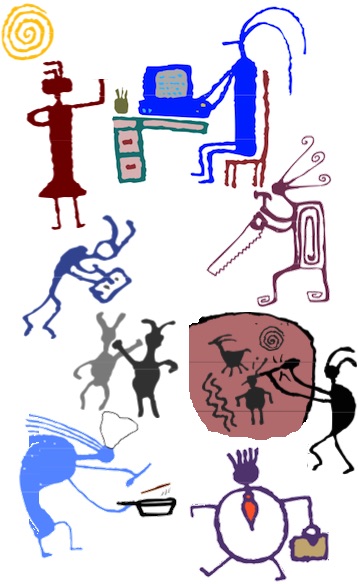
graphic by Jayne Cravens representing volunteersI love the United Nations, especially UNDP. I’ve been proud of my association with such in Germany, Afghanistan, Ukraine, and online. I hope to be associated with them again.

I am also a big advocate for internships, paid and unpaid, at the UN and other mission-based organizations.

But I’m bothered by many of the calls by UN agencies for unpaid interns to work 40 hours a week. And how many people are undertaking full-time unpaid internships at UN offices and have NOTHING about their terms of reference in writing at all.

Currently, formal recruitment messages from United Nations agencies for full-time unpaid interns talk about all of the tasks these volunteers – yes, volunteers, because they are UNPAID – will be responsible for, but rarely say what kinds of skills-development/career-development support an intern can expect. They also never say why these tasks have been deemed as most appropriate for an unpaid intern, as opposed to a paid consultant. I asked someone at a UN agency in an office where I was working why a particular role was designated for a full-time unpaid intern instead of a short-term, paid consultant or as a paid internship, and he said, “We don’t have the budget to pay someone.” Yes, I fumed. Involving volunteers – even if you call them unpaid interns – to save money is never the primary reason to involve such! NEVERUnpaid interns are volunteers, and if you are involving them because you don’t have to pay them, you are, in fact, being exploitative.

If this keeps up, UN interns may use the dollar/Euro value of volunteer hours that UN Volunteers, IFRC, ILO & others are promoting to sue UN agencies for back pay – and there is growing legal precedent for them to do so (see the links at the end of this blog).

Also, think about how your full-time unpaid internships are limited to only certain economic classes, excluding some people because they can’t afford to give you that many unpaid service hours. Are you thinking about how to ensure a variety of qualified people can undertake unpaid internships with your organization, not just those that can afford to? One way to address this: make the internships only one or two days a week.

I established my own policy when I worked for the UN Volunteers programme in Germany that all staff in our department had to adhere to regarding involving unpaid interns. This was NOT an agency-wide policy, just the one I established for our department:

  • An internship had to have a primary focus on giving the intern a learning experience, not  getting tasks done. Therefore:
    • There had to be a written job description that reflected this primary purpose of the internship.
    • The intern was invited to all agency-wide staff meetings, all staff meetings for just our department, and encouraged to ask to attend staff meetings for other departments, to learn about work across the agency. Staff were encouraged to take interns with them to meetings or events whenever possible, as appropriate.
    • The intern also had one project that was uniquely his or hers, that he or she was responsible for and could put on his or her résumé (for instance, conducting a survey and writing up the results, or evaluating some process and making recommendations for improvement).
    • The intern received job coaching and job search help from other staff members.
  • Those considered for the internship had to be able to say why they wanted to enter into a profession related to our agency’s work, and say what they had done up to that point, in terms of education, volunteer work and paid work, to pursue that career choice.
  • A person could hold an internship only for up to six months. They absolutely could not hold it beyond six months, no exceptions. An intern could NOT return to our department as an intern again, ever. That reduced the chance of a person being exploited as free labor; it forced rotation in what was supposed to be a role reserved for people learning about our work, not the opportunity for someone to have an unpaid assistant indefinitely. Interns were, however, welcomed to apply for paid positions, and we did, indeed, hire former interns for short-term consultancies sometimes – but we never guaranteed that this would happen.
  • Ideally, the intern that was leaving would overlap with the intern that was coming in by one week, so that the departing intern could get experience training someone, documenting his or her responsibilities, etc. – experience which looks great on a CV.
  • When the intern left, he or she was interviewed about his or her experience as an intern from the point of view of getting the learning and professional development he or she was looking for, and this was used to continually improve internship involvement and to show if interns were getting what our internship promised: a learning experience.

The primary task our department at UNV reserved for interns was answering the many, many emails that came in regarding the Online Volunteering Service. We found that interns really were the best people for this task: in contrast to giving this task to employees, interns brought freshness and enthusiasm to responses that really shown through. They quickly saw patterns in questions or comments that a jaded staff person might not see, leading to adjustments to web site information and other communications. Also, in my opinion, because the interns were volunteers, they assumed a much stronger customer-advocate point-of-view regarding the people emailing with questions or comments than employees did; the agency could have a real siege-mentality outlook when dealing with anyone outside the organization, while the interns had a mentality of being advocates for those outside the organization.

As I mentioned, I also came up with tasks specifically for an intern to own. It might be an internal staff survey, a customer/client survey, a research project, an evaluation/analysis project, production of a report or online resource, etc. Every intern walked away something that was his or hers, a project that he or her directed or managed or lead, and that employees and other interns contributed to. That gave interns the management experience so many were desperate for.

One more piece of advice: create a mission statement for your office’s volunteer (unpaid staff) involvement and live it: state explicitly why your organization reserves certain tasks / assignments / roles for volunteers (including unpaid interns), to guide employees and volunteers in how they think about volunteers, to guide current volunteers in thinking about their role and value at the organization, and to show potential volunteers the kind of culture they can expect at your organization regarding volunteers. A commitment by UN offices to involve volunteers would be a wonderful thing – allowing people, particularly local citizens, to take on tasks and see first hand how an agency works that is meant to serve them, creating a sense of both ownership by citizens as well as a sense of transparency about the agency.

My other blogs on this GROWING internship controversy worldwide:

Note that the links within the aforementioned blogs may not work, as I moved all of my blogs from Posterous to WordPress a year or so ago, and it broke all of the internal links. Also, some web pages on other organization’s sites have moved since I linked to such, and I either don’t know or haven’t been able to find a new location for the material.

coyote1Have a comment? Share it below!

Volunteers can help you reach more people on Facebook

Most nonprofits, NGOs, government agencies and other mission-based organizations have taken a big hit regarding their social media outreach because of changes to Facebook’s newsfeed algorithm. These changes greatly affect how many people see a status update on a Facebook page that isn’t sponsored through paid advertising. That means that, even if people have “liked” your organization’s Facebook page, they won’t see most of what you post, because of how Facebook has newsfeeds configured now. According to the International Business Times, the reach for many Facebook pages posts was at about 16 percent, but over the last few months it’s down to 2 percent or less. Facebook is a for-profit company – they want you to pay for people to see your organization’s Facebook page posts.

I’ve read some comments from nonprofit managers that say they will stop updating their organization’s Facebook pages as a result. But Facebook is a primary communication method for oh-so-many people – to stop updating your organization’s page means you are cutting yourself off from current and potential volunteers, donors, clients, and other people who care about your mission.

In How a Few Tiny Horses Bucked the Facebook Algorithm, the nonprofit TechSoup does a great job of talking about what your nonprofit can do to greatly increase the number of people that see your Facebook page updates, and TechSoup profiles a small nonprofit that’s done it all with great success. I won’t repeat their recommendations here – but I will make an additional suggestion: involve volunteers in your efforts.

The TechSoup article talks about how much sharing images can increase your organization’s Facebook page reach. I can immediately hear so many people saying, “We don’t have any photos to share.” YES YOU DO. Or you should. Are volunteers taking photos during their service time and sharing those photos with you? You need to be encouraging volunteers to do this! And another volunteer can maintain the archive of these submissions, make sure photos have keywords so that they can easily be searched, etc., if your marketing staff has no time.

I hear someone saying, “We’re a domestic violence shelter. We can’t do this!” Yes, you can: a photo of a massive amount of dirty dishes in the sink, with the description, “Tonight, we fed more than 20 people staying at our shelter this evening.” A photo of hands holding each other, with a description about how your shelter is there to help. A photo of a group from the knees down. A photo of your Executive Director. A photo of artwork created by children at your shelter. I came up with that list in two minutes (I timed it). Imagine the ideas your volunteers could come up with that would allow photos that show impact or reflect your mission, but completely protect the identity of those you serve and of your volunteers.

The TechSoup article also talks about leveraging holidays, pop culture events, memes, “or even just plain old Friday. International days as designated by the United Nations is another good source for leveraging events or themes by others to generate content for your own Facebook page – these often come with ready-to-use logos, photos and keyword tags. Many of these posts that can be created days, weeks, even months in advance, and scheduled in advance to be posted by a tool like Hootsuite. This is another place that volunteers can be a huge help – most nonprofit marketing staff will tell you they don’t have time to leverage holidays, memes, UN days, etc. – so why not welcome volunteers to submit ideas? The marketing staff can still have final say on what will be posted, of course.

And, of course, ask your volunteers regularly to like your Facebook page status updates, to comment upon them, and to share them – this all leads to your page getting more viewers!

Involving volunteers in social media is, of course, yet another example of virtual volunteering!

Facebook’s days as a primary online communications tool are numbered, of course. It’s already been abandoned by millions of teens. Just as the dominant online tools America Online and MySpace ultimately fell out of favor with most users, so too will Facebook. But, for now, it’s worth sticking with.

Could a Twitter exchange lead to change in a Kentucky nonprofit law?

Could an exchange on Twitter lead to a change in a law in Kentucky?

My tribal homeland of Kentucky has finally made it legal for boards of nonprofits to vote online; it’s an issue I have been talking about since the 1990s, as a part of virtual volunteering, so I’m glad Kentucky got around to it at last. According to this article in the Nonprofit Quarterly, “Boards of directors can now take action outside of a meeting through means of electronic voting, unless the organization’s bylaws prohibit such action. If that vote is taken, and the directors vote for it unanimously, the action passes and is effective just as if a vote had been taken in a regular meeting.”

Sadly, the laws has some flaws: “Similarly, board directors are now allowed to telecommute into a meeting. If a director is using a method of communication whereby they can hear all the other participants in the meeting, they are allowed to be deemed ‘present’ in the meeting and, therefore, count towards quorum. It is probably unintended that this precludes people who are deaf from taking advantage of this newly acceptable way of participating in a meeting. Interestingly, the law also does not require a director who is telecommuting to have the same materials as all of the other directors, a stipulation that has been included in laws in other states.”

Why the state didn’t simply use the laws already in other states – California has allowed online board meetings and votes since the 1990s – so that it didn’t leave anyone out, I don’t know.

I tweeted several times about the law, including one tweet about not being happy about leaving out people with hearing impairments. Below is that Tweet and the conversation it lead to. Could it also lead to real change? (transcript of the conversation after the screen capture). Kudos to@kynonprofits for not getting defensive but, instead, ENGAGING with us on Twitter:
kylaw twitter exchange


Transcript:

Me, @jcravens42: Kentucky Updates Rules For Nonprofits – but excludes people who are deaf from taking advantage of new rules  link

David J. Neff ‏(to me): Ouch. Why such a big mistake?

Me, replying to David: No idea. It’s quite shameful. @kynonprofits ? Ideas?

@kynonprofits, to me and David: we not finished working on these laws! Would love your input on what technology might be used to address!

Me, replying to both @kynonprofits @daveiam : Contact the nonprofit org @knowbility – they are experts in accessible tech (& dear friends of mine).

@kynonprofits to everyone: will do. We’re just getting started with improving these laws. Thanks!

International Sport Volunteering – Call for Chapters

A Call for Chapters for a new book project. Posted at ISTR-L, and email-based group by the International Society for Third-Sector Research. Chapter proposals are due by May 1, 2015. And I’m guessing British English must be used.

Begin forwarded post:

International Sport Volunteering

Editors: Angela M Benson, University of Brighton and Nicholas Wise, Glasgow Caledonian University (eds)

The study of volunteering is well documented with sport voluntarism hailed as a valuable contribution to society, particularly within the western world. In terms of scale and the range of such opportunities, international sport volunteering is not only replicated through mega-sporting events, as seen in Beijing and Sochi at recent Olympic Games, but through sport development initiatives/programmes in remote communities in Africa and South America. As such, the research into sport volunteering within national boundaries is reasonably well developed, and therefore more research is needed to evaluate the impact and assess sport volunteering in international contexts at a range of scales to critically frame/ successes and limitations to the wider body of volunteering literature. International sport volunteering is often contextualized as part of sport tourism or volunteer tourism research, which is an embryonic but growing field of study. Therefore, the purpose of this timely special issue is to tease out and address conceptual uncertainties and challenges associated with international sport volunteering, pertinent to various dynamics and diverse approaches/understandings.

Linking volunteering and sport within an international (and therefore, tourism related) context is a more recent phenomenon with much of the research focusing around events; according to Baum & Lockstone (2007), even this area lacks a holistic approach and again is concentrated on predominantly national volunteers. More recent research by Nicols (2012) suggests that sport volunteering now plays a significant role in sports policy and the current demands and pressures placed on society are encouraging international volunteering. Bringing together a collection of papers adds diverse scope into the holistic and interdisciplinary nature of contemporary sports volunteering. The field of sport volunteering in an international context is clearly both dynamic and diverse with a range of opportunities and challenges emerging. For instance, a growing number of volunteer tourism organisations are offering ‘sport volunteer projects overseas’; colleges and universities are travelling with volunteer sport students to engage with communities in a sporting context; mobility of sport volunteers is occurring at events, with volunteers travelling both domestically and overseas to take part. These burgeoning opportunities however, raise a plethora of questions and issues (see below) and it is evident that the current literature offers few answers. While these questions are inherently geographical and sociological, nascent understandings inform policy, practice and performance, thus offering greater insight to better manage future sports volunteering programmes that attract internationals.

More research needs to consider sport volunteering in an international context, especially in an era where people continually seeking opportunities abroad whilst engaging in familiar activities through what are often deemed as altruistic experiences. Consequently, this special edition seeks to provide an opportunity amongst academics and practitioners to explore the relationship between these two phenomena and present ideas that capture the dynamics and diversity of international sport volunteering. Interdisciplinary and international approaches are particularly welcomed.

We, therefore, invite chapter proposal on topics that include, but are not limited to:

  • Understanding the sport volunteer in an international context (who is the volunteer in regards to their behaviour, motivation, experience, gender, contribution, impact?) To what extent are they similar or different to other international volunteers (volunteers on projects such as humanitarian, conservation, medical)?
  • Intercultural perspectives on international sport volunteering (a recent advert stated that ‘sport is a universal language’; is this true?  If so, what affect does it have on adaptation, culture confusion and cultural exchange?  If not, what engagement is happening?
  • Supply side (which sectors are involved – private, public or third sector organisations? To what extent are partnerships being formed?)
  • Sponsorship, funding and payment (how is international sport volunteering being funded?)
  • Impact (social, economic, environmental) (is it sustainable?) upon people and places (host communities, volunteers, cities, townships) (are host communities in western cities less impacted than host communities in developing countries where international sport volunteering takes place?)
  • Social development aspects (whose development the volunteers and/or the participants?)
  • Legacy of volunteering in international sport volunteering – tangible and intangible (whose legacy – the country where the volunteering took place or the country the volunteers return to?) (To what extent do relationships continue after volunteers return home?) (Do episodic volunteers become long-term volunteers?)
  • Management of key stakeholders (what are the issues related to the management of international sport volunteering?)
  • The media is full of articles regarding the quality of volunteer tourism should the current academic debates and discussions around this include international sport volunteering.
  • Critical reflections of self, including auto-ethnographies where the international volunteer critiques their role/position during the process of volunteering and conducting research

We are happy to discuss and consider other areas and case-studies related to the main topic area of international sport volunteering.

Chapter proposals should be between 300-500 words in length and should be emailed to both Angela M Benson amb16@brigthon.ac.uk and Nicolas Wise Nicholas.Wise@gcu.ac.uk by the 1st May 2015.

We have already discussed the proposal with a publisher who is keen to work with us on this.

Angela and Nick

Dr Angela M Benson
Principal Lecturer in Sustainable Tourism Management and Development
Director of Postgraduate Studies (Integrated Doctoral Framework)
and
Adjunct Associate Professor, University of Canberra, Australia
Centre of Sport, Tourism and Leisure Studies (CoSTLS)
Eastbourne Campus
Denton Road
Eastbourne
East Sussex
BN20 7SR
Tel: +44 (0) 1273643621
Fax: +44 (0) 1273 643949
Email: amb16@brighton.ac.uk

ESRC Seminar Series – Principal Investigator for “Reconceptualising International Volunteering”. Partner institutions University of Kent and University of Strathclyde. 2013 – 2015. http://about.brighton.ac.uk/sasm/research/researchevents/reconceptualising-international-volunteering/

Special Issue (forthcoming):

Theme Editor: Dr Angela M Benson. Worldwide Hospitality and Tourism Themes   – Why and how should the international volunteer tourism experience be improved?  Volume 7 Number 2  2015 Information about the themed issue can be found at: http://www.emeraldgrouppublishing.com/products/journals/news_story.htm?id=5976

Latest Papers (2014):

Darcy, S., Dickson, T. J., and Benson, A.M. (2014) London 2012 Olympic and Paralympic Games: Including volunteers with disabilities, a podium performance?  Event Management. 18 : 431-446.

Benson, A.M., Dickson, T. J., Terwiel, A. and Blackman, D. (2014) Training of Vancouver 2010 volunteers: a legacy opportunity? Special Issue: The Olympic Legacy; Contemporary Social Science: Journal of the Academy of Social Sciences. 9(2): 210-226.

Dickson, T. J., Benson, A.M. and Terwiel, A. (2014) Mega-event volunteers, similar or different? Vancouver 2010 vs. London 2012. International Journal of Event and Festival Management. 5(2): 164-179.

Two celebrity charities using Facebook very well

There are two celebrity charities that are using Facebook very well as a means to promote their missions. Their Facebook pages are worth watching because what they are doing with social media are activities even tiny nonprofits, NGOs and government initiatives should be doing: using social media PRIMARILY to educate about their cause or mission, not primarily to talk about how desperate they are for funds. These pages also provide lessons for any celebrity that wants to front his or her own charity.

smartgalsThe two charities are the Geena Davis Institute on Gender in Media and the Amy Poehler’s Smart Girls. Both are focused on the empowerment of women and girls. The Geena Davis Institute has the tagline, “Changing media to empower girls,” and the web site is www.seejane.org/. Smart Girls says, “We emphasize intelligence and imagination over ‘fitting in.’ We celebrate curiosity over gossip. We want you to truly be your weird and wonderful selves!” The Smart Girls web site is here.

Have a look at their respective Facebook pages: every post is somehow about furthering their initiative’s respective missions, and many of the links on the posts DON’T point to content created by the charities. Notice how many people comment on the Facebook pages – how most of the comments aren’t trolls – messages just to make people angry – but real attempts to offer insight on what is being posted (that means both sites do a good job of deleting inappropriate comments). Negative comments are not deleted – and often spark more discussion. And look how often the content of these Facebook pages is shared by Facebook users! That’s how I found out about these two organizations – because my friends kept sharing such.

Obviously, both organizations have paid employees or paid consultants that are monitoring the media for particular types of stories and monitoring comments. For a small nonprofit, I think this is a WONDERFUL task for a volunteer, not because “Hurrah, I don’t have to pay that person” but, rather, because it is an interesting, impactful micro task that many people would LOVE to do as a volunteer. Also, volunteers might be more daring in their suggestions for things to share on Facebook than a paid employee. Your organization can still have an employee serve as the Facebook page manager, and only she or he has control to post something, but why not invite Facebook posting ideas from ALL employees and ALL volunteers?

What celebrity charities do you think are doing a great job using Facebook or other social media, and why?

Are charities “stuck up” – or the corporate volunteers offering help?

I monitor the question-and-answer site Quora off-and-on, to get a sense of what people are saying about various subjects in which I’m interested, particularly regarding nonprofits, international development work, and/or volunteerism. Recently, this “question” caught my eye:

Why are many charities full of stuck-up people?
I have built an association/network of professionals willing to help charities in the form of skills-based volunteering – i.e. consulting charities with our skills, for free.

But with a very few exceptions, most charities response was to just shrug us off, don’t reply to us or when they reply sound either skeptical or ask for all sorts of background check information.

Worst, some of the people I got in touch with in person would look away at events (or ignore immediately), not accept my invitation on LinkedIn and other little behaviors that make me feel these are some of the worst people I have met in my life. Which sometimes makes me wonder: are they afraid of “competition”? Or have some kind of deep-rooted prejudice against people from the corporate world?

Yeah, jaw-dropping, I know. The problem is, of course, right there in his approach to nonprofits and the language he uses, and sadly, it’s the approach so many corporations have regarding donating their expertise to nonprofits.

My response on Quora:

My first reaction is – why do people promoting skills-based volunteering think nonprofits don’t already have people that are highly-skilled? Why do they think nonprofits are sitting around, wishing someone would show up and do some work for free?

Nonprofits are businesses. And just as a business cannot hire every marketing manager that shows up to work, a nonprofit cannot involve every volunteer that wants to help with marketing, no matter how experienced that person is.

Just as finding a job requires networking and building relationships, so does volunteering, especially for a volunteer that wants to take on a high-responsibility role.

I became so frustrated by the attitude of the “I’m from the corporate sector and you should be grateful that I’m here!” people that I wrote this web page: Donated Services for Nonprofits/Mission-Based Organizations to help guide “skilled” volunteers that want to take on roles at nonprofits in line with their expertise.

Have a read – and think about your own attitude when approaching nonprofits.

His response:

As far as my group is concerned, we don’t think they are not highly skilled – but many of the charities we approached are doing pretty poorly and could do much better with help of “corporate” professionals who can offer a different perspective. Our purpose is to consult, not to join their ranks. Frankly we have seen charities with the most awful and off-putting websites and advertising material. No offense, but sometimes low resources and lack of corporate experience DOES lead to low quality – that’s what I have seen.

Another cringe-worthy set of statements that show just why nonprofits would turn him and his volunteers away. My response, again, pointing out the language he uses and attitude he exudes:

I would never hire anyone, paid or volunteer, whose approach to me was, “Hi, you have the most awful, off-putting web site and advertising material I’ve ever seen. Your lack of corporate experience has lead to low quality. I’m from the corporate sector – I’ll fix it.” I would show you the door. Whether you want to be paid or donate your service, there is a way to approach a nonprofit about undertaking a project on their behalf, on selling them on YOU – and your approach, as shown here, just isn’t it.

And his response:

Obviously we don’t tell them off like that – that would be unprofessional. I was simply answering your question about why we would bother trying to help. But see… what else could I expect from a community of stuck-ups? Prejudice, low education, frustration… you name it! 🙂

And there you have it: his very first post revealed how he felt about nonprofits, and every other posts has as well. If you wonder why nonprofits don’t want to work with this group, look no further than their own words.

Also see:


Corporate volunteers can be a burden for nonprofits

Back in 2011, I asked if group volunteering was really all its cracked up to be.

The sentiment has gone mainstream: the Boston Globe published this yesterday: Corporate volunteers can be a burden for nonprofits.

Corporate social responsibility folks, managers of employee volunteerism programs: are you listening?

A PDX group’s volunteers ROCK MY WORLD! (that’s good)

As a researcher regarding effective volunteer engagement and a trainer of managers of volunteers, I have high expectations when I engage with volunteers or the managers of such as a customer, client or volunteer. I’m a tough audience. I know that successful volunteer training and support, and appropriate customer service, come not from large budgets but, rather, from the organization making such a priority. I’ve encountered so many well-trained, conscientious volunteers from small nonprofits with tiny budgets, and so many ill-trained, distracted, unmotivated, uncaring volunteers from large, well-known nonprofits with large budgets.

I live near a group home for adults with mental disabilities, and I’ve grown quite fond of the residents – one in particular, who loves animals. He used to help his neighbor with her many pets, but she died last year, and all of pets had to be rehomed – taking away not only his beloved friends, but also activities that he absolutely lived for. About the same time, a stray cat living under a foreclosed house across the street had two kittens, and my friend started feeding them. We’ve cobbled together shelter for the cats on the front porch of his group home, and neighbors give him bottles to return to the grocery to get money for cat food. He has a renewed lease on life, and the cats are well-cared for. My friend loves his new role as cat caretaker – but I’m dreading new kittens in the spring. So I decided to see what our options were for getting the cats spayed and neutered. How could I catch these cats?  And if I caught the cats, was there a place that would fix them for a low cost? And how would we provide after-surgery care, when he couldn’t have them in his house, and me, with a dog, a cat, and a cat-hating husband, couldn’t have them in mine?

My vet gave me a flyer for the Feral Cat Coalition of Oregon, based in Portland. I called the number, left a message, and within two hours, a volunteer called me back. She patiently answered all of my MANY questions, said that FCCO does a special surgery that allows cats to be released the next day after surgery, and said that my friend’s cats qualified as feral cats. She put me in touch with a volunteer a bit closer than Portland, who lent me humane traps for the cats, and she explained the week-long process to go through in order to catch the cats. Unfortunately, I was able to capture only one, but I drove him to Portland (45 minutes away), dropped him off at the FCCO offices just before 8 a.m., spent the day with various friends in PDX, then went back just before 4. A volunteer provided an orientation to everyone like me, new to FCCO, about how to release the cat and look for post-surgical issues, and then I came back with the cat to where I live outside of PDX.

Every FCCO volunteer and employee I encountered was wonderful. They had complete information, they all knew the process inside and out, and they answered my questions before I could ask them. They were always ready and willing to help me. I never felt like I was a burden, that I was bothering anyone, as I’ve felt SO many times at other organizations. FCCO made me feel so supported and valued. They didn’t focus on what they couldn’t do – they focused on all that they CAN do for people that care about stray cats. If they couldn’t provide something I asked for, they always gave me an alternative – not just a “No, we don’t do that.” I didn’t have to pay anything, but was happy to make the recommended tiny donation for the cat’s surgery, rabies shot and ear-mite treatment.

BRAVO, FCCO! You are doing a LOT of things right when it comes to recruiting, training and supporting your volunteers. And, based on my experience, I think animal welfare groups are some of the most challenging when it comes to effective volunteer management: the people you attract as volunteers are oh-so-passionate about animals, and that kind of passion and mission ownership be both a wonderful blessing and a horrific curse. Your volunteer management is obviously outstanding, as is your focus on customer/client services. WELL DONE!

As soon as I catch that other cat (the mom has disappeared, I’m sorry to say), I’ll be back!

And if you want to see what it’s like when I am NOT happy with customer service from an animal welfare organization, you will have to go over to my personal blog.

I also have often blogged here on my official, professional blog site about unsatisfactory volunteering experiences, on my part and on the part of others, but I don’t name names. I provide these as cautionary tales – what NOT to do in engaging volunteers:

Court-Ordered Community Service Gone Bad – featured on “Judge Judy”

I’m not much for reality TV. Except for one show. Judge Judy. It’s my late afternoon indulgence, working from home. It has less calories than anything in my all-too-close fridge.

Recently, on a rerun, an episode from 2012 was shown. A woman sentenced to community service for a DUI said a pastor had swindled her into free labor. In Judge Judy’s own words:

“You had to do a certain number of hours for community service (320). Your claim alleges that Miss Stewart, who you knew, scammed you into working for her at a shelter that she runs. And you thought you were doing work that would go towards your community service. And it turns out that she did not have the right paperwork. So you want her to pay you for the 143 hours that you spent working for free at her rescue. That’s what your case is about. Unusual. Miss Stewart says it was your idea to come to work and to do whatever you did around the shelter.”

So, how did Judge Judy rule?

She said that the woman who was suing for payment should have confirmed with the court that assigned her the community service that this shelter – which actually turned out to be not a nonprofit, but a woman who was inviting women in need to her house to pray with her – would be acceptable for her community service, and she should have gotten that confirmation in writing.

That’s the legal ruling. The ethical ruling is, of course, that the pastor should have had a written agreement with this woman, saying exactly what they were, or were not, agreeing to.

I realize a lot of managers of volunteers refuse to work with people assigned community service by a court or by a class, and they don’t see this as any kind of issue they have to care about. I think differently: people work unpaid at nonprofits and unofficial community organizations for a variety of reasons, and I’m okay with that. I’m concerned with just how often people undertake community service as directed by a court or class and find out the hours they’ve worked won’t meet their commitment. I wish more managers of volunteers were as well.

Also see:

Wildlife Crime (prevention/response) Tech Challenge

As demand for products from wildlife has skyrocketed, criminal networks and corrupt officials exploit porous borders and weak institutions to profit from wildlife trafficking. These syndicates are more organized, sophisticated, and technologically advanced than ever before.

Are you a mobile developer, conservation biologist, engineer, forensic scientist, social media analyst, or entrepreneur with a great idea? USAID’s Wildlife Crime Tech Challenge will reward the most innovative science and technology solutions—at any stage of innovation, from anywhere in the world, and from all areas of expertise—that can be scaled to address one or more of the four issues identified on the page: detect transit routes, strengthen forensic evidence, reduce consumer demand, tackle corruption.

Follow on Twitter at @wildlife_tech