Tag Archives: measurement

Measure the ROI of your nonprofit’s volunteer engagement by grading each volunteer activity

graphic representing volunteers at work

Some organizations want to evaluate ROI (return on investment) regarding volunteer engagement by comparing the cost to the organization for a particular volunteer activity (staff time to support the activity, materials, etc.) versus how much that volunteer activity brings in in terms of financial donations or revenue generation.

I don’t think that’s a good evaluation method, in part because you do NOT know, for sure, which volunteer activities have resulted in donations. For instance, there may be no way to prove that, as a result of a group of employees from the local Amazon warehouse volunteering at an event, the nonprofit that was supported received a donation from Amazon two months later. There may be no way to prove that, as a result of regularly seeing social media posts featuring photos of volunteers engaged in activities to support a nonprofit that a person decided to donate financially to that nonprofit. 

I also think it’s a lousy method because the value of volunteers is rarely shown via a dollar value. And I refuse to measure volunteer value by assigning a dollar value to each hour a volunteer contributes, for the reasons I’ve written about again and again.

Here’s a method I think is a much better way to judge the ROI of volunteer activities. You can do this evaluation by yourself, as the manager of volunteers, or you can do this as a team exercise with a variety of employees and lead volunteers.

If you use this matrix at your organization, let me know in the comments or contact me! Let me know how it worked out and what you had to change to make it work for your organization. And if you think there’s anything I should add, or clarify, also let me know!

Also see

The Volunteer Management Audit by Susan J. Ellis.

Justifying a position as “volunteer” instead of “paid staff”

Reporting impact should be EASY – why do so many struggle with it?

Volunteer Bill of Rights – a commitment by a host organization to volunteers

Fun way to recognize a year’s worth of participation

If you have benefited from this blog or other parts of my web site and would like to support the time that went into researching information, developing material, preparing articles, updating pages, etc. (I receive no funding for this work), here is how you can help

Measuring the Impact of Volunteers: book announcement

Want to make me cranky? Suggest that the best way to measure volunteer engagement is to count how many volunteers have been involved in a set period, how many hours they’ve given, and a monetary value for those hours. Such thinking manifests itself in statements like this, taken from a nonprofit in Oregon:

Volunteers play a huge role in everything we do. In 2010, 870 volunteers contributed 10,824 hours of service, the equivalent of 5.5 additional full-time employees!

Yes, that’s right: this nonprofit is proud to say that volunteer engagement allowed this organization to keep 5.5 people from being employed!

Another cringe-worthy statement about the value of volunteers – yes, someone really said this, although I’ve edited a few words to hide their identity:

[[Organization-name-redacted]] volunteers in [[name-of-city redacted]] put in $700,000 worth of free man hours last year… It means each of its 7,000 volunteers here contributed about $100 – the amount their time would have been worth had they been paid.

I have a web page talking about the dire consequences of this kind of thinking, as well as a range of blogs, listed at the end of this one. That same web page talks about much better ways to talk about the value of volunteers – but it really takes more than a web page to explain how an organization can measure the true value of volunteers.

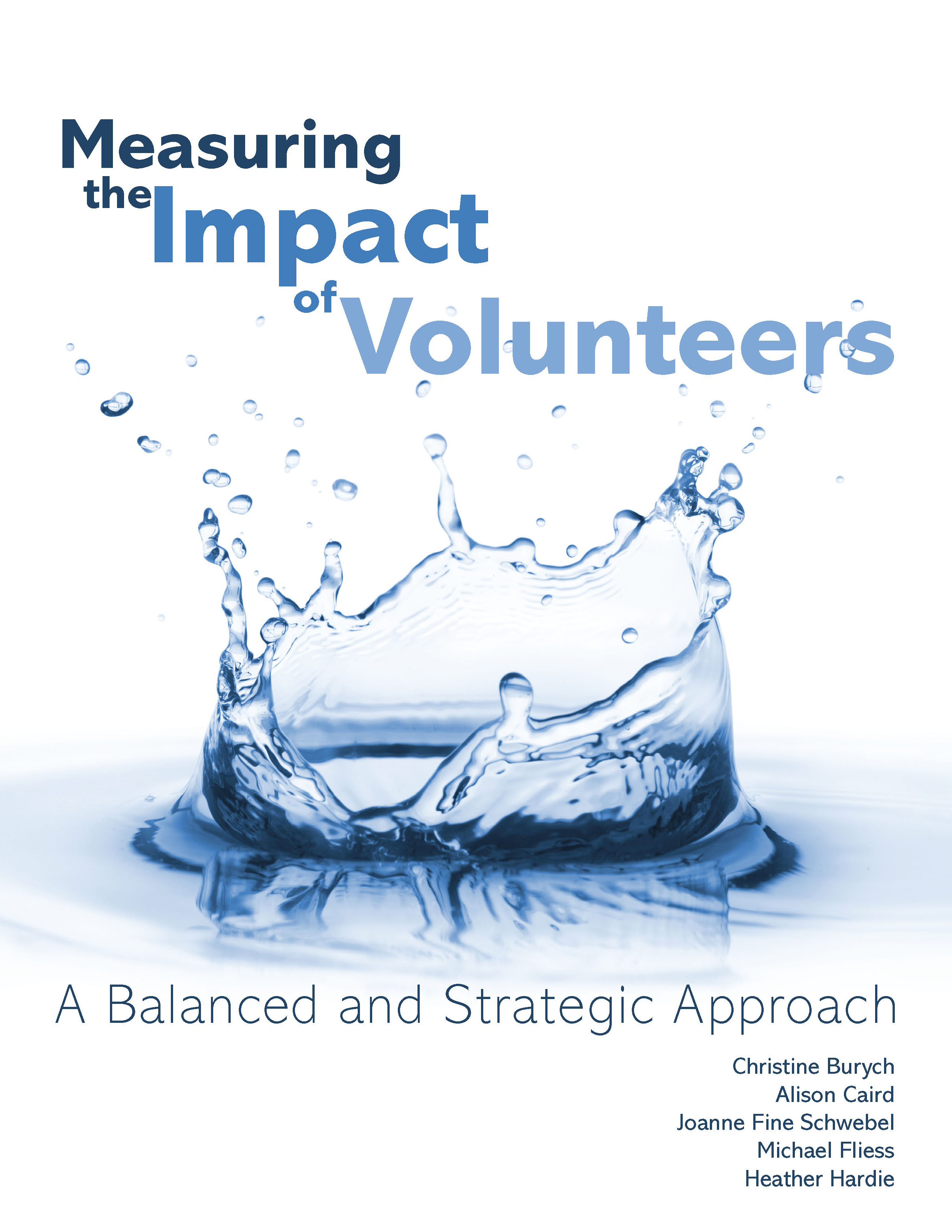
9780940576728_FRONTcover copyThat’s why I was very happy to get an alert from Energize, Inc. about a new book, Measuring the Impact of Volunteers: A Balanced and Strategic Approach, by ChristineBurych, Alison Caird, Joanne Fine Schwebel, Michael Fliess and Heather Hardie. This book is an in-depth planning tool, evaluation tool and reporting tool. How refreshing to see volunteer value talked about in-depth – not just as an add-on to yet another book on volunteer management. But the book’s importance goes even further: the book will not only be helpful to the person responsible for volunteer engagement at an organization; the book will also push senior management to look at volunteer engagement as much, much more than “free labor” (which it isn’t, of course). Marketing managers need to read this book. The Executive Director needs to read this book. Program managers need to read this book. The book is yet another justification for thinking of the person responsible for the volunteer engagement program at any agency as a volunteerism specialist – a person that needs ongoing training and support (including MONEY) to do her (or his) job. This book shows why the position – whether it’s called volunteer manager, community engagement director, coordinator of volunteers, whatever – is essential, not just nice, and why that person needs to be at the senior management table.

I really hope this book will also push the Independent Sector, the United Nations, other organizations and other consultants to, at last, abandon their push of a dollar value as the best measurement of volunteer engagement.

For more on the subject of the value of volunteer or community engagement, here are my blogs on the subject (yeah, it’s a big deal with me):

Judging volunteers by their # of hours? No thanks.

I would never judge the quality of an employee by how many hours he or she worked. When I see someone regularly working overtime, week after week, here are my thoughts:

  • That person’s job might be too much for one person; that job might need to be broken up into two positions.
  • That person might be doing things he or she shouldn’t be doing, and ignoring what should be priorities. I wonder what isn’t getting done?
  • That person may not be qualified for this position.
  • That person may have personal problems that aren’t allowing him or her to get this job done.

So, if I wouldn’t think the number of hours worked by an employee is a good indicator of their job performance, why would I judge a volunteer by the number of hours he or she contributes?

When judging volunteer performance, I look at:

  • What did he or she accomplish as a volunteer for this organization?
  • How does this person’s volunteering – specifically this person’s time and effort – have a positive effect?
  • How did volunteering have a positive effect on him or her?

Which is actually how I judge paid employees as well…

I gather that data by:

  • surveying volunteers, employees, clients and the public, through both traditional online and printed surveys and formal and informal interviews
  • reading through feedback that comes through emails, memos and online discussion groups
  • listening and writing down comments I hear
  • observing their work for myself

What about you? Is your organization still giving out volunteer recognition based on number of hours provided to an organization? Is the person who donated 100 hours to your organization last year really more valuable than the person who donated 20?