Still don’t like slacktivism… but…

I’m not fond of slacktivism (or slackervism). The word and its variations are a combination of the words slacker and activism. It’s a pejorative term that describes easy activities that make a person feel like they’ve made a difference for a group or a cause, like putting a bumper sticker on your car to “support the troops” or changing your profile photo on Facebook to show support for gay marriage, but the activity is more about making the person doing it feeling like they have contributed – but it doesn’t cost any kind of time, money or sacrifice on the person’s part, and probably doesn’t really affect the cause in any tangible way.

I’ve ranted about slacktivism a lot (see end of this blog for my other pieces on the subject), because I worry that people will choose to post a meme on Twitter that supports a cause they believe in rather than stand outside a grocery store to ask for signatures on a petition, or attend a rally, or staff an information table for a nonprofit at a community event, or donate money, or give substantial time to a political action committee or nonprofit trying to make a difference. I worry they think forwarding a message will end homelessness, stop female genital mutilation, provide mental health care services for veterans, feed hungry people, and on and on. I also I hate when people equate it with virtual volunteering; I have never considered it such, and I still don’t.

I stand by all my previous blogs ranting against slacktivism. But I’m now having trouble with exact definitions of it, because I have experienced, first hand, how posting memes and other messages to Facebook in support of a cause actually has caused someone to change their mind – and even voted differently as a result. There’s no absolute definition of who is and isn’t a volunteer, so I shouldn’t be surprised that the borders of the definition of slactivism have turned out to be so permeable.

I work very hard to keep my political views separate from my professional work. As I’m often in a communications officer position on behalf of a nonprofit, NGO, or government initiative, I often am not allowed to write letters to a newspaper or blog to express a point of view about current political affairs, or even just attend a protest rally. As a frequent consultant to the United Nations, I need to be perceived as politically neutral and respectful to those with whom I’m working, and I work hard to meet that requirement. As a result, many people I work with have no idea just how politically active I have been. None. This comes as a massive shock to my friends who know me outside of work, who know that I’m quite passionate about many issues, and that I’ve been an activist for many causes, long before the Internet, when I’m not in a communications officer position: I’ve worked to register voters, written and edited a newsletter for a group working to promote women’s right to abortion services, and spoken on behalf of political candidates I’m supporting. My friends have seen me VERY angry over various human rights issues, and act out on that anger, and can’t believe I can turn that button off so easily in certain circumstances.

Sometimes, through my activism, I’ve changed minds. Sometimes, my words have caused me to lose friends. I don’t know of an effective activist who hasn’t made people angry, no matter how hard they may have tried not to, no matter how much they’ve stayed away from anything that would seem personally insulting and tried, instead, to stick to education and patience. I’ve had my life threatened or put into danger twice because of my activism. Being an activist comes with costs that can be painful to pay.

Per several shootings in the USA of unarmed black Americans by white police officers, several online campaigns started, such as tagging posts on Twitter and Facebook with #blacklivesmatter. The tag was used by many people who have been on the streets and in community meetings and at political events, spending many hours to bring to light the very real, justifiable fear black Americans – particularly black American men – experience in encounters with the police. The tag was also used by people who’ve never done any of that kind of activism at all, as a way to show their support and outrage. That lead to some arguments online: should people who have not been traditional activists, should people who have never marched or attended meetings or put in the hours for the cause, should people who are white and would never experience the kind of fear and persecution so many black Americans experience regularly, use the tag? And white people using the tag – shouldn’t they do MUCH more, like march, register voters, write their elected officials, donate money to organizations working long-term on these issues, etc.?

Per the recent Supreme Court decision saying that all adults have a right to marry, including couples of the same sex, millions of people changed their Facebook profile photo to show a rainbow filter over the image, as a way of expressing support for the decision. And most of these people who did this are straight and have never done any traditional activism in support of gay rights: they’ve never stood outside a grocery store getting people to sign petitions, they’ve never marched in a rally, they’ve never donated any money to an organization working for gay rights, etc. In fact, they may never have told anyone before that they supported gay rights. That’s lead some posts online deriding straight people for their attempt to be gay allies – including a very angry direct message to me from a friend who seems to think that’s all I’ve done on behalf of gay rights. Others praised “straight allies”.

The underlying messages of these criticisms of white allies for #blacklivesmatter and for straight allies of gay marriage is this: you haven’t suffered for this cause, you haven’t worked for this cause, you haven’t sacrificed for this cause, you aren’t really a part of this cause, you shouldn’t get to celebrate a victory or be counted among those supporting the cause – and using a tag or a photo filter is just slacktivism.

I understand that criticism, I do. I understand what it can feel like when you work hard for something, you sacrifice, you experience hardship, and at a victory, people you’ve never seen alongside you in the trenches are there for the celebrations. I understand what it’s like to be an activist on an issue that is VERY personal to you, and to work with people who are supportive but who cannot experience the issue the way you do – men at an organizing meeting to support abortion rights, people of faith defending their atheist friends – and to wonder, can they ever really understand this? 

But consider that some of those people who have never said a word on Facebook or Twitter or at the family dinner table or even to you about these causes before, and then have then dared to post a meme about Ferguson or Baltimore or Cleveland or anywhere else there has been a shooting of a black American by a white police officer, or have changed their profile to the rainbow filter, have suddenly received very hurtful comments – some of it quite public – from family, friends, neighbors and work colleagues. And some of them have received direct messages from family, friends, neighbors and work colleagues saying, “I’m so glad you posted that. I agree – but I can’t say anything because I’ll make too many people around me angry.” And some of them may have started to changed the mind of someone that a regular, traditional activist NEVER could have reached – a friend, a family member, a neighbor, a work colleague, who is surrounded by only one kind of messaging, and here is someone they know and trust and maybe even love, making this simple, challenging statement in opposition to what they believe. I’ve gotten private messages from three people who said my private, friends-only posts on a personal account on an online social network changed their minds about who to vote for in an upcoming election. I’ve had friends and family members write me private messages saying they can’t be so vocal, but they agree with me – and it’s been shocking who these messages have been from – I never would have guessed those sympathies in many cases. I’ve never had anyone tell me that in those long hours standing at an information booth on a hot day at a community event – though I like to believe it’s happened.

So I’m going to start being a lot kinder about what I brand as slacktivism. I might even be willing to consider it microvolunteering in some instances. But mostly, I’m not going to play the more-activist-than-thou game I see so many playing. The world needs all kinds of activism and activists, and I’m going to welcome them all. 

And I’ll always be thankful for every activist, every ally, for every cause.

See also:

Requests for submissions for ISTR conference

Abstract submissions are now being accepted for the 12th International Society for Third-Sector Research (ISTR) International Conference, being held in Stockholm, Sweden, 28 June – 1 July, 2016. The theme of the conference:

The Third Sector in Transition: Accountability, Transparency, and Social Innovation.

Deadline for submissions is 26 October 2015. Papers on the following topics would be especially welcome:

  • The Third Sector and the Welfare state
  • Civil society and Democracy
  • NGOs and Globalization
  • Accountability and Transparency
  • Social Innovation and Social Enterprise
  • Advocacy and Public Policy
  • Philanthropy and Foundations
  • Volunteerism and Co-production
  • Managing Third Sector Organizations
  • Emerging Areas of Theory and Practice

More info on how to submit.

Managers of volunteers & resistance to diversity

graphic by Jayne Cravens representing volunteersIt never fails: try to have a conversation about diversity and volunteerism, get comments about how such conversations are not needed.

“Thoughtful Thursday” is an online discussion about issues related to the involvement of volunteers. It takes place in the comments section of the blog and on Twitter using the tag #ttvolmgrs.

Two weeks ago, the subject was diversity. The comments section on the blog are a perfect example of how these much-needed conversations in the nonprofit sector frequently turn into:

We don’t need this.
We are doing just fine with the volunteers we have.
Our recruitment has worked for 25 years. No need to change.
We are not going to lower our standards in order to get new volunteers.
Young volunteers just don’t have the commitment that are current volunteers have.

And it’s what frustrates me most about managers of volunteers. Most – yes, I said MOST – are resistant to change. Meanwhile, they wonder why they are having trouble recruiting, or keeping, volunteers.

Harumph.

(not all the comments are negative on the subject – so there’s hope)

Also see:

Internet tools needing improvement

There are a lot of software applications – apps – I use regularly – and some that I’m using less-regularly, because of “improvements” by developers. So many apps are becoming so poorly-designed that they are becoming unusable, yet I read about many of these companies whining about how many users they’ve been losing.

So let me do you a favor, designers: here’s more than a dozen ways that the apps I use regularly – and millions of others use regularly – really, truly could be improved:

  • Flickr – Bring back the narrative slide show view. Yes, most people just look at photos, and look at them on their smart phones. But there are a lot of us who want to see the narrative too – not every photo is self-explanatory.
  • Facebook – So many changes needed:
    • Make adding and removing people from lists as easy as adding and removing people from circles on GooglePlus. Right now, it is SO hard to do. And there’s no “at a glance” way to see who is one which list. I would use Facebook oh-so-much more if the lists were easier to use.
    • Make it possible to put Facebook pages into lists. I would love to be able to put causes I really love, and want to follow, on a list, so I could look just at that list sometimes.
    • Make it possible to delete smart lists from a person’s view of lists – I have a company listed on my account that I have NEVER worked for. I have no idea how it got there, but there’s no way for me to remove it! It looks like I worked there – but I never did.
    • Create a blog space for users the way MySpace used to have. I could create a blog that someone could view WITHOUT being a member of MySpace – but the only way for someone to comment it on it unless they were signed in. You would end up taking market share from Tumblr and Medium and so many blog spaces if you did that.
  • Twitter:
    • Make it possible to view lists I create, as well as the list of accounts I follow and the list of those that follow me, viewable however I want (alphabetical, oldest to newest, etc.)
    • Keep it simple! That’s the beauty of Twitter! Please stop trying to be like Facebook. I connect with people and organizations I really need to know, even get job leads, from Twitter – that NEVER happens on Facebook. You are going to ruin Twitter if you keep “adding” Facebook features.
  • YahooGroups, formerly my favorite app:
    • Please, please, please go back to non-threaded discussions. You’re threaded way of doing things have killed discussions on most of the groups I’m on.
    • Create a fee-based service for users who don’t want ads on their groups, including no ads in emails generated by messages on the group. I will HAPPILY pay that fee! So would many, many thousands of other users!
  • Google
    • regarding GoogleGroups: go look at YahooGroups from 2002 or so – if your interface looked more like that, you’d still massive numbers of users from not only Yahoo, but from various online collaboration web sites as well.
    • GoogleCalendar: Please reconsider your decision to stop sending calendar updates via SMS! I don’t always have great Internet access. And there are LOTS of people that still use feature phones that don’t have apps. We need our SMS reminders!
  • iTunes – STOP BEING STUPID. Instead, start beta-testing your interface with non-software developers, as well as people over 25. I am not a stupid person, and yet, it takes me way too long to figure out how to add a song to a playlist, how to remove one, how to play just one album, and on and on.

Those are my ideas. Get right on that, ‘kay?

I’m thrilled with UNV’s 2015 State of the World’s Volunteerism Report – Transforming Governance

state of volunteerism 2015I’m thrilled with the United Nations Volunteers program’s recently published 2015 State of the World’s Volunteerism Report – Transforming Governance.

Oh, yes, you read that right. THRILLED. And , as you know, I am a tough audience.

Why am I thrilled? Because, instead of doing the usual – talking about the value of volunteers only, or mostly, in terms of money saved because they aren’t paid a salary – this report talks about the value of volunteers in the terms that are much more powerful and important, value that goes far beyond money. Excerpts from the reports introduction explain better than I can:

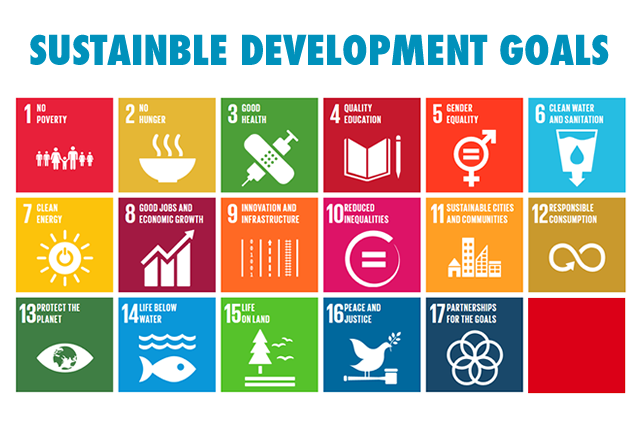
For the post-2015 sustainable development agenda to succeed, improving governance, tackling inequalities, and expanding voice and participation need to be addressed simultaneously. Volunteerism can help by giving voice to stakeholders and by mobilizing people and civil society organizations to contribute to solutions.

The report suggests that the ability of volunteers to support development progress depends on the willingness of national governments to ensure that the space and supportive environments which encourage their participation and initiatives are available. The Report finds that volunteerism can help to generate social trust, advance social inclusion, improve basic services, and boost human development. Volunteers and volunteerism bring the greatest benefits where enabling conditions like freedom of speech and association and an atmosphere of vigorous political debate are already in place. At the local level, the Report suggests that volunteerism can increasingly be a vehicle for people in excluded and/or marginalized communities to be heard, and to access the services, resources, and opportunities they need to improve their lives.

Examples of formal and informal volunteering attest to the fact that those who are marginalized, such as women, indigenous populations and disempowered young people, can create spaces where their voices can be heard and where they can affect governance at local levels. This report addresses the issue of women’s engagement, providing interesting examples of how women have been able to engage in spaces outside the traditional norms, hold authorities accountable and ensure responsiveness to their needs and those of their communities.

Further research and innovative strategic partnerships are needed for better understanding, documenting and measuring volunteerism and its contribution to peace and development. This report starts a conversation that can and needs to be deepened.

And this, from the executive summary:

This report shows, using a body of knowledge collected through case studies, that volunteerism provides a key channel for this engagement from the local through to the national and global contexts.

This report has identified key strategies, challenges and opportunities for volunteerism, focused on three pillars of governance – voice and participation, accountability and responsiveness – where volunteers have shown impact. Specific volunteer actions and strategies illustrate the diverse ways in which volunteers engage in invited spaces, open up closed spaces or claim new spaces.

Volunteerism spans a vast array of activities at the individual, community, national and global levels. Those activities include traditional forms of mutual aid and self-help, as well as formal service delivery. They also include enabling and promoting participation and engaging through advocacy, campaigning and/or activism. The definition of volunteerism used in this report refers to “activities … undertaken of free will, for the general public good and where monetary reward is not the principal motivating factor.”

Volunteering in this report is also understood as overlapping and converging with social activism; while it is recognized that not all activists are volunteers, many activists are volunteers and many volunteers are activists. The terms volunteerism and social activism are not mutually exclusive. The idea that volunteers only serve to support service delivery or are only involved in charitable activities is one that is limited and provides a superficial line of difference between volunteerism and activism.

The report recognizes that volunteering is highly context specific and is often not on a level playing field. Women and marginalized groups are frequently affected by this unevenness; not all volunteers can participate equally or on equal terms in each context. Volunteerism is harder in contexts where people are excluded, their voices curtailed, their autonomy undermined and the risks of raising issues high. An enabling environment that respects the rights of all enhances the ability of volunteerism to contribute to positive development and peace. The report shows that creating a more enabling environment that allows positive civic engagement in sustainable development is critical for success.

If you do nothing else, PLEASE read the report’s executive summary.

Every program or project manager in every local, regional or government office needs to read at least the executive summary: government workers that are focused on police, fire and emergency response, parks and recreation, environmental issues, agriculture, the justice system, education, public health, arts, library, historical sites, economical development – they all need to read this report, look at how they currently involve the community, and ask themselves lots of questions:

  • Could you do a better job involving volunteers in decision-making?
  • Could you do a better job involving a greater diversity of volunteers – women, minority groups, children, the people that are the target of government services, etc.?
  • Are there tasks that volunteers actually might be better at doing than paid staff, because they wouldn’t have any worries regarding job security or loss of pay?
  • Are – or could – volunteers help your organization be more transparent to the general public and improve services?
  • Could volunteers help you build bridges with hostile communities?
  • Have you handled critical comments from volunteers appropriately?

This report can help you start answering those questions.

For more on the subject of the value of volunteer or community engagement

Principles for Digital Development – one that’s missing

digitalprinciplesThe Principles for Digital Development were developed per the efforts of individuals, international and local development organizations, including non-governmental organizations (NGOs) and nonprofits, and donors who have wanted to improve the use and promotion of information and communication technologies (ICTs) in development projects. The Principles for Digital Development were created in consultation with The Bill and Melinda Gates Foundation, the Omidiyar Foundation, the Swedish International Development Agency (SIDA), the United Nations’ Children’s Fund (UNICEF), the UN Development Program (UNDP), UN Global Pulse, the UN Fund for Population Assistance (UNFPA), the UN High Commission for Refugees (UNHCR), the UN Office for the Coordination of Humanitarian Affairs (OCHA), UN Women, the World Bank, the World Food Program (WFP), the U.S. Agency for International Development (USAID), the U.S. Department of State, and the World Health Organization (WHO).

For instance, principle 1 is design with the user. The description says, “Too often in the field of international development technology tools are created, or tech-enabled projects are designed, without sufficient input from the stakeholders whose engagement and ownership are critical to long-term success.” The design with the user principle provides recommendations to avoid this.

You can download this one page Principles for Digital Development flyer and post it (for instance, post it in your office for any visitor to see), include it in an information packet, etc.

Tweets about this initiative use the tag #digitalprinciples

The only thing missing? Something very significant: a principle regarding equal access: regarding accessibility for people with disabilities and people using assistive technologies, regarding ensuring that women and girls have full access to ICT resources developed (in a harassment-free, intimidation-free environment), regarding access by minority groups to resources developed, etc.

Also see:

  • Women’s Access to Public Internet Access, resources and ideas to support the development of women-only Internet centers/technology centers/etc., or women-only hours at such public Internet access points, in developing and transitional countries, to ensure a harassment-free, intimidation-free environment.
  • Archive of the United Nations Information Technology Service (UNITeS) , a global initiative to help bridge the digital divide, one of the first UN initiatives on the subject (maybe the first?). UNITeS both supported volunteers applying information and communications technologies for development (ICT4D) and promoted volunteerism as a fundamental element of successful ICT4D initiatives. UNITeS was launched in 2000 by then UN Secretary General Kofi Annan.


New online resources to help recruit volunteer firefighters

Per the comments on a recent blog, why you can’t find/keep volunteer firefighters, I was doing research on newspaper articles in the last two years highlighting recruitment problems at volunteer firehouses, and found this recent big news: just four days ago, the National Volunteer Fire Council (NVFC) launched Make Me a Firefighter volunteer recruitment campaign. Fire departments can now sign up at http://portal.nvfc.org to join the campaign and showcase their volunteer opportunities.

Here is a video from the Make Me a Firefighter.

According to fireengineering.com and the NVFC web site “volunteer firefighters make up 69 percent of the nation’s, yet the number of volunteers has declined by about 12 percent since 1984. At the same time, call volume has nearly tripled. In addition, the average age of the volunteer fire service is increasing as departments are finding it difficult to reach millennials -€“ those within the 18-34 age range.”

To help departments counter these trends and increase the number of volunteers, the NVFC was awarded a SAFER grant from FEMA to conduct a nationwide recruitment campaign. The first component of the Make Me a Firefighter campaign consists of a department portal where fire departments that involve volunteers can register for the campaign and post their volunteer opportunities. Starting August 1, the NVFC will launch a public web site allowing potential volunteers to search for opportunities and connect with their local department.

This summer and fall, the NVFC will also release resources to help local fire departments recruit members. This includes recruitment ads and materials that departments can customize and localize using an online materials generator; tools to help departments reach target audiences such as millennials, women, and minorities; and training to assist departments in conducting a successful recruitment program.

NVFC research has shown that there is strong interest in volunteering among millennials and minority audiences, and helping departments reach these largely untapped markets is a main goal of the campaign.

“Recruitment is a challenge for many volunteer and combination departments across the country,” said NVFC Chairman Kevin D. Quinn. “Yet our research shows that 44 percent of millennials are interested in volunteering with their local department. Many simply don’t know the need for volunteers exists. The Make Me a Firefighter campaign will help build awareness among the public as well as provide departments with the tools and resources they need to recruit to this and other target audiences.”

Hope fire departments will not only use this new portal, but also VolunteerMatch and their local affiliate of the HandsOn Network, such as Hands On Greater Portland, to list their volunteering opportunities. These platforms are widely used by people looking for volunteering opportunities, particularly millennials.

A “Yelp” or “Angie’s List” for Migrants – to avoid exploitation

Contratados.org launched in October, 2014 as a resource for workers—mostly from Mexico—to anonymously rate the employers and recruiters who bring them to the USA for temporary jobs under the H-2B, H-2A, and J-1 visa programs. It bills itself as “the Yelp for migrant workers.”

Migrants working legally in the USA on temporary visas can end up as virtual slaves. They can’t change jobs, they’re often paid less than minimum wage for 80 or more hours a week, and they can’t usually return to the U.S. to sue their employer in court—there’s no visa program for that.

Most migrants do not have smartphones, so designers created the Contratados.org website so it could also be accessed like voice mail. Much of migrants’ internet access is done in internet cafes which charge a few pesos an hour for fairly slow web service, and that meant the videos originally envisioned to be a part of the site were scrapped—too much bandwidth. Also scrapped was an interactive map of the players in the employment side of the equation—although such a map and database can be found in another section of the organization’s website. (It was built from public documents in order to help legislators understand what is happening in the migrant labor program.)

What did get into contratados.org are audio novelas—short dramas telling workers what to watch out for, what to expect, and who to contact in case of trouble as they uproot their lives to try to make a living here doing seasonal work. And they can listen to information about their rights and follow along with comic-book-style illustrations.

Full story at Baltimore’s CityPaper.

SMS helping to fight Ebola in Liberia

The growing ubiquity of mobile phones in the developing world is unlocking tremendous opportunities to amplify humanitarian response efforts. Liberia, for example, which is one of the world’s poorest countries, has seen an explosion in its mobile market in recent years; phone ownership rates skyrocketed from 4 percent to 60 percent in just the last decade.

To foster culturally adaptive community engagement in the fight against Ebola, USAID-funded training events in Liberia are teaching social mobilizers how to use social media tools like WhatsApp and SMS-based U-report to stay connected while they’re out in the communities, educating people about how to protect themselves from the disease.

At-risk communities need to know the facts about Ebola and how to prevent its spread. Rapid response teams need to know where to find suspected cases as soon as they show symptoms. Health ministries need to know which public health facilities are not yet equipped to isolate and treat infected individuals. But these types of data originate in thousands of different places with thousands of different people, and we must get the right information into the hands of thousands more who can take action… By weaving well-placed feedback loops into human response networks, USAID, the U.S. Centers for Disease Control and Prevention (CDC), the governments of the affected countries, and private and NGO partners have coordinated efforts to prevent, detect and treat the disease. And, in many cases, mobile phones provide the key link to connect those who have life-saving information with those who need it.

More from the USAID blog.

And if you want more stories like this, regarding Tech for Good (tech4good), I post regularly to the TechSoup Community Forum branch for Public Computing, ICT4D, and Tech4Good.

Digital Diplomacy During #NepalEarthquake

this week I attempted to evaluate the manner in which foreign ministries used social media in order to offer consular assistance to citizens stranded in Nepal following the recent earthquake. This analysis explores the manner in which MFAs use social media in order to achieve a traditional goal of public diplomacy- aid to citizens in need. As such, it may be an example of the evolutionary view of digital diplomacy.

Here’s the rest of the blog by Ilan Manor of Tel Aviv University’s Department of Communications. His project aims to gain an understanding of how foreign ministries now use Digital Diplomacy and digital platforms in the conduct of diplomacy. Therefore, it examines a variety of topics ranging from an analysis of the content posted by foreign ministries on their digital channels (e.g., Twitter, Facebook) to the manner in which foreign policy messages are tailored to different audiences.