Tag Archives: virtual volunteering

Volunteer online ever? I’d love your photo!

jayne at computer 2002Do you help, or have you ever helped, a nonprofit organization, non-governmental organization (NGO), grassroots organization, school, or other civil society organization (CSO) via a computer or smart phone, as a volunteer (that means unpaid, NOT as a paid employee or paid consultant)?

Maybe you volunteered onsite as well, but at least sometimes, you also volunteered offsite, designing a database or graphic or web site, editing a document, translating text, offering professional advice, moderating an online discussion group, tagging photos or mentoring someone.

Maybe it was called virtual volunteering. Or online mentoring. Or cyber service. Or microvolunteering. Or crowd-sourcing. Or cloud computing volunteering. Or Internet-mediated service.

Or maybe it was just called volunteering, plain and simple.

Whatever it was – or wasn’t – called, I want your photo! Why? I want to feature such photos at this Flickr Group, “Online Volunteers.”

Photos of yourself with a computer or tablet or smart phone would be great, but so would a photo of you with your dog. Or your kids. What’s most important is that you don’t just submit a photo; you also should describe what you do as an online volunteer, including either the name or a description of the organization(s) you support.

ALSO, please tag your photo “online volunteer” (use quotes in the tagging process).

Submit the photos directly to the Flickr group for online volunteers– which means you will need a Yahoo ID. If you don’t already have such, and don’t want one, you can send ONE photo to me, via email, however, please clearly note in your email who you are, why you are sending the photo, etc.; blank emails, or those with sketchy descriptions, will be discarded without viewing (to protect myself from computer viruses). Photos that don’t clearly represent online volunteers will be rejected – that’s why your description is SO important.

Please share this message to volunteers you work with, or anyone you think might be interested.

Goal: to show the diversity of online volunteers out there. The practice of online volunteering is more than 30 years old. I want to show just what a HUGE group of people volunteer online, and have been doing so for a long while now!

Looking forward to your photos!

Ugh – Slacktivism (I still don’t like it)

UNICEF Sweden has an image that’s floating around the Internet and causing quite a stir:

“Like us on Facebook, and we will vaccinate zero children against polio. We have nothing against likes, but vaccine costs money…”

It’s part of a fundraising and awareness campaign by UNICEF Sweden that includes this video  (subtitled in English). The point is a powerful one: “liking” something on Facebook, or sharing a status update, or retweeting something, often has no impact at all beyond a momentary “Oh, that’s sad” moment for the viewer. By itself, it does NOT create any real impact.

Danny Brown, a blogger and author, doesn’t like the campaign; he thinks slacktivism or slackervism campaigns – where a person is encouraged to “like” something on Facebook and feel like he or she has made a difference – are terrific.

As I’ve said before, I LOATHE slacktivism. As a consultant and researcher that works with nonprofits every day regarding community engagement and fundraising, I see again and again just what little return on investment the vast majority of nonprofits get for investing in such campaigns. I also see the endless posts by young people on YahooAnswers who believe this is all they have to do – like something or click on something – to make a difference, and don’t understand why they have to actually volunteer or donate something to actually support a cause. These campaigns imply that actually donating money, volunteering, writing a letter to a politician or turning out for a demonstration aren’t really necessary – just click “like” and we’ll solve domestic violence, homelessness, hunger animal abuse, and on and on! It’s a misconception that is growing – and it’s creating generations of people who don’t see the point of actually investing time or money.

I note in detail in this blog from 2010 why slacktivism does NOT generate donations or increased awareness for most nonprofits or causes – and the blog also notes nonprofits CAN (and do) use Facebook, Twitter and other social networking sites to create a real social marketing/health marketing campaign, with real impact (changed behavior, new awareness, etc.) – so I won’t repeat myself here.

And for those who want to accuse me of being a Luddite, or implying that the Internet isn’t an effective way to donate time and talent to a nonprofit, NGO, charity, etc. – I’ve been promoting virtual volunteering since the mid-1990s. Online action can have HUGE impact for a mission-based organization. But it takes more than just a “like” on Facebook. 

Also see: what ROI for online action really looks like.

Can virtual volunteering lead to better employability?

Can engaging in virtual volunteering, particularly by individuals in the European Union, lead to better employability for those individuals?

The ICT4EMPL Future Work project is exploring “pathways to employability mediated by ICTs – Information and Communications Technologies.” For the next few months, I am working on part of this project, specifically regarding internet-mediated volunteering or virtual volunteering, including microvolunteering. 

I – and my fellow researchers – are seeking specific information for this project, such as:

  • Individuals, especially those living in Europe, who have volunteered in any way, onsite or online, for charities or NGOs, and believe that, because of this experience, they have improved their inclusion in society or difference communities, had an interview for a paid job, been hired for a paid job (as an employee or a consultant), created an entire career, or become more employable in some way.
  • Organizations, especially those based in Europe, that have used volunteering, onsite or online, as a way to help their clients, volunteers or others gain skills that improve their employability (this does not have to be a primary mission of the organization).
  • Organizations, especially those based in Europe, that help train unemployed or under-employed people in computer and Internet-related skills in order to improve their employability.
  • Organizations that involve volunteers online, in whole or in part, and would be willing to be interviewed for this project, and would be willing to encourage their volunteers to be interviewed for this project as well.
  • Resources and research related to Internet-mediated volunteering (virtual volunteering) that is specific to a European country or Europe in general.
  • Resources related to telecommuting, virtual teams and remote management that is specific to a European country or Europe in general.
  • Any research that relates to any of the aforementioned (it can be USA-centric, or from any country outside of Europe, but it needs to be a resource that will help inform this project for possible applications in Europe).

Update April 12, 2013: I am ALSO looking to connect with individuals / organizations that have:

  • Evaluated a virtual volunteering/Internet-mediated-volunteering-related initiative in a European country and would be willing to share the evaluation with us.
  • Evaluated a volunteering initiative in a European country that related to volunteers developing job skills for paid work or career advancement and would be willing to share the evaluation with us. 
  • Hosted or lead workshops on virtual volunteering/Internet-mediated-volunteering for NGOs, charities and other organizations in a European country, with the goal of these NGOs, charities and other organizations involving volunteers via the Internet in some way (virtual volunteering, crowdsourcing, microvlunteering, etc.) or expanding such involvement.

If you would like to submit information for this project, edit content for the wiki for this project, or ask any questions, send an email to me, Jayne Cravens.

Información en español es aceptable

Informations en français est acceptable

Informationen in Deutsch ist akzeptabel

DEADLINE: I’d prefer to get information before June 1, 2013, if at all possible, but I will continue to accept information through early August, 2013, if I haven’t gathered enough information by that point for the end of my part of the project (actually, I’ll probably always accept information related to this project, since I’m forever identified with virtual volunteering, and am always interested in the subject, particularly outside the USA).

For more information, check out the wiki for “my” part of this project.

The ICT4EMPL research project is in the context of of implementation of the Europe 2020 strategy and the Digital Agenda for Europe.

Microvolunteering @ Techsoup


TechSoup has relaunched its microvolunteering initiative Donate Your Brain.
It allows anyone, anywhere, to help nonprofits, NGOs, libraries and other mission-based organizations with quick answers and suggestions for their Internet, software, and other tech needs. Right now, these microvolunteering tasks are being highlighted on Twitter, primarily.

If you want to volunteer, here’s how you can get involved:

  • Search and save the hashtag #TechSoupDYB on Twitter
  • When you see a question you want to answer (2-3 will be posted every weekday), respond either via a tweet or by following the link to the TechSoup forum post where this question originated.

Ta Da! That’s it!

No Twitter account? No problem! You can also:

Nonprofits – if you have a question regarding technology use at your organization, post to the appropriate branch of the TechSoup forum. TechSoup staff may choose to highlight your question on Twitter or on its TechSoup Global LinkedIn group!

Why do I care? I’m working temporarily for TechSoup right now, and I have helped to relaunch the Donate Your Brain. To me, it was obviously microvolunteering intiative – but no one had ever called it that! Probably because the phrase hadn’t been coined when TechSoup’s DYB initiative was first launched a few years ago. But, then again, I promoted microvolunteering back in the 1990s, but didn’t’ call it microvolunteering – I called it byte-sized online volunteering. See more at Micro-Volunteering and Crowd-Sourcing: Not-So-New Trends in Virtual Volunteering/Online Volunteering.

Also see:

Microvolunteering is virtual volunteering

But virtual volunteering means it takes no time, right?

Tags: engagement, engage, community, nonprofit, NGO, not-for-profit, government, library, libraries, school, schools, volunteers, civil society, social media, technology, microblogging, microvolunteering, micro, volunteer, volunteering

Online community member? Supporter? Volunteer?

Not much sets tongues wagging more among people that work with nonprofit organizations, NGOs, or other mission-based organizations, than a debate on who is and isn’t a volunteer.

I recently had a person responsible for a Second Life community assure me that those people involved in that community are not volunteers. In 2010, NetSquared, an organization I’m a big fan of, talked about how to encourage donors to contribute their time and/or talents virtually  – and never once used the word volunteers.

I’m firmly in the big tent when it comes to who is a volunteer: if you are doing something to support a nonprofit organization, and you are not being paid for it, you are a volunteer. I don’t care if you have been assigned community service by the court or a school, if you want to be called intern, if you are online or offline, if you will be the unpaid manager in charge of an entire department during your volunteer service, if you are doing a so-called micro-assignment and you are never ever going to do one again – I’m going to call you a volunteer.

The aversion to the term volunteer is astounding to me. I’ve had co-workers passionately try to explain to me why an intern isn’t a volunteer, despite the fact that that intern is NOT being paid. Or why an online community member, who helps other online members, and offers advice and feedback, isn’t a volunteer. Or a supporter who blogs and tweets about the organization regularly – and very positively – resulting in more publicity for the organization isn’t a volunteer. Or a board member isn’t a volunteer. My response to this: NONSENSE!

Part of the reason for the aversion to calling anyone and everyone who provides support to an organization, but isn’t paid to do so, a volunteer is because of how rigid so many staff members see their roles. If online community members are volunteers, who is in charge of those volunteers? Very traditional volunteer managers who see their role as being responsible for involving all volunteers, rather than supporting all staff in involving volunteers themselves, will balk at the increased (actually, just different kind) of responsibility. The program manager responsible for an online community of supporters, or the fundraising manager responsible for working with the board members and leadership committee members, may balk at the idea of having to be more internally-transparent about his or her involvement of such people and providing reports to the volunteer manager. It means approaching work and responsibilities more as a team, and many nonprofit, NGO, government and other mission-based managers just are not ready for that, terrified that it will diminish their manager or director role.

In addition, as I said in my blog on this subject back in 2010, I’ve heard some people say that they think the word volunteer conjures an image of very traditional people (whoever they are — I’m still not sure) doing traditional things like stuffing envelopes or handing out food at a homeless shelter. I’ve heard some people say that they think the term volunteer means someone who is merely providing free labor rather than free expertise, so they prefer to talk about pro bono consultants or executives on loan. Or online community member or supporter.

Does that mean all volunteers should be managed by the same person, or that they should all be screened, supported, recognized and supervised the same way? No. Volunteers’ level of responsibility, the amount of time they are donating, the length of their commitment, the nature of their work as a volunteer – all this and more will determine how they are screened, supported, recognized and supervised.

So, once again, I’ll be a rebel: I fully embrace the word volunteer. I’m going to keep using the word volunteer to mean when a person is donating time, talent and skills, whether onsite or online.

Tags: volunteer, volunteers, online, virtual, volunteering, community, discussion, supporters, members, fans, super

Transcribe & caption!

Captioning a video, or offering a transcription of a video or podcast, should be a priority for your organization. Why?
    • Many people that don’t have time to watch that video or listen to that podcast DO have time to read the transcript.
    • Many people are in an environment that would not allow them to listen to a podcast or online video (their surroundings are too loud, they would disturb people around them, they can’t use headphones or ear buds for some reason, etc.).
    • Many people want to quote from a video or podcast in something they are writing (and if that’s online, that quote will often link back to the original broadcast).
    • A person may just need very specific information, and a text search makes that information oh-so-easy to find.
    • Some people prefer reading to listening or watching (I’m one of those people); they are much more likely to access your information in text form than a video or audio.
  • And, of course, so people with hearing impairments can access the information.
In short, you greatly increase the number of audience members for a video or podcast, reaching more potential donors, volunteers, clients and others, by captioning a video or offering a transcription of a video or podcast. At minimum,
  • Any video or audio training materials you have should be captioned and/or transcribed.
  • All PSAs you want to be distributed widely should be captioned and/or transcribed.
  • Videos and podcasts that are part of your service delivery should be captioned and/or transcribed.
Think you don’t have the resources to caption or transcribe a video or podcast? You do: volunteers. There are online volunteers who would love to transcribe your audios and videos. These volunteers may have speech recognition/voice recognition software that they can use to convert spoken words to text, or they may be willing to listen and type. Either way, you will want volunteers checking up on other volunteers’ transcriptions and captioning, to ensure information is rendered correctly. Keep such volunteer transcribing assignments small: you might have trouble finding a volunteer to transcribe a two-hour-long panel discussion, but it might be much easier to find someone to transcribe just a 10 minute excerpt. If a video or podcast is particularly long, you could divide the transcribing or captioning job up among several volunteers. You might even be able to find a volunteer who would happily lead up the entire project for your organization – leadership volunteering opportunities are highly sought by many people these days! Recruit these volunteers from among your existing volunteers and their networks, via your web site, via VolunteerMatch and AllforGood if you are in the USA, Idealist and whatever resources are available in your country, or, if you are in a developing country or your NGO or nonprofit is focused on such: the UN’s Online Volunteering service. December 21, 2017 update: I recently created a five-minute pitch video for the OpenAIR hackathon – the Accessibility Internet Rally – for Knowbility, a nonprofit based in Austin, Texas (I’m in Portland, Oregon). I also used the YouTube captioning tool for the first time ever – I couldn’t believe how easy it was! If I can figure it out, anyone can – including online volunteers you might recruit to caption all of the videos your nonprofit has on YouTube already.
cover of Virtual Volunteering book with hands raising up various Internet connected devices
A reminder yet again that The Last Virtual Volunteering Guidebook provides detailed advice on creating assignments for online volunteers and for working with online volunteers, including volunteers that are going to transcribe or correct the transcriptions of your videos or podcasts. The book also has detailed guidance for using the Internet to support and involve ALL volunteers, including volunteers that provide service onsite, for ensuring success in virtual volunteering, and for using the Internet to build awareness and support for all volunteering at your program. Tech tools come and go, but certain community engagement principles never change, and those principles are detailed in this comprehensive guide. You will not find a more detailed guide anywhere for working with online volunteers and using the Internet to support and involve all volunteers. It’s co-written by myself and Susan Ellis. Tags: volunteering, volunteers, community, engagement, volunteerism, volunteering, online, micro, microvolunteering, virtual

TweetChat re: virtual teams on July 11

TechSoup will host a TweetChat on 11.July at 10am Pacific USA Time regarding working with virtual teams.

Also known as distributed teams, virtual teams have come together for a day, a week, many months or even years to work on a project together for a nonprofit, an NGO or other mission-based organization. Your organization may already be involving a virtual team now and not even know it:

  • a committee with members who discuss and plan online rather than at onsite meetings
  • a mix of volunteers and employees collaborating on the development of a new online tool
  • a group of volunteers around the world working together to develop an HIV education curriculum

I’m particularly interested in this topic, as I’m currently revising the Virtual Volunteering Guidebook – specifically, I’m revisiting yet again this week the chapter that addresses the subject of virtual teams, a subject that did not appear in detail in the original book. I have been compiling resources and case studies on the subject for quite a while now, and want to make sure the chapter that includes this subject addresses all the fundamental elements required for virtual team success, no matter what online tools you may use with such a team. Woe to the volunteer manager – or any nonprofit professional – who does not know how to work with virtual teams!

You can watch the TechSoup event on Twitter as it happens on July 11 (and even participate!) or look in to the archive of the chat later. Here’s more info from TechSoup on how to participate.

I have more details about live tweet events here on my web site, on this page about using micro-blogging, in case you are wondering what this will event will really look like.

Follow me on Twitter @jcravens42, and follow @TechSoup as well, so you will stay up-to-date about this and other events to help build the capacity of nonprofits, NGOs, libraries, and other organizations that involve community members to meet their goals.

Tags: volunteering, volunteers, community, engagement, international, volunteerism, volunteering, collaborative, collaboration, virtual, teams, staff, employees

Photos of Online Volunteers Wanted

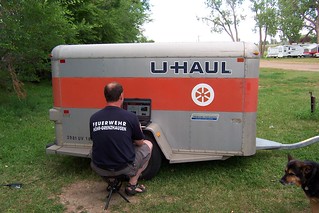
Camping and surfing in North DakotaI’m looking for photos of people who help nonprofit organizations, non-governmental organizations (NGOs), grassroots organizations, schools, or other civil society organizations (CSOs) via a computer at their homes, their work, a computer cafe, a cell phone/smart phone — as a volunteer (that means unpaid, NOT as a paid staff member or paid consultant).

You know: online volunteers. Virtual volunteering. Online mentoring. Cyber service. Microvolunteering. Crowd-sourcing. Clowd computing volunteering. Whatever the hot new term is.

I need photos of people who research information, design web sites, databases or graphics, prepare proposals, edit documents, translate text, offer professional advice, moderate online discussion groups, contact the press write newsletter articles, manage web sites, manage Flickr accounts, edit podcasts or online videos, or any other activities to help organizations that support causes those people believe in – but these people perform their service as a volunteer (unpaid!) from a remote site.

Why? I want to feature them at this Flickr Group, “Online Volunteers.”

These don’t have to be volunteers who help ONLY via the computer; most online volunteers also help onsite as well. So if the volunteer helps only half the time, or a quarter of the time, online, that’s fine! It still counts!

Photos or video of online volunteers should be taken either via your webcam or with the computer or other Internet device you use somehow visible in the photo, to give it that “Internet” feel. ALSO, describe what you do as an online volunteer, including either the name or a description of the organization(s) you support. If you really can’t work a computer into the photo, then at least make the description ultra-obvious about why you are submitting the photo.

ALSO, please tag your photo “online volunteer.”

Submit the photos directly to the Flickr group for online volunteers– which means you will need a Yahoo ID. If you don’t already have such, and don’t want one, you can send ONE photo to me, via email, however, please clearly note in your email who you are, why you are sending the photo, etc.; blank emails, or those with sketchy descriptions, will be discarded without viewing (to protect myself from computer viruses). Photos that don’t clearly represent online volunteers will be rejected.

Please forward this message to volunteers you work with, or anyone you think might be interested.

Goal: to show the diversity of online volunteers out there. The practice of online volunteering is more than 30 years old. I want to show just what a HUGE group of people volunteer online, and have been doing so for a long while now!

Another person’s take on microvolunteering

The most popular blog I’ve ever written was Microvolunteering is Virtual Volunteering. It was my effort to make sure those who really care about quality volunteer engagement continue to advocate for volunteering, no matter what form it takes, to be results-oriented and beneficial to both the organization and the volunteer – whether it’s volunteering that takes just a few minutes, or just once with an organization, or over months, or over years.

Orange in the U.K. has jumped on the microvolunteering bandwagon, creating a smart phone application that is supposed to allow people to microvolunteer. But many of its claims regarding what microvolunteering is and what it can do are outlandish. Luckily, I don’t have to write a blog debunking their claims – this blog which does an excellent job of doing so, in much kinder terms than I usually use.

I’ve said it before and I’ll say it again: microvolunteering can benefit – and has benefitted – many organizations. But it’s also not worth the enormous amount of prep and supervision time required for many organizations, just as one-day group volunteering events aren’t always worth the prep time and supervision for many organizations.

The first step in deciding if microvolunteering / episodic volunteering, group volunteering, teen volunteering, family volunteering or any other specialized volunteering is right for your organization is for your organization or program to think carefully about what is in it for you, the organization or program. What benefit are you looking for? Volunteering is never just to get work done. Instead – or in addition – volunteer engagement is about:

  • measurable results regarding participant or community awareness of a particular issue, program or your organization
  • candidates for longer-term volunteering in more substantive activities regarding service delivery
  • cultivation of donors
  • activities that fulfill your organization’s mission (the group volunteering experience results in activities that reach part of your organization’s mission)
  • reaching diverse audiences you aren’t reaching, or aren’t reaching well, otherwise

And the second step is thinking about how you will know if you are achieving these results! Those two steps are critical before ever embarking on volunteer engagement, no matter what kind of engagement you are thinking about!

How many organizations involve online volunteers?

I gave up trying to find every organization engaged in virtual volunteering back in 1998. Why? Because by 1998, when I was directing the Virtual Volunteering Project, I had already found hundreds of such organizations, and knew there were probably thousands more organizations engaged in virtual volunteering – I gave up and focused exclusively on discovering best practices.

Now, 13 years later, I dare say most nonprofit organizations, at least in the USA, involve online volunteers, even if they don’t know it; most organizations allow at least some volunteers to do some service online. For instance, Girl Scouts of the USA doesn’t say they involve online volunteers, yet I’m an online volunteer with Girl Scouts: 90% of my duties coordinating communications here in my part of the world are done online, from my home, via my computer. When I do workshops on virtual volunteering, attendees come up afterwards and say, “I’ve got online volunteers and didn’t even realize it!” And that’s good, because it means they aren’t distinguishing between online and onsite volunteers, something far too many organizations try to do – they are treating them all as just volunteers (and I mean just volunteers in the most praiseworthy of terms). Animal shelters, homeless shelters, communities of faith (churches, mosques, temples), community gardens, community theaters, nonprofit zoos, YWCAs and on and on involve online volunteers, to create web pages, to write articles for a newsletter, to test an online tool, to translate text from one language to another, to moderate or facilitate an online discussion group, to tag photos, to edit video, to research a subject online and gather information, to make regular posts to Facebook, to Tweet regularly, and on and on.

There is no database of organizations involving online volunteers, just as there is no database of every organization that involves volunteers. I hope that organizations that research volunteering, such as the Corporation for National Service, will finally catch up to the practice of online volunteering and start asking organizations about their virtual volunteering engagement for their volunteering studies!

What I have kept up is a list of organizations that recruit or involve online volunteers primarily and specifically; opportunities range from mentoring students to mentoring entrepreneurs in developing countries to helping to code software to offering tech advice to nonprofits to reporting on your local weather. Some tasks take an ongoing commitment, and some are so-called micro-volunteering (episodic volunteering online – it doesn’t take an ongoing commitment). I published the list to show what real online volunteering / online community service / virtual volunteering looks like – as opposed to highly questionable ones.

This is on one of my monetized pages so, yes, there are ads. But no study of online volunteering should be limited to this list – remember, if an organization involves volunteers at all, it’s very likely they involve online volunteers – or could!