UN Volunteers, IFRC, ILO & others make HUGE misstep

I’ve been trying to follow the Global Volunteering Conference in Budapest (one of my favorite cities) from afar. It’s co-hosted by the UN Volunteers (UNV) programme and the International Federation of Red Cross and Red Crescent Societies (IFRC), and it has “gathered leaders from governments, UN agencies, non-government organizations (NGOs) and other international organizations to discuss ‘Volunteering for a Sustainable Future.'”

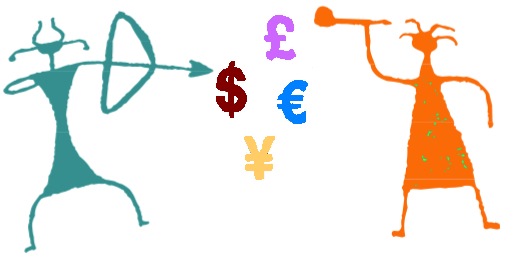
I recently read this statement by UN Volunteers Programme Executive Coordinator Flavia Pansieri, and I cringed. It’s a call to value volunteers based on the money value of the hours they contribute.

Yes, you read that right. The measurement so many of us have been campaigning to end – or at least not make the primary measurement of the value of volunteering – is being officially embraced by UNV and IFRC.

As you will see from the UNV statement, the conference is touting that the value of volunteering across just 37 countries amounted to at least $400 billion and celebrates a new manual by the UN International Labour Organization (ILO) in cooperation with the Johns Hopkins University Center for Civil Society Studies  which aims to help statisticians and economists measure the value of volunteer work at the national, regional and global levels by tracking the amount, type and value of such work in their countries. The manual is a strategic plan to try to measure how many people are volunteering and to value their time based on industry/professional classifications were they being paid.

I’m all for the value of volunteering coming to the increased attention by policymakers. But I’ve said it before and I’ll say it again (and probably a lot more): Involving volunteers because of a belief that they are cheaper than paying staff is an old-fashioned idea that’s time should long-be-gone. It’s an idea that makes those who are unemployed outraged, and that justifies labor union objections to volunteer engagement. These statements, and others that equate volunteers with money saved, have dire consequences, which I’ve outlined here.

How to talk about the value of volunteers? Instead of looking for the money value of the hours contributed, UNV and IFRC and other players could look at:

  • Do communities that increase volunteering rates lower unemployment, or have more resilience in dire economic times? The National Conference on Citizenship (in the USA) did a study that found such. Couldn’t ILO do the same?
  • Do increased levels of volunteer engagement lead to less violence in a community?
  • Do high levels of volunteer engagement lead to healthier, more sustainable NGOs and civil society?
  • Do high levels of volunteer engagement lead to more voters, more awareness of what is happening in a community or more awareness of how community decisions are made?
  • Do high levels of local volunteer engagement relate to successfully addressing any of the Millennium Development Goals?
  • Does increased volunteer engagement by women contribute to increased women’s empowerment?
  • Does volunteer engagement by youth contribute to youth’s education levels or safety?

What an important, powerful study that would be! THAT would be a wonderful measurement of the value of volunteers that could help volunteers, the organizations that involve such, and the funders that finance the involvement of volunteers (because, ofcouse, we all know that volunteers are never free, right?)!

But, instead, as a result of UNV, IFRC, ILO and all of the other organizations touting the volunteer-value-based-on-dollar-value:

  • Governments can be justified in saying, “Let’s cut funding for such-and-such programs that the community relies on and, instead, get some volunteers to do it, because volunteers are free labor – they save money!”
  • Corporations can be justified in saying, “We’re cutting our philanthropic programs because these nonprofits should just find some people to do the work and not be paid for it! That will save money. And nonprofits can, instead, create a half day for our staff to come onsite and have a feel-good volunteering experience – it won’t be any extra work for the nonprofits because, you know, volunteers are unpaid, and that makes them free!”
  • Unions can be justified in saying, “We are against volunteering. Because volunteers take paid jobs away.” That’s what the union of firefighters in the USA says – and the UN’s action says it’s right.
  • Economically-disadvantaged people that are being asked to volunteer are justified in saying, “How can you volunteer if you have no income, no money and are concerned about the means to provide your kids with something on their plates every night? With all due respec…I say, ‘Please be serious!'” (yes, that’s a real quote)

All of those scenarios are happening right now in response to calls for more volunteers. And there will more of them as a result of this approach by UNV, IFRC and others.

It’s nothing less than a tragedy.

Also see: Judging volunteers by their # of hours? No thanks.

Best volunteer thank you gift ever!

Jayne & her thank you gift from BPEACE Jayne & her thank you gift from BPEACE

I’m an online volunteer with BPEACE, and out of the blue, they sent me this soccer ball, hand-stitched by Afghan women. Afghan women have been renowned for centuries for deft needlework. Now the women of DOSTI, meaning “friendship” in Dari, have harnessed that heritage to handcraft club-quality soccer balls – with the help of BPEACE. Read the DOSTI soccer ball story for yourself (and learn how to get one for yourself!).

BEST VOLUNTEER THANK YOU GIFT EVER!

On a related note, see this page on how to thank online volunteers (also covers how to use the Internet to thank ALL volunteers)

No excuses for not having the word “volunteer” on your home page!

graphic by Jayne Cravens representing volunteersKudos to the Girl Scouts of Kentuckiana for having the words volunteer and volunteers on the home page of its web site, thereby showing immedately the value of volunteers in their efforts. The vast majority of programming that Girl Scouts receive in the USA is delivered by volunteers — unpaid staff — rather than paid staff from a council office or the national office, and Girl Scouts of Kentuckiana shows that it not only recognizes this, but that it welcomes volunteers – by putting those words permanently on its home page.

I wonder why so many Girl Scout council offices do not have those words on their web site. You might find those words on a pull down menu – maybe. But often on these and other web sites for nonprofit organizations or non-governmental organizations (NGOs), I do not see, immediately, that new volunteers are welcomed – and I would see that if it was obvious from glancing at the web site for just a few seconds how someone could get started as a volunteer.

Here is much more advice on the REQUIRED volunteer information on your web site. If your organization or department involves volunteers, or wants to, there are certain things your organization or department must have on its web site – no excuses! To not have this information says that your organization or department takes volunteers for granted, does not value volunteers beyond money saved in salaries, or is not really ready to involve volunteers.

Hackathons for good? That’s volunteering!

I recently tweeted out this message to my Twitter followers, and a few other people retweeted it to their own followers as well.

(you can follow me on Twitter here)

My goal was to write a detailed blog about all these different hackathons for good, and maybe even develop a web page on how to organize these kinds of episodic volunteering events (group volunteering events that don’t require a long-term commitment, that require just one day, or just a few days, of participation) related to technology.

Unfortunately, I have not had any response yet… but I’ll go ahead and blog about the examples I know about, and hope it leads to more examples:

The first event I ever attended that brought lots of web designers into one room, or one site, at multiple computers, to do something to help others for a few hours, was a web-building event by the Metropolitan Austin  Interactive Network (MAIN) in Texas in the 1990s. These web-raisings don’t happen anymore, at least not by MAIN, but what’s replaced it in Austin is something even better: the Accessibility Internet Rally, or AIR Austin, by Knowbility. This competitive event not only helps nonprofits get web sites – it also helps educate web developers and nonprofits about web accessibility for people with disabilities. It’s my favorite volunteering event – the perfect combination of fun, food, volunteering and making a difference. It’s so successful that not only does it happen year after year (it started in the late 1990s), not only do many of the web designers come back year after year to volunteer for the event, but the event happens in other cities as well.

I think Knowbility’s AIR events are the perfect hackathons, because they not only get work done – they also educate the participants about a critical issue. That isn’t just awareness – it’s transformative. The experience affects the web designers in how they approach their work when they get back to their day jobs. They design differently, and they think of nonprofits differently.

Hackathons have been around since the 1990s, but just the practice, not the name; now with its new branding, this form of episodic volunteering seems to be becoming all the rage.

One of the most high-profile hackathon groups is the nonprofit Crisis Commons, which produces “hybrid barcamp/hackathon events which bring together people and communities who innovate crisis response and global development through technology tools, expertise and problem solving.” Crisis Commons co-hosted the Random Hacks of Kindness (RHoK) event with Google, Yahoo, Microsoft, NASA and the World Bank in 2010, with events taking place in cities around the world including Nairobi, Jakarta, Sydney, Washington DC and San Paolo. Software developers, usability experts, emergency planners, technologists, “social media knowledge workers,” project managers, NGOs and university professors met in each of the cities to volunteer or, as Crisis Commons put it, to “crowdsource open source solutions to very real humanitarian problems. There are seven main projects ranging building SMS applications to report amputee needs, near real-time UAV imagery processing to creating a people finder application.” Geeks Without Bounds (GWOBorg) has been a part of several Crisis Commons activities.

Also new on the scene of hackathons for good is Code for America, which, among many activities, hosts or co-hosts hackathons where developers and designers come together in, say, 24 hours, to “build applications for social change” and, sometimes, compete for prizes. Code for America offers its own suggestions for ingredients for a successful hackathon, based on its own experiences.

Jumping on the hackathon bandwagon as of 2007 is GiveCamp, which “a weekend-long event where technology professionals from designers, developers and database administrators to marketers and web strategists donate their time to provide solutions for non-profit organizations.”

Also new on the scene is Data Without Borders, which hosts various kinds of hackathons, also called Data Dives, that provide nonprofits with data analysis (data collection, analysis, visualization, and decision support) by volunteer “data scientists.”

Also listen to this presentation from SXSW about a hackathon in San Francisco related to DonorsChoose.org.

One thing that is both amusing and sad to me about all these hackathon events is that these organizations rarely use the terms volunteers or volunteering. The people contributing their time and talent are teams or pro bono researchers or Data Heroes – anything but volunteers! Very strange… and sad.

Anyway…

If you know of other hackathons for good, hacks4good, hacks for good, onsite crowdsourcing – whatever you want to call these volunteering events – please note the names of such in the comments section of this blog. Web addresses would be particularly helpful!

Also see:

Short-term assignments for tech volunteers

My voluntourism-related & ethics-related blogs (and how I define scam)


Perspectives on International Organizing

Social Policy Press has recently published, Global Grassroots: Perspectives on International Organizing edited by Wade Rathke and including essays from community organizers in more than 20 countries including Canada, Philippines, Germany, United Kingdom, Kenya, France, India, Korea, and many others. Included are essays by John Bauman, Denis Murphy, Kirk Noden, Lawrence Apiyo, Na Hyowoo, Craig Robbins, Judy Duncan, and Amanda Tattersall. The book is available through www.socialpolicy.org for $15.00 plus shipping.

I haven’t read this. I might….

Has anyone read this? Or any other books about community engagement in Europe, Africa, Central or South America or Asia that they would recommend? Or even evaluation reports of such efforts? Post in the comments with your recs.

Tags: community, engagement, organizing, global, international, perspectives

Leverage UN days, weeks, years & decades!

International days, weeks, years and decades offer excellent outreach opportunities for nonprofit organizations, non-governmental organizations (NGOs), civil society organizations, charities, and others trying to improve our communities, our individual lives, and the environment. There is a commemorative day or week, as designated by the United Nations general assembly, for just about any subject you can think of, and on top of that, there are designated years and decades you may also be able to utilize for outreach efforts.

You can use these designations to tie in your organization’s events and programs, through issuing press releases, writing op-ed pieces for local media, blogging on a related topic, offering yourself for interviews to radio and TV, or even holding a special event.
If you mention these days, weeks, years, etc. on your blog and web site, you increase the chance of your organization coming to the attention of anyone doing a search online for information about these days, weeks, etc. Look for Twitter tags that are trending on these topics, so can have your Tweets reach an even wider audience.

For a list of these UN days, weeks, years and decades, see either this part of the UNESCO web site or this page by the UN Association of Canada

So far, 2012 has just one UN designation: International Year of Cooperatives. Organizations focused on microfinance, rural business development, small farmers and all organizations that support co-ops / cooperative enterprises in some way should all already be thinking about what they are going to do to leverage this year’s designation to promote their work and the needs of those they serve. Credit unions and even REI need to be thinking about leveraging the International Year of Cooperatives as well!

By the end of 2011,, 2012 will have at least two other designations from the UN as well.

It’s not too late to leverage 2011, which has been designated as:

2011 is also the International 10th anniversary of International Year of Volunteers (IYV+10), and the United Nations Volunteers programme is leading its promotion. In addition, 2011 is also the European Year of Volunteering 2011.

Individual countries and individual organizations also have their own designated days and weeks that may be different than other countries and agencies.

So, how are YOU going to leverage International Year of Cooperatives? Or the next UN Day, September 8: International Literacy Day (UNESCO)? Or any UN day, week, year, decade, whatever?

Tags: cooperative cooperatives, co-op, co-ops, credit, union, unions, women, business, small, micro, enterprise, investing, investment, United, Nations

911 charities gone wrong, how to measure fundraiser performance, & Palestinian/Israeli cooperation

Three items that came to my attention recently that you REALLY need to read:

First, an AP story about 9/11 nonprofits that raked in millions of dollars – and have nothing to show for that money.

“There are those that spent huge sums on themselves, those that cannot account for the money they received, those that have few results to show for their spending and those that have yet to file required income tax returns. Yet many of the charities continue to raise money in the name of Sept. 11.”

I seethed as I read this. Not only at the reprehensible mismanagement of funds, but also because this will make millions of potential donors say, “I’m not going to give to nonprofits anymore. They cannot be trusted.” ARGH! Here’s advice on what needs to appear on your nonprofit, NGO or charity web site, to show you aren’t like these 9/11 charities.

Second, a piece in the Nonprofit Quarterly by Simone P. Joyaux, about how to measure performance of a fundraiser/donor manager. Absolutely outstanding!

And, finally, something that made me very happy: six paramedics and supervisors from Magen David Adom in Israel (IMDA) attended the International Trauma Life Support (ITLS) course, provided by instructors and doctors from the Palestine Red Crescent Society (PRCS). While both organizations cooperate around emergency ambulance services, this was the first time that PRCS staff served as instructors for IMDA personnel.

These were shared earlier via my Twitter feed:

Would love to have you as a follower. Actually, what I would really love is for someone to tell me exactly how to create a bridge so that all that I tweet gets posted here on my blog…

Tags: transparency, accountability, accountable, scrutiny, accounting, finances, donations, donating, funding, sponsorships, investment, investing, Palestine, Israel, Red, Cross, cooperation

Accountability is a MUST for nonprofits, NGOs & charities

The corporate world loves to say that nonprofits and NGOs should act more like businesses. But the reality is that there are two things (at least!) that nonprofits, NGOs, charities and other mission-based organizations must do that corporations do not have to do:

  • Nonprofits, NGOs and charities are focused on their mission, not profits. Helping the homeless, providing financial literacy classes to low-income community members, helping victims of domestic violence, working to reduce the number of stray and at-risk animals, providing live theater, offering dance classes, and various other activities may not ever see any financial return on investment (ROI) for a nonprofit, but they will provide lots of non-monetary, and very much essential, ROI for the community as a whole.
  • Nonprofits, NGOs and charities have to be transparent about their expenses, in a way that corporations would never dare.

It’s that second bullet point that for-profit businesses would fight tooth-and-nail if it were a requirement for them, yet they will demand it of the third sector, and start poo pooing expenses they see as frivolous, but that they would never, ever scrimp on for themselves: copy machines, computers, software, salaries for expert staff, heating, cooling, water, electricity, staff health insurance, etc.

Like it or not, third sector, your organization has to be transparent about expenses. And that does not have to be a bad thing: there is absolutely no shame in wanting to pay expert staff to deliver the best services possible, for needing things like copy machines, computers, software, etc. Don’t shrink from talking about those expenses: affirm them, to show just how expensive it is to provide quality services toward your mission. Doesn’t the community or clients you serve deserve the best in whatever program or services you provide?

And don’t be surprised when your financial transparency leads to more donations!

For more information:

Tags: transparency, accountability, accountable, scrutiny, accounting, finances, donations, donating, funding, sponsorships, investment, investing

Walking My Talk: How Do I Use Online Tools for Outreach?

I talk again and again about the importance of nonprofits, NGOs, government agencies and other mission-based organizations:

  • creating a strategy for their online communications,
  • always knowing exactly how they are using each online tool,
  • always looking for measurements of success and areas that need improvement, and
  • always looking for ways to refine that strategy.

Do I practice what I preach, for myself and my own business? Yes I do! And I’ll share my own ever-evolving strategy regarding social media networks, right here, right now, not as a blue print for you, but for you to consider how to create your own road map for your nonprofit, NGO, government program or other mission-based endeavor.

My use of all these tools is ever-evolving. This is how I use these now, but in a year? It may not be true!

Facebook
I have both a Facebook fan page, which I hope you will “like”, and a Facebook account, Jayne Cravens.

I use my Facebook fan page to post about updates to my blog or my web site, and to note anything I think nonprofits, NGOs or other organizations will find particularly helpful or interesting with regards to computer and Internet technology, management, public relations/outreach, volunteers / volunteering, humanitarian / development / aid issues, and women’s empowerment. I try to post to it every work day. One does not have to be my friend on Facebook to like me (and receive updates from me).

I use my Facebook profile page to like, comment on or share other people’s or organization’s Facebook status updates, and to report on personal news that I think my associates might be interested in and that I feel comfortable sharing online. I also use my Facebook profile page to talk about what I’m doing as a consultant, the organization I’m working for, what I’m learning, what we’re accomplishing, etc. (I save my criticisms of current employers for offline conversations directly with the employer, of course!). I try to keep my personal life and professional life separate online, but I don’t want the wall to be so thick that I have no personality online to professional colleagues, and this profile helps in that regard. I friend people I work with, people I volunteer with, volunteers I support or have supported, people I admire and want to learn from, and organizations I support personally or that I think do a great job using Facebook for community engagement. And I accept almost all requests to friend me, though I turn down anyone who I suspect is actually a spammer or scammer… and anyone who is shirtless.

I also have a personal Facebook account that is only for friends. Real friends. People I know and drink beer with. Yes, a *few* people are on all three. A couple of times a month, I might share an item on all three accounts, but I really do try to keep each focused on a specific goal, on a specific audience.

Twitter
Like my Facebook fan page, I use my Twitter feed to post about updates to my blog or my web site, and to note anything I think nonprofits, NGOs or other organizations will provide particularly helpful or interesting with regards to computer and Internet technology, management, public relations/outreach, volunteers / volunteering, humanitarian / development / aid issues, and women’s empowerment. And like my Facebook profile page, I also use it to learn from people and organizations that are also at least somewhat focused on my areas of professional interest. Anyone can follow me on Twitter, but I don’t automatically follow someone who is following me; by limiting those I follow on Twitter to only those people and organizations that relate to my work and that I don’t already friend or follow on Facebook, I keep Twitter much more valuable to me.

I greatly prefer Twitter to Facebook when it comes to getting the word out about my own professional activities and engaging with others (commenting on other’s activities, forwarding the messages of others, etc.). I also learn more on Twitter than I do on Facebook – I learn about resources my own network should know about, news that will affect my work, and ideas I can use in my work. Twitter feels more creative, more fun, and more manageable than Facebook. But I have to be on Facebook too, because that’s where soooo many people and organizations are. For your organization, it might be the reverse – I have worked with many organizations that get far more out of Facebook in terms of engaging constituents, including volunteers, than Twitter.

I don’t link my Twitter and Facebook accounts – meaning when I post to one, it doesn’t automatically post to the other. Because I really don’t like it when someone does that – feeds to Twitter from Facebook often make no sense (the person forgets Twitter’s 140 character limit, or the URL link doesn’t come out right), and feeds from Twitter on Facebook look cryptic. More on why not to do this is best said in this presentation by Carie Lewis at Humane Society of the USA.

LinkedIn
I use my LinkedIn connections to connect with people I have worked with. Period. My 360+ connections on LinkedIn are actual colleagues. These are people I’ve worked with, volunteered with, corresponded with at length regarding work or volunteering, have been in one of my workshops, etc. They are people I know. That makes them a real, trusted network. It is my highly-specialized database to use for specific communications to that network.

My former boss and good friend, Howard Sherman, said in a Tweet once,

Why do people I don’t know keep trying to link to me on @linkedin? Don’t they understand it’s for professional ties? Poor use dilutes goal.

That is exactly how I think as well.

I do use LinkedIn to network: I’m on as many groups as a free account allows me to be on, I post my presentation dates in the events feature, so others can consider attending, and I post regularly to the “answers” section regarding nonprofits. All of that brings me in contact regularly with new people and organizations – and we engage together via email, I read their blogs, they read mine, we get to know each other, and maybe, as a real relationship develops, I may ask to friend them on LinkedIn (or they may ask me). Otherwise, everyone who asks to be a connection that isn’t a professional or volunteer colleague gets directed to my Facebook page, my blog and my email newsletter, Tech4Impact, and I ask for their blog address, newsletter subscription info, or any links to publications they have so I can learn more about them and their work.

Tech4Impact
I have a monthly email newsletter. It has almost 800 subscribers, most of whom do not follow me on Facebook or Twitter. My email newsletter is focused on…

  • how technology is used effectively by mission-based organizations — that means nonprofits, non-governmental organizations/NGOs, civil society organizations, public sector agencies, schools — and their supporters, to benefit individuals, communities and the environment;
  • what tech and online tools, resources and practices are proving most valuable to these organizations and their volunteers;
  • what cultural and financial conditions, legislation, and other factors are that can and do influence tech use by these groups.
  • news and resources relating to all of the above
  • updates to the Coyote Communications web site relating to nonprofits and technology.

Tech4Impact is less about techno-jargon and more about the human factors in using technology successfully, including the Internet, to benefit people, communities and the environment.

I would love to get rid of this newsletter and convert everyone on it to my Twitter feed or an RSS reader for the blog you are reading now. But guess what! The subscribers have told me that is not what they want to do, and so, I’m going to keep publishing this email newsletter. Because that’s what this huge group of people interested in my work have asked for, and I listen!

Google+
I’m still figuring this out. I will probably use it just like I use Facebook. And maybe it will replace Facebook someday. Or maybe it will go away, just like GoogleWave.

I also am still an active user on many email-based and web-based online discussion groups, including several on YahooGroups; it’s through these channels that I reach the most people and organizations, far more than any of the social media channels I’ve just named.

I also subscribe to numerous blogs via RSS, though I’m lead to most via a link on Twitter, Facebook or an email newsletter.

My goal with all this? To be truly accessible – that all of the information I want about me is out there is for the people who want that information, in the form in which they want it. Not everyone wants information delivered the same way, hence why these multiple channels are necessary.

How do I judge success with these tools? Not by the numbers… but here are those numbers, in case you are interested:

There’s not as much cross-over on those social media network numbers as you might think – meaning most of the members of each of those audiences do not follow me multiple ways. How do I know there isn’t much crossover? I’ve asked who is following me where, and I look over subscriber and follower lists to look for people or organizations showing up on more than one network.

I judge success with these tools by the kind of comments I get from readers and colleagues, by the inquiries I get for my services, and by what I learn via these channels, the blogs or web pages inspired by what I learn, and how often the information from these networks leads to new web pages or new material for presentations.

Based on that criteria for success that I use, I abandoned MySpace, GoogleWave and USENET/newsgroups (which used to be the primary way I used the Internet, except for email, back in the 1990s).

Okay, I’ve shown you mine – now, organizations, you don’t have to show me yours, but you do have to create a similar map for use in your own organization or program. How and why are you using various online tools, and what is the result of using those tools? How are you using those tools not just to get information out, but also to get information in?

More on how I use Twitter (includes a list of tags I follow and use)

Tags: social, media, advertising, networking, outreach, relationships, communications, connections, networks