What marketable IT skills should be taught mobile-only users?

Someone online asked the following – they were asking about people in a particular developing country:

If you had to teach an IT skill (IT used in the very broad sense and including social media management, online chat support, microblogging) to a group of people whose only exposure to tech is their cellphones and social media platforms, in 16 half-day sessions, what would you pick? These should be skills that are in demand by employers and can give them a foot-in to work on platforms like Fiverr and Udemy.

I found the question interesting because, when it comes to online volunteering, finding roles where you use ONLY a smartphone are few and far between. Similary, I’ve never seen a paid job where all you need is a smart phone (but LOTS of scams implying there are such).

My answer was very different than everyone else’s. Here are the suggestions I made:

I would make sure they understood:

  • the basics of cutting and pasting, editing,
  • spell check with the free version of Grammarly, when something is online/in the cloud and when something is downloaded,
  • when something SHOULD be in the cloud versus when something is downloaded,
  • using a VPN,
  • keeping information safe online,
  • knowing what of your information should be private and what’s okay to be public,
  • how to protect privacy online and stay safe online and detect scams,
  • the basics of netiquette and
  • how to build trust online.

I would do a workshop on what an effective online video interactive meeting looks like versus an online panel or online presentation. I would show how YouTube, Vimeo and Facebook video work – how to post, how to “like” a video, how to set privacy settings for videos, how to moderate comments, and if possible on a phone (I’m not sure if it is), how to edit such. I would emphasize that online tools are fluid – what we use now might not be what we use in 10 years, and that’s okay, because what we learn and how we work now will just transfer over to whatever comes along.

What’s interesting is that the person didn’t really seem to like the answer. She found them too “basic.” My rebuttal, which I didn’t post on her original question, but will here:

The aforementioned skills are what I look for when hiring someone, and I find them severely lacking among both applicants and co-workers – especially co-workers under 35. Whether the role is social media management, web site design, database management or online counseling, all of the aforementioned skills are fundamental to an employee, consultant or volunteer’s success in that role – and when any of these skills are lacking, the work suffers and it reflects poorly not only on the person but the entire organization.

Basic or not, these are the essential skills 21st-century workers need to master, no matter where they are in the world. And way too many of them are falling short. When an applicant has these skills, they get hired and they FLOURISH, no matter what tech changes come along.

And for those in the USA: Happy Labor Day!

Also see:

Virtual Volunteering & Employability

If you have benefited from this blog, my other blogs, or other parts of my web site and would like to support the time that went into researching information, developing material, preparing articles, updating pages, etc. (I receive no funding for this work), here is how you can help

When nonprofits don’t like your pro bono expertise

It can be just one person volunteering their expertise or a group of people from the business world gathering together to leverage their expertise for a nonprofit. They may build apps or create communications plans or build web sites for nonprofits. And this type of pro bono consulting can be a terrific thing: the nonprofit gets something it needs, and the expert volunteers, usually from the corporate sector, may get a team-building and/or networking event that also checks a corporate social responsibility (CSR) box.

But it doesn’t always work out that way. Sometimes, at the end of that hackathon, the nonprofit doesn’t get the app it needs. Sometimes, at the end of that build-a-thon, the nonprofit doesn’t get the revamped web site it was counting on to replace its current, out-dated site, or gets a site that does not at all meet its requirements.

Sometimes, it’s not a huge deal that the pro bono consulting doesn’t work out. I once helped with a brainstorming session for a nonprodit that the branch of a very well-known consulting firm wanted to do. The employees were excited that they could offer free consulting regarding how to better market the nonprofit’s programs. Imagine my disappointment when I realized the consultants hadn’t read any of the material they had been sent beforehand, and therefore they had a complete misunderstanding of our programs. I spent the majority of the brainstorming session explaining the programs of the nonprofit, and we were left empty-handed regarding any strategies or new insights. But all I lost was, altogether, a full-day of work, in terms of setup and the actual meeting; I have to admit I wasn’t really expecting much from this “partnership.” The nonprofit did get a photo of the employees altogether in a room, looking interested as a nonprofit staff person spoke, and we both got to use that photo in a variety of marketing material.

But I’ve been involved in organizing volunteering events where volunteers from the business sector are supposed to, at the end of the day, have created something tangible that the participating nonprofits need, and the nonprofit’s disappointment is not just a minor inconvenience: that nonprofit participated specifically to get that graphic or app or marketing strategy or web site, and now they are left in the lurch. They were counting on this volunteer endeavor to result in something they could use. And when the nonprofit staff realize that despite all of their own work – and that would be extra work, on top of their day-to-day responsibilities – they are leaving empty-handed, their frustration can turn into anger and bad public relations.

How does it happen?

  • The corporate volunteers didn’t take the commitment seriously, didn’t budget time for their participation, etc.
  • The corporate volunteers didn’t learn about the nonprofit beforehand, didn’t treat the nonprofit the way they would a paying client, didn’t listen to the nonprofit staff, etc.
  • The corporate volunteers just wanted to say, “We volunteered an entire Saturday helping so-and-so. Here’s some photos of us volunteering.”

If you are organizing a hackathon or other event meant to result in a tangible product for a nonprofit, please remember to temper expectations:

  • Emphasize to volunteers that the nonprofits are their clients. The volunteers need to treat the nonprofits the way they would paying clients: their needs are real, and if their needs aren’t met, if they aren’t listened to, they have every right to complain.
  • Be honest about what the nonprofit really is going to have at the end of this hackathon, build-a-thon or other volunteering project. Don’t hype expectations.
  • Be clear about what nonprofits can expect from volunteers in terms of support after the event. And it’s worth noting that, in my experience, no matter how much volunteers say they will continue to support the nonprofit with the hackathon or build-a-thon is over, when the event ends, the volunteers scatter and the nonprofit is on its own with the resulting app, graphics, marketing plan, web site, whatever.
  • Be honest about the possibility that not every nonprofit walks away with something they can use. If you have been doing this program for a while, say what percentage that might be: “Of the 20 participating nonprofits, we find that at least 2, unfortunately, don’t end up with a usable web site.” You might want to emphasize the experimental nature of what is happening, that this is a change for two groups from different sectors to get to know each other and have fun, and that the resulting product is a somewhat secondary goal (although, please remember that nonprofit staff are underpaid and overworked – they may not be looking for a feel-good event right now).
  • Consider scheduling a low-profile makeup session that will take place two or three weeks after the main event, where select, veteran volunteers will gather and ensure the “left out” nonprofits DO get the finished product they signed up for. Have the date for this after-main-event makeup function on the calendar and book committed volunteers to participate at the same time you are putting together your main event, so that you can say with confidence to disappointed nonprofits: “We have a makeup event scheduled for such-and-such date and we already have volunteers lined up and we will get your needs taken care of.” In fact, you may want to pay the people who are going to do the makeup work – even just a stipend – to better guarantee they show up and get the job done.
  • Let nonprofits grade their experience participating in the event and their experience with the volunteers specifically; volunteers with low grades don’t get to participate in the future, or have to go through some sort of training that will help them not let nonprofits down in the future.
  • Consider paying nonprofits for their participation. A stipend of $500 to a nonprofit can offset any hard feelings for, at the end of the day, not having that app, graphic, marketing strategy or web site that they were supposed to get per their participation.

Does it all seem like too much? Are you thinking, “Hey, nonprofits should be glad they are getting free expertise, no matter how it works out for them!”? Then, please, don’t do these events for nonprofits, because all you are doing is creating unrealistic expectations and a lot of disappointment. The work of nonprofits is serious and their staff members are grossly underpaid – if they are paid at all. They don’t have time for unfunded experiments and feel-good corporate team-building social events. Show them the respect they deserve!

Also see:

If you have benefited from this blog, my other blogs, or other parts of my web site and would like to support the time that went into researching information, developing material, preparing articles, updating pages, etc. (I receive no funding for this work), here is how you can help

NOTE: I’m taking August off from weekly blogging. See you in September!

The key to success in using online tools in nonprofit work is…

The reality is that nonprofits that did well pivoting to online meetings, online service delivery and virtual volunteering during the pandemic, and that continue to successfully leverage online tools, are those that already had excellent relationships with employees, volunteers and clients before the pandemic. They are those that already were well-managed and had excellent communication among teams and partners and the public, and that came from trust and a commitment to their staff and supporters, not from being techies. Their success was about the trust they had cultivated, not the technology they used.

No, I haven’t done academic research on this and I have only my own experiences and anectodal observations to back this up. But I have seen and experienced enough to know it’s true. You do too.

And these same successful organizations, most of them quite small, won’t stop using online meetings, online service delivery and virtual volunteering, even as they re-introduce onsite meetings back into their work. Because they know what works and they want to do the best they can to support staff and clients.

If your organization isn’t doing well adopting a new tech tool or using what it has or leveraging social media, the problem may not be your understanding of tech – it may be your lack of understanding of your own organization and its people.

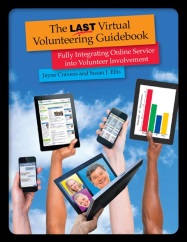
cover of Virtual Volunteering book with hands raising up various Internet connected devices

For more advice on virtual volunteering, including how to cultivate trust among volunteers, employees and clients in such relationships, have a look at The Last Virtual Volunteering Guidebook. It’s the most ultimate guide to digital engagement and it’s available both as a traditional print publication and as a digital book. And if you buy it directly from me, the last two boxes in my closet will soon go away! And your copy will be signed with best wishes from me! I also get a bit more money than if you buy it from Amazon (and it’s slightly cheaper to buy from me as well). Note that if you buy two or more books, you get an additional book for free!

Also see:

If you have benefited from this blog, my other blogs, or other parts of my web site and would like to support the time that went into researching information, developing material, preparing articles, updating pages, etc. (I receive no funding for this work), here is how you can help

How are you supporting the mental health needs of your volunteers?

graphic by Jayne Cravens representing volunteers

People in the USA are struggling with the basic decisions required to navigate daily life as the effects of pandemic-related stress continue to take a toll, especially on younger adults and parents, according to a national survey from the American Psychological Association. The global pandemic, rising prices, the housing crisis, climate change, violent political rhetoric targeting specific groups and people and world events are all adding to the stress and anxiety people are feeling, and that’s in addition to the stress they may experience through social interactions, family interactions, their professional work and, yes, volunteering.

No volunteering is stress-free. Cleaning up a beach means seeing all sorts of plastics and it can mean that volunteers begin to realize that merely cleaning up beaches occasionally won’t ever be enough to get rid of the garbage that is harming our environment. Serving on a board can mean feeling like if you fail in fundraising and/or in appropriate oversight, the nonprofit will cease to exist. Volunteering in a high-stress environment – helping women who have experienced domestic violence, working in an animal shelter, working with people experiencing homelessness – all come with intense mental pressures. As one nonprofit put it on the TechSoup community:

My nonprofit provides free home repairs. Many of the homeowners we serve are living in tragic conditions – without heat, hot water, full bathrooms or kitchens. It’s a lot to process and my team has been asking for upgraded mental health support. 

Your nonprofit needs to think about the mental health needs of your volunteers (and your employees, for that matter).

Some suggestions:

  • Remind volunteers regularly that it is okay to take a break – AND MEAN IT. If a volunteer says, “I need to take a break from volunteering for four months,” your reply should be, “Thank you so much for telling us. What date do you want your leave to start?” And then you work with the volunteer so that you have all the information you need from them so that you don’t have to bother them during leave. Remind volunteers that taking a break can better ensure they are able to succeed at volunteering and that it further helps them have a balanced, healthy life and, therefore, be even better volunteers. Remind them that working for prolonged periods without a break is bad not only for a person’s psychological and physical health but also for their volunteering: the more tired and burnt out a volunteer feels, the less effective and productive that volunteer will be.
  • Consider mandatory leave for volunteers – that they MUST take a month off once a year, for instance, especially if they work directly with clients. While I was not a volunteer, when I worked in Afghanistan for the UN back in 2007, they required me to take at least a week’s leave every nine weeks. When I found this out during my first week, I thought it was ridiculous; in my ninth week, I couldn’t sleep in anticipation of getting out of the country and back to my family for a much-needed vacation. Volunteers sometimes feel like they cannot take leave, but the reality is that breaks make us better upon return.
  • Remind volunteers that they have the right to say no to a new assignment or to continuing an assignment. Remind them that saying no isn’t selfish, that it allows them to better ensure they are able to succeed at the opportunities they say yes to and that it further helps them have a balanced, healthy life and, therefore, be even better volunteers.
  • Post the names and phone numbers of help lines and mental health resources in a common area frequented by onsite volunteers, in emails to volunteers and on your online community for volunteers. In the USA, your county’s department of health probably has such a list on its web site.
  • Remind volunteers to set boundaries with clients, other volunteers and employees. No volunteer should be required to socialize with other volunteers or employees, and an organization needs to be careful to not show favoritism to volunteers who do socialize with stNo volunteer should be required to friend a volunteer or employee at your organization on Facebook or to follow someone on Instagram, for instance, and you may want to have a policy that they are forbidden from friending or following clients. No volunteers should be required to join a Facebook group, since they very likely use Facebook with family and for personal social interactions.
  • Shop around for special discounts and freebies for volunteers:

— Is there a spa that would give your volunteers a special discount on manicures, pedicures or massages?

— Is there a movie theater that would give your volunteers and their families a special discount on theater tickets?

— Is there an arts organization that would give your volunteers a special discount on ceramic, drawing, dance or other classes?

— Is there a sports team that would give your volunteers and their families a special discount on tickets to a game or match? Don’t limit yourself to the big three – baseball, basketball or American football. Also look into hockey, soccer and roller derby.

— could you get a donor to pay for yoga or tai chi classes onsite at your nonprofit? Or would a studio offer a discount for your volunteers?

Don’t require volunteers to do one of these fun events together, if possible – like all going to get a mani/pedi the same day. They often need a break from each other, not just volunteering service itself.

  • Ask volunteers in different settings what brings them stress or anxiety in their service: you can do a survey (and make identities of those that answer anonymous), you can ask the question on your online community for volunteers, you can ask at face-to-face meetings of volunteers and you can call or meet with volunteers one-on-one specifically to ask. Showing that you care will be valued by your volunteers – but be sure you also act on their feedback.
  • Refer your volunteers to other resources, like:

“Staying resilient while trying to save the world” by Amnesty International

Protecting your mental health and well-being while speaking out, from the Malala Fund.

  • Ask volunteers how they would like to be supported as well.

How does your nonprofit support the mental health care of its volunteers? Please share in the comments below.

Also see:

If you have benefited from this blog, my other blogs, or other parts of my web site and would like to support the time that went into researching information, developing material, preparing articles, updating pages, etc. (I receive no funding for this work), here is how you can help

Ensuring cultural & social interactions: as important as water, food & shelter.

ACAPS is a nonprofit, nongovernmental project founded in 2009 with the aim of conducting independent, groundbreaking humanitarian analysis to help humanitarian workers, influencers, fundraisers and donors make better-informed decisions. ACAPS is not affiliated with the UN or any other organisation, allowing it to be a more neutral, critical voice regarding such initiative. ACAPS is overseen by a consortium of three NGOs: the Norwegian Refugee Council, Save the Children and Mercy Corps.

ACAPS published a report in May 2022, Life goes on in Yemen: Conversations with Yemeni families as the war nears its eighth year, that illustrates why humanitarian response cannot be just about providing water, food and shelter, and why it’s a mistake for charities to limit their communications with donors to only these needs. Water food and shelter are often called “basic needs”, but the reality is that social interactions, cultural practices and trust in the strength and work of institutions are all a part of basic human needs as well. The report is about Yemen, but it applies to every country.

This image is, to me, oh-so-powerful – and applies to every community, not just Yemen:

An image of a family as a part of a cycle that includes life-cycle events like weddings, deaths, births, etc., and the essential nature of having a social and cultural life.

This excerpt from the report is a good summary of what the image and the entire report is trying to say:

This research serves as a reminder that Yemenis are interested in more than just the satisfaction of their essential needs (such as water, food, and shelter). It highlights the diversity of households and the creative ways people adapt to economic challenges and accommodate long term strategic needs. Yemenis continue to participate in life-cycle events, celebrations, and social obligations. Having a social life maintains and creates networks and connections that build social capital, enhance the quality of life, and form the support network people can rely on when they most need it. Understanding the key role social capital plays in Yemeni life highlights that social capital is something built, maintained, stored, and used in a continuous cycle. Connections are important, but social capital is the glue that keeps these connections alive. When Yemenis keep celebrations modest by inviting fewer guests or keeping events shorter, they build less social capital. Similarly, they lose social capital when they hold fewer gatherings or visit extended family in their ancestral villages less.

So many people want to volunteer and/or donate financially to help people experiencing extreme poverty caused by social injustice, historic oppression and inequities and armed conflict. That should continue to be encouraged and cultivated – but people also need to understand that community development is every bit as important as charity and the provision of water, food and shelter.

Shout out to the Aidnography blog for bringing this to my attention.

Also see:

Decolonizing International Aid (including international volunteering).

humanitarian stories & photos – use with caution.

Extreme poverty is not beautiful.

Advice for teaching children compassion & understanding instead of pity with regard to poverty.

Nope, volunteering is not always inherently “good”.

A blend of international & local volunteers can “decolonize” humanitarian development

image of four human like figures holding hands in a circle

A May 2022 report from VSO and Northumbria University in the UK says that changing how international and local volunteers work together, rather than eliminating the involvement of foreign volunteers abroad entirely, can decolonize humanitarian development, so that foreigners are no longer in control of decision-making and so that racist and discriminatory structures are addressed and dismantled.

The research, based on interviews and participatory workshops with volunteers, community representatives and VSO staff, found that there was no “one-size fits all” approach to designing and putting in place successful “volunteer combinations”. The report emphasizes that there is a need to adapt volunteer planning and management in programs based on local requirements and local learning.

The presence of international volunteers brings energy and donor attention to projects, whilst community and national volunteers enable effective engagement with local communities and increase the likelihood that impacts can be sustained due to their particular knowledges and longer-term involvement. However, there is no simple one-size-fits-all approach that can be applied to constructing a blend of volunteers, as the combination is dependent on the individuals within each blend, the environment around the project and the phasing of the work itself.

The report also warns that “community volunteers” – local volunteers, while crucial to the effectiveness of each blend, risk being sidelined.

Here is the press release summarizing the report.

And here is the full report (PDF).

Also see:

Either be committed to quality or quit involving volunteers.

graphic by Jayne Cravens representing volunteers

I will always be fascinated by people at nonprofits, employees or volunteers, who will write a LONG post to an online forum about their lack of staffing for all that needs to be done or a safety issue regarding volunteers and clients, & when they read recommendations about how to address such, reply, Oh, yuck, bureaucracy… we’re non-traditional! We’re dynamic and nimble and get things done and rules are such a drag!

Being a dynamic, nimble startup nonprofit that GETS THINGS DONE! with NO RULES is lots of fun until volunteers start harassing clients or the executive director cries every night under all the stress and core volunteers quit because they just can’t anymore – and they aren’t replaced because the word is out about just how overwhelming volunteering can be.

Planning, policies and structure are NOT BAD THINGS. And they do NOT mean your organization can’t be dynamic and nimble and use all the latest jargon.

Put the mission of your program first, put your clients first, commit to quality, and remember that sometimes the reason for traditional ways of doing things is because traditional ways of doing things can WORK.

If you don’t have time to learn and apply the essentials, you’re being reckless with both volunteers and those they serve.

  • Foundations of Volunteer Engagement: Before you recruit volunteers, these are fundamental pieces that MUST be in place. If you choose not to do these and, instead, start recruiting volunteers right away, you are setting up your organization and those volunteers up for failure.
  • Support for Volunteers/Management of Volunteers & Safety Considerations: All of the resources I have regarding the support for and management of volunteers, as well as safety in engaging volunteers, are on one page because I believe they are inextricably linked – it’s impossible to separate these two issues. Also, I believe that these MUST be explored and drafted BEFORE you start recruiting volunteers.
  • Creating Roles & Tasks for Volunteers: A key to retaining volunteers is having roles and tasks well-defined and IN WRITING, so that expectations are clear. This is yet another step to undertake BEFORE you start recruiting volunteers – and if you don’t, don’t be surprised when you can’t keep volunteers and your volunteer engagement flounders.
  • Ethics in Volunteerism & Court-Ordered Community Service: If your organizations involves volunteers, you should also be thinking regularly about the ethics of such. Involving people who are not financially compensated for work that they do carries with it regular questions and criticisms. Exploring ethics in volunteerism has not won me many friends. Exploring ethics in volunteerism can help you avoid public relations disasters later.
  • Harumph.

Note: I will be quite hard to reach from Monday, June 20 through Wednesday, June 29. I will be checking email and social media only sporadically in that time.

Volunteer turnover isn’t always a bad thing

graphic by Jayne Cravens representing volunteers

High turnover of volunteers at a nonprofit, NGO, community program, etc., usually is not a good thing. But I hear nonprofits often talk about how they don’t want to lose any volunteers, or how they see a large number of volunteers leaving as an automatically negative thing.

No volunteer is forever. People’s lives change: they get married, get divorced, have babies, get new jobs, move, have a change in their health, have new caregiving responsibilities, develop new interests and on and on. Their interests also change: they may decide they want to do something that your organization doesn’t offer – work with animals, develop web sites, mentor young people, do outdoor service projects – and all of those changes are fine and normal.

Absolutely, you should do exit interviews when a volunteer formally quits, and surveys of former volunteers that stopped signing up to help, to find out if there is an issue you need to address. And if you see a problem – complaints about a toxic work environment, or volunteers being asked to do too much, or volunteer burnout – you need to address those.

But some volunteering turnover should not only be expected, it should often be welcomed. Volunteer cliques don’t welcome new members and exclude volunteers that are different than the clique’s status quo – so if you have a lot of long-term volunteers, is it really a sign that you do a great job of supporting and engaging volunteers or is it that you’ve created or enabled an unwelcoming clique of volunteers? How volunteers do what they do needs to evolve with the times: there are approaches that worked previously that don’t now, and new approaches that need to be considered and explored – is your lack of turnover really a sign of stagnation of ideas and methods?

I saw this message posted to social media from someone talking about an event that is staffed primarily by volunteers.

Longtime volunteers feel pride & ownership in what they do (which is generally great). But because they feel ownership, they dismiss any suggestion to change anything they do, even when that would help the event & the organization.

I’ve heard this complaint by managers of volunteers for many nonprofit initiatives, especially animal shelters, thrift stores and rural firehouses. Volunteer ownership is a blessing for the commitment and responsibility it can inspire, but it also can be a curse, for the inflexibility and unwelcomeness it can cultivate.

Maybe it’s not such a bad thing if you lose some volunteers because you introduced more thorough safety policies, or because the volunteers wanted to rally around a volunteer who was dismissed for sexually-harassing clients or other volunteers. Maybe it’s not such a bad thing if you lose some volunteers because you now require them to go through a training to better protect and serve clients. Maybe it’s not such a bad things to lose some volunteers who don’t like your new focus on inclusion and diversity. Maybe it’s not such a bad thing if you lose some volunteers who are opposed to all change and like to say, “But we’ve always done it THIS way…”

Do you think some annual turnover of volunteers at a nonprofit might actually be a good thing? Comment below.

Also see:

If you have benefited from this blog or other parts of my web site or my YouTube videos and would like to support the time that went into researching information, developing material, preparing articles, updating pages, etc. (I receive no funding for this work), here is how you can help.

Donors offering feedback on humanitarian projects & proposals

image of a panel discussion

Years ago, I was a part of an online community for humanitarian aid and development workers. It wasn’t a group for the sharing of best practices or professional development. It was a group for venting and kvetching.

The group didn’t last long in that form – as the group became more and more popular and new members came in, venting started to be frowned on, because of the expectation of such workers to always be positive took over – as it always does in the offline world. The snarky commenters were shamed into silence and the group became yet another boring, rarely-controversial discussion group for best practices and where to find jobs and funding.

One of my favorite times on the group were when conversations would break out about eyebrow-raising comments that came from funders. I loved the comments so much, I saved many of them. I just found them as I was cleaning out a hard drive and decided to share my favorites. No actual humanitarian groups or donors are named here.

These are reported to be actual comments humanitarian workers have gotten from foreign funders:

For the household disinfection kit you are proposing, could you please explain the purpose of the mop? I mean, I know people use it to clean their house, but could you write a justification to that effect?

Email conversation:
Funder: “Hey, can you include some photos of children. They usually look good for fundraising”.
Agency: “No. I cannot.”
Funder: “Why not?”
Agency “Because the project is NOT about children”.

Funder: “When refurbishing the health facility, ensure that a maximum of 2 coats of paint is used”.

After sending a very long and detailed report (according to the donor’s format and per their request), including photos showing the progress of each activity, I got this email response: “Hi. Can you give me some quick updates on the project?”

Funder, regarding the alphabetization component of a rural development program: “Why would women living in the desert need to learn how to read and write anyway?”

Funder: “We don’t understand why you want to do contingency activities due to increased fighting. Could you just solve the conflict?”

Funder: “Why do they need a gravity-fed spring water system? Don’t they have normal tap water?”

Funder said they would rather spend $200 US per day renting cars for a five-year project rather than actually buying cars, which would be far cheaper, “because we don’t support the purchase of assets.”

Funder, at our first meeting: “I thought you would be a man.”

I submitted a very long, detailed research report for a donor. Got it returned with feedback. Throughout the 120-page report there is a comment from the funder, stating “you should mention xyz government and UN report here.” The comments were given at least 20-30 times, and the comments got angrier and angrier throughout the report because we’d missed such an important document.
Me in follow-up call with the donor: “I have searched all of the documents you sent that you wanted us to include and the Internet, I can’t find xyz report.”
Donor: “It hasn’t been released yet.”
Me: “errrrmmmm… Could you send me a copy? That way I would be able to mention its contents” (and actually know it exists which obviously I didn’t before).
Donor: “I don’t have a copy.”
Me: “errmmmmm… have you even read it?”
Donor: “No, I just heard about it.”

Funder: “So are you actually a spy for the British Government?”
Worker: (nervous, confused) “No, I am sure my Government considers me far too troublesome to employ” (i.e. sweary with an inability to toe the line), “Why?”
Funder: “How else would a woman end up working in Mine Action here?”

Donor: “We are paid for a children’s rights project. We cant support you in a nutritional crisis.”

Had a potential donor call me at 3 AM local time, when I was helping with first response after a disaster, to say that they had decided that they wanted their aid to go to providing shelter to orphans and could my organization do that? At 3 AM, I had to explain that nobody knew which children were orphans as yet because they were still determining who had died, and that the first option would be to reunite children with extended family members rather than create a separate facility. They were noticeably displeased during this call. I clearly did not understand their humanitarian impulse to help ORPHANS. They didn’t give us the money.

Funder: “These photos don’t show a reality that would reflect the need for the kind of assistance you’re asking for. Do you have photos that more obviously show the effects of food insecurity and mass migration?”
Many words for: put in images of starving children
🙄. For the record; the photos we provided were of adult women who had consented to having their photos taken.

As for myself, I had to help a colleague explain to the representative of a very large, well-known tech agency that Africa is not a country and that not everyone spoke English there.

Also see:

If you have benefited from this blog, my other blogs, or other parts of my web site and would like to support the time that went into researching information, developing material, preparing articles, updating pages, etc. (I receive no funding for this work), here is how you can help.
an online group for potential donors for your nonprofit – possible? appropriate?

Someone wrote on an online community I’m on:

I am interested in using Facebook to build a community of potential donors. Anyone have expertise in this area?

Here’s what I think:

image of a panel discussion

No one likes to be identified as a potential donor. They really don’t. You can think of me as a potential donor because I’m a volunteer, or because I’ve donated in the past, or because I came to your event, or because I’ve otherwise expressed some kind of interest in your nonprofit, NGO, charity, etc. But I won’t join a group called “potential donors,” because I don’t want to be thought of only as a financial donor, as someone that gives money, or should be targeted to give money.

People will join online groups that are focused on a cause they care about, or an online group that is going to educate them about that cause. They want to hear about the great work the program is doing. They want to know how to “live the cause” in their own lives: how they can recycle or how they can register voters or how they can explain the importance of vaccinations to their family or whatever. They will join online groups that discuss and debate topics related to the cause – how to advocate for accessible web design, how to rescue wildlife, how to run a youth soccer league, etc. And if those groups also, sometimes, solicit donations, that’s appropriate and will probably generate some donations – as long as no member feels that’s why the group exists (to ask for money). They are going to leave a group that just asks for money.

If you are going to call me a partner, by the way, that means I’m going to get to offer my advice, ask questions and disagree. If you don’t allow that on your online group, then I’m NOT a “partner.”

That said, in the 1990s I joined an online group for organizations that had received funding from one funder – the Mitsubishi Electric America Foundation. It was wonderful: we learned so much from each other, and MEAF got to see the nonprofits it funded collaborate in real-time. It was one of the best online community experiences I’ve ever been a part of.

cover of Virtual Volunteering book with hands raising up various Internet connected devices

For advice specifically on how to create and leverage an online community for your volunteers specificallly, have a look at The Last Virtual Volunteering Guidebook. It’s available both as a traditional print publication and as a digital book. And if you buy it directly from me, the last two boxes in my closet will soon go away! And your copy will be signed with best wishes from me! I also get a bit more money than if you buy it from Amazon (and it’s slightly cheaper to buy from me as well).

Also see:

If you have benefited from this blog, my other blogs, or other parts of my web site and would like to support the time that went into researching information, developing material, preparing articles, updating pages, etc. (I receive no funding for this work), here is how you can help