Monthly Archives: January 2025

Why Work for the United Nations? & What is Working the for UN really like?

Three years ago, someone on Reddit wrote on the subreddit UNPath, “Why Work for the UN?” Their post said:

What is the appeal? It seems very difficult to even get in at all, regardless of qualifications. So why try? I am studying a field that would probably be perfect for the UN but I’m not sure why it’s actually even appealing or worth trying to get in.

Here’s my reply from then, with some edits for clarity:

A lot of people want to work for the UN because they believe all sorts of myths – UN employees get to travel the world, you get paid a huge salary, you get a special passport, everyone is impressed that you worked at the UN and will want to hire you, etc. In fact, most UN employees don’t travel for work, don’t get a “huge” salary and don’t get that special passport. And some people, including employers back in your home country, view working at the UN as some weird thing – or will say to you, “But you worked at the UN, so why are you now applying for a boring normal job?”

Spoiler alert: a lot of UN work is really boring and normal.

I’m suspicious of anyone who says, “I want to work at the UN” on this subreddit or in a cover letter and leaves it at that. It’s like saying, “I want to work for a mega huge software company.” It doesn’t tell me anything about what work you actually want to do. It sounds like you just want a certain company on your CV. But what kind of WORK is it you want to do?

The nature and atmosphere of work for a UN employee in Bonn, Germany working on government policy recommendations for climate change is nothing like the nature and atmosphere of the head accountant that’s been brought in from abroad to work in the UNICEF office in Afghanistan. They might as well be working on different planets. Most UN jobs are administration – you’re sitting at a desk, not driving orphans to safety.

Why do I like working for the UN as a communication professional or project manager? Because the work feels very much like it matters and is making a difference on a scale far bigger than just in one community. Because I love reading country strategies and program strategies and interviewing a diversity of staff to try to represent their work. Because I love taking photos of the work my colleagues are doing and then sharing those photos in a variety of communications materials. Because I love helping people understand the benefits and impact of development projects, from earthen dams to repaired bridges to work training programs to HIV AIDS education programs to micro loans and on and on and on. Because I love working in multi-cultural environments or in an environment filled with local people staffing most of the posts in a developing country and getting to help build their capacities. And, indeed, the pay is competitive, far more than doing that exact same work for a nonprofit.

My UN job in Bonn, Germany was mostly at a desk. I met a ton of interesting people from all over the world, but I rarely traveled for work. Most of my colleagues didn’t travel for work. My jobs in Afghanistan and Ukraine were spent mostly at a desk, trying to rapidly prepare material for very demanding funders from various foreign governments – in one I had to be taken to work in an armored car and couldn’t leave the work campus except to leave for the day, nor leave my home except with approval. In the other, I could walk to work, go out with colleagues after work, go to street markets and live life like anywhere – except on the days when there were potentially violent protests. But even on “boring” days, the work always, always felt like it mattered. But note: a lot of colleagues, doing very similar work, didn’t feel energized by it – it was just a job.

As for it being difficult to get in – I have to say, most of the people I see here wanting a job in the UN don’t offer anything to show any qualifications at all for working at the UN. They seem to think there’s some sort of magical master’s degree or PhD that gets you “in”. Or some magical way to phrase things in a cover letter. And as a person that often was the person who went through a stack of CVs to pick who would get interviewed, it was soooo easy to disregard 80% of applicants, because they so clearly did NOT have anything in their CV that showed they had all – and I mean ALL – of the skills and experience asked for in the job description.

End of my reply on Reddit.

A lot of this could be said for why I prefer working for nonprofits or government agencies, rather than in the private sector: because it feels like the work matters, even if it’s at a desk most days. I like helping a specific community, including the one that’s all around me currently. And the differences between rural Oregon and rural anywhere else aren’t as great as you might think.

Also see:

If you have benefited from this blog or other parts of my web site and would like to support the time that went into researching information, developing material, preparing articles, updating pages, etc. (I receive no funding for this work), here is how you can help

Your nonprofit WILL be targeted with misinformation; prepare now.

a primitive figure, like a petroglyph, shots through a megaphone

Watching misinformation and disinformation related to the fires in Los Angeles spread exactly like wildfire has been a reminder of just how bad things are regarding public relations and truth. Instead of an army of newspapers, local radio stations and TV stations and other credible media ready to debunk it, the media landscape is as decimated as the actual landscape of the area, and lies about government funding and action, spread by the owner of the site formerly known as Twitter and other people with a political agenda. And no amount of fact-based debunking seems to matter.

As someone that’s studied misinformation and disinformation campaigns against governments and cause-based organizations since the 1990s, it’s been as horrifying to watch as people losing their homes. And as I’ve watched, I am reminded that nonprofits, no matter how small, no matter how beloved, need to be thinking about their strategy NOW for if and when they are targeted by misinformation. It doesn’t matter what your nonprofit’s mission or size: it can be a target for misinformation, on a local or even national level. And given the incoming Presidential administration, the power of misinformation should never be under-estimated.

I’ve used the example of the Association of Community Organizations for Reform Now (ACORN) before: it was a collection of community-based nonprofits and programs all over the USA that advocated for low- and moderate-income families and worked to address neighborhood safety, voter registration, health care, affordable housing and other social issues for low-income people. At its peak, ACORN had more than 1,200 neighborhood chapters in over 100 cities across the USA. But ACORN was targeted by conservative political activists who secretly recorded and released highly-edited videos of interactions with low-level ACORN personnel in several offices, portraying the staff as encouraging criminal behavior. Despite multiple investigations on the federal, state, and county level that found that the released tapes were selectively edited to portray ACORN as negatively as possible and that nothing in the videos warranted criminal charges, the organization was doomed: politicians pounced and the public relations fallout resulted in almost immediate loss of funding from government agencies and from private donors.

Public libraries are another good example of how misinformation campaigns can work: more books were challenged in public libraries and school libraries in 2024 than ever before, according to the American Library Association. The vast majority of that increase came from groups or individuals working on behalf of national efforts trying to censor dozens or hundreds of titles at a time, part of a push across the country by those supporting the incoming Presidential administration to ban certain books based on the unfounded claims that they are inappropriate for children, as well as to defund and close public libraries altogether.

Goodwill is a frequent target of misinformation regarding senior staff salaries – and from what I see on a local level, makes no effort to counter that misinformation, resulting in people choosing not to donate items to their thrift shops nor shop at such. Which is so sad, as Goodwill does amazing work regarding training people to enter or re-enter the workforce (which most people don’t know is their mission).

There are nonprofit theaters, including community theaters, that have mounted a production that has resulted in community protests and a loss of donors, and seemed utterly unprepared for the groundswell of controversy, a groundswell that’s often started by just one person spreading misinformation about the play, and the people protesting often haven’t actually read nor seen the play. But they are loud, organized and committed, and the theater is often left utterly unprepared for the negative attention.

I have an entire blog about how to train staff so that your organization doesn’t become a victim of GOTCHA media?, so I won’t repeat those tips here. But you need to have a plan for what to do when there is even a hint of misinformation starting about your organization.

Misinformation about nonprofits usually targets their budget, what they pay staff, how they have or haven’t helped someone, how they make their programming decisions, how they carry out their work and their plans for the future. Therefore:

  • Make sure your web site is up-to-date regarding all of the above.
  • Your social media needs to regularly updated the public about all of the above.
  • ALL staff, including volunteers, need to be regularly briefed (at least twice a year; once a quarter is better) on all of the above.
  • All staff, including volunteers, need to know what to do if they see or hear misinformation related to your organization.

Your entire staff, including volunteers, need to be on the lookout for misinformation: a post on an online community, a comment at a church meeting, a reference at a civic group, a comment from a new volunteer, even a comment at a family gathering. If they see it or hear it in a public setting, or from an elected official or community leader or influencer, they need to NOT respond themselves – they need to know who at your organization they need to tell (it’s probably the executive director, the communications manager or their immediate supervisor). If it wasn’t a public comment, there’s no need to say exactly who said it, but do say what was said.

When was the last time you told your entire staff what to do in case they see or hear misinformation? If you don’t have an answer, create a strategy NOW and meeting dates and times. If it was in the last six months or more, it’s overdue to do it again.

When you hear misinformation, the next step may not be to have a meeting next week to discuss what’s happening; it may be to start drafting responses IMMEDIATELY, to be shared online within hours, even minutes. Who is going to be involved in that? Just the Executive Director and communications person? The board president too? Do you have all the contact information you need for these people so this can happen quickly?

If you had a message that needed to spread quickly online, do you have that system ready to go: do you have a board member who will be in charge of calling all board members to tell them to share an urgent social media message? do you have a manager of volunteers or volunteer leaders who will be in charge of contacting certain volunteers to encourage them to share that urgent social media message? Do you have more than one person who knows how to update your web site, in case your communications manager is on vacation?

And here’s the reality: if you are just thinking about this for the first time, right now, as you read this blog, or if you haven’t done anything to prepare yet, then you are already behind schedule. Most of the recommendations above cannot be done quickly without many weeks, even months, of preparation and refreshers. This is an URGENT need your nonprofit needs to address now, no matter its focus.

One more thing: you need a photo of your executive director, and any other staff, with as many elected officials as possible: the mayor, at least one city council member, at least one county representative, your area’s state representative, your area’s state senator, your areas US Representative and, if possible, your US Senators. It makes it more difficult for an elected official to criticize an organization when there is a photo of that person smiling with your staff, particularly at one of your events. See more at Nonprofits: look at local election results & prepare to reach out.

July 2025 update: They matched on Tinder shortly after the November presidential election, shared their mutual disappointment about Donald J. Trump’s victory and agreed to meet for a drink. The date lasted an hour and the man said he barely thought about the date again. Then a video of him appeared on the website of Project Veritas, a right-wing group known for using covert recordings to embarrass political opponents. His date had posed as a politically liberal commercial real estate agent and recent transplant to the capital, but she was actually a Project Veritas operative with a hidden camera. Conservative media and Republicans used the date conversation as supposed evidence that the Biden administration had mishandled funds. (if the link doesn’t work, try this one)

Also see

How to handle online criticism.

Could your organization be deceived by GOTCHA media?

Growing misconceptions about the role of nonprofits in the USA.

Mission-Based Groups Need Use the Web to Show Accountability

Governments cracking down on nonprofits & NGOs.

If you have benefited from this blog or other parts of my web site and would like to support the time that went into researching information, developing material, preparing articles, updating pages, etc. (I receive no funding for this work), here is how you can help

Philanthropy is commendable, but…

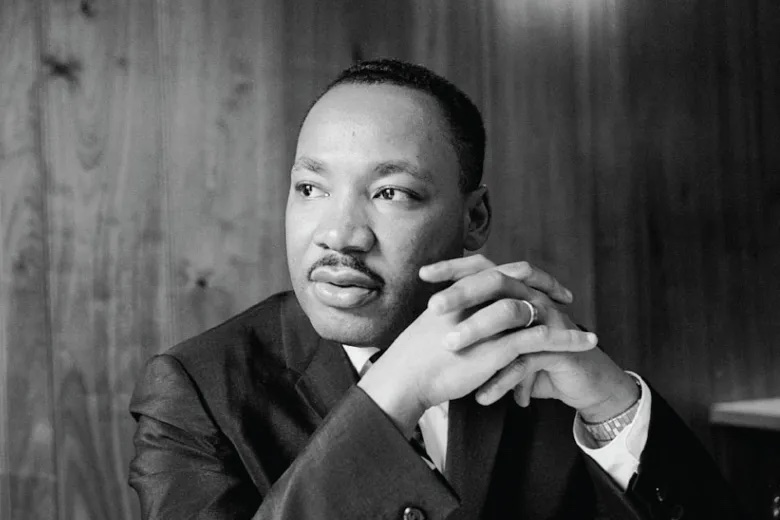
Dr. Martin Luther King, Jr., looking thoughtful.

In anticipation of MLK day later this month:

“Philanthropy is commendable, but it must not cause the philanthropist to overlook the circumstances of economic injustice, which make philanthropy necessary.”

– Martin Luther King, Jr.

On a related theme: Shifting Philanthropy From Charity to Justice, from the Stanford Social Innovation Review.

Also see my earlier blogs:

Charity isn’t enough.

Volunteering, by itself, isn’t enough to save the world.